

SPEED READ
- Despite the negative impact of the war in the Middle East, economic growth in Q1 2026 was positive in both the US (+2.0% annualized) and the EU (+0.1% qoq).
- In both the US (+3.3% yoy) and the EU (+3.0% yoy), inflation rose and was significantly above the 2% target of the FED and the ECB.
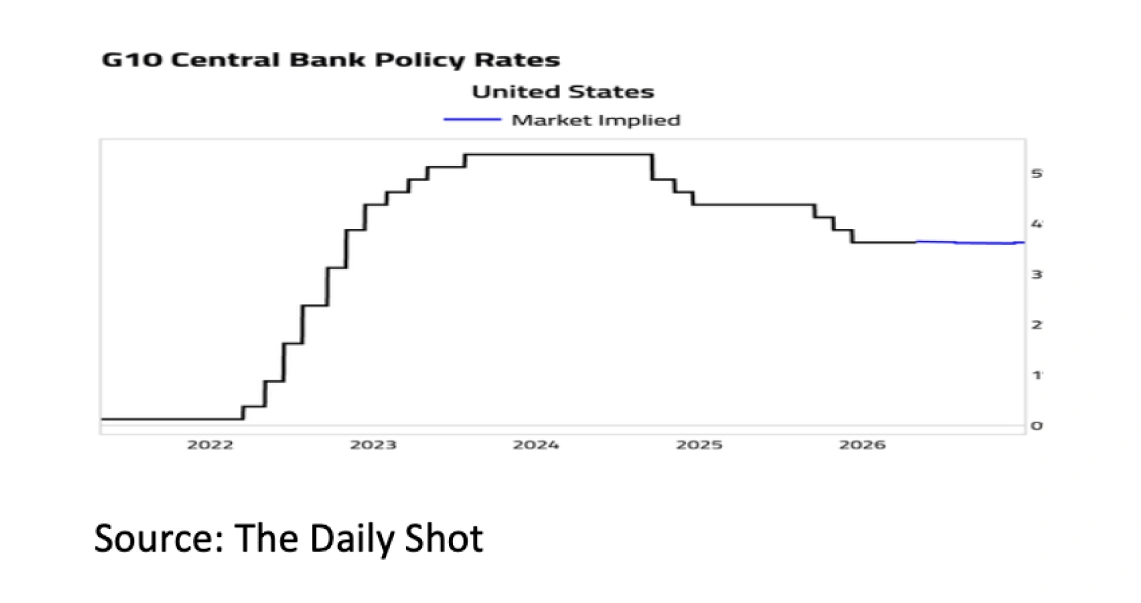
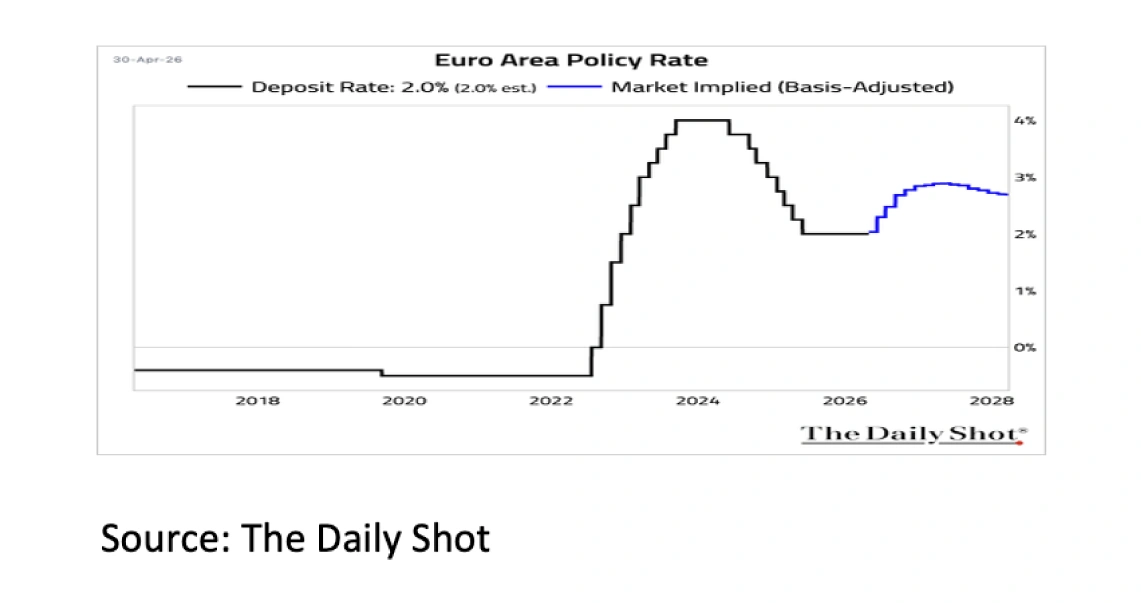
- Nevertheless, both the FED (3.75%) and the ECB (2%) decided at the end of April to leave interest rates unchanged.
- While the FED primarily pointed to the negative impact of the war in Iran on economic growth, the ECB primarily pointed to the negative impact on inflation.
- Considering the (persistently) higher oil prices and geopolitical unrest around the world, it appears that the peak in inflation has not yet been reached for the time being.
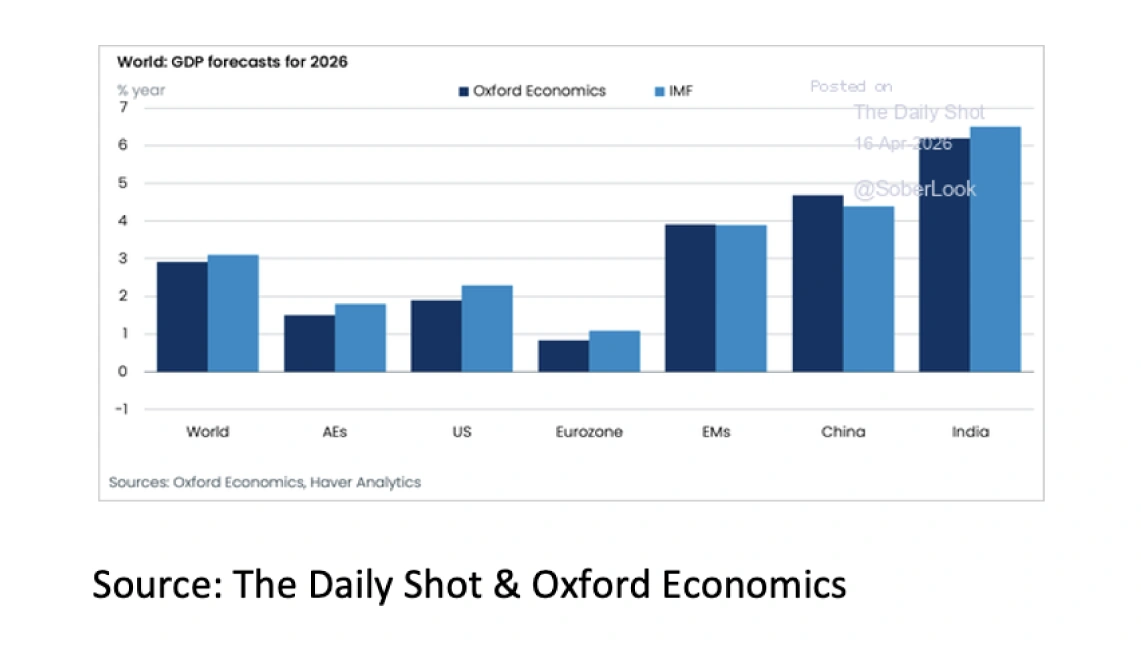
- As a result of the war in the Middle East, the IMF has revised its forecasts for global economic growth in 2026 downwards by -0.2% to 3.1%.
- Despite all the geopolitical tensions and rising oil prices, April was an extremely good month for equity investors, and the S&P 500 rose by over 10%.
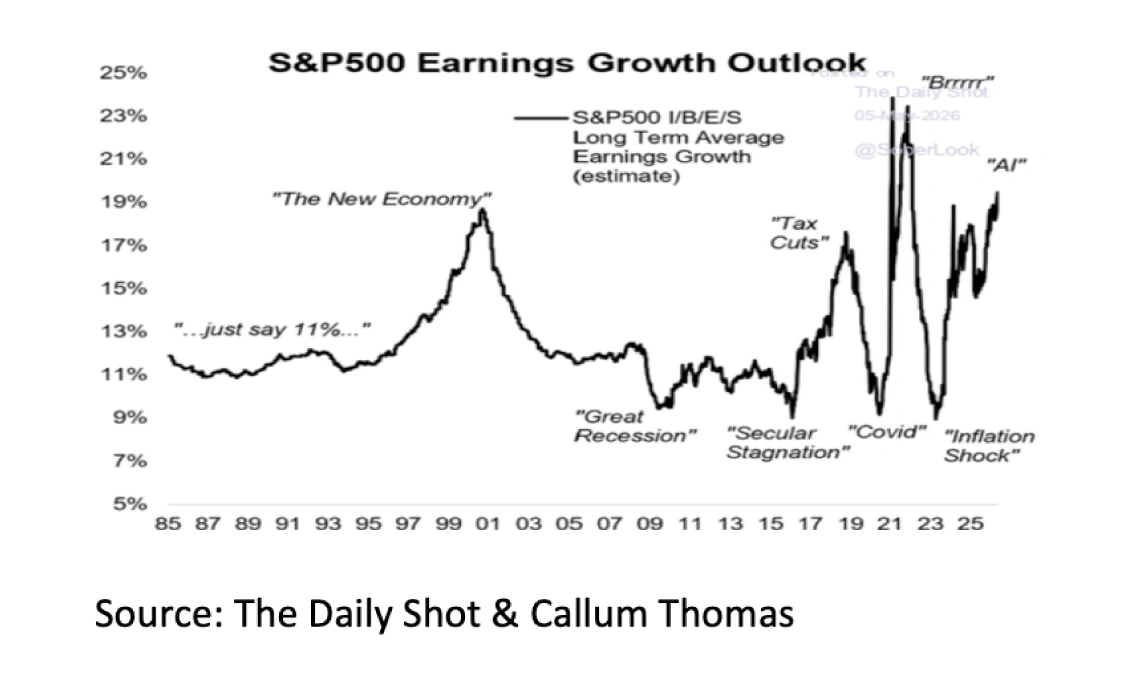
- The primary reason behind this is corporate profits. Thanks in part to developments in the field of Artificial Intelligence, these are developing much better than expected. Profit margins are at record levels in both the US, the Eurozone, Japan, and Emerging Markets.
- The main risks to these profit margins are an economic recession and/or significantly higher capital market interest rates.
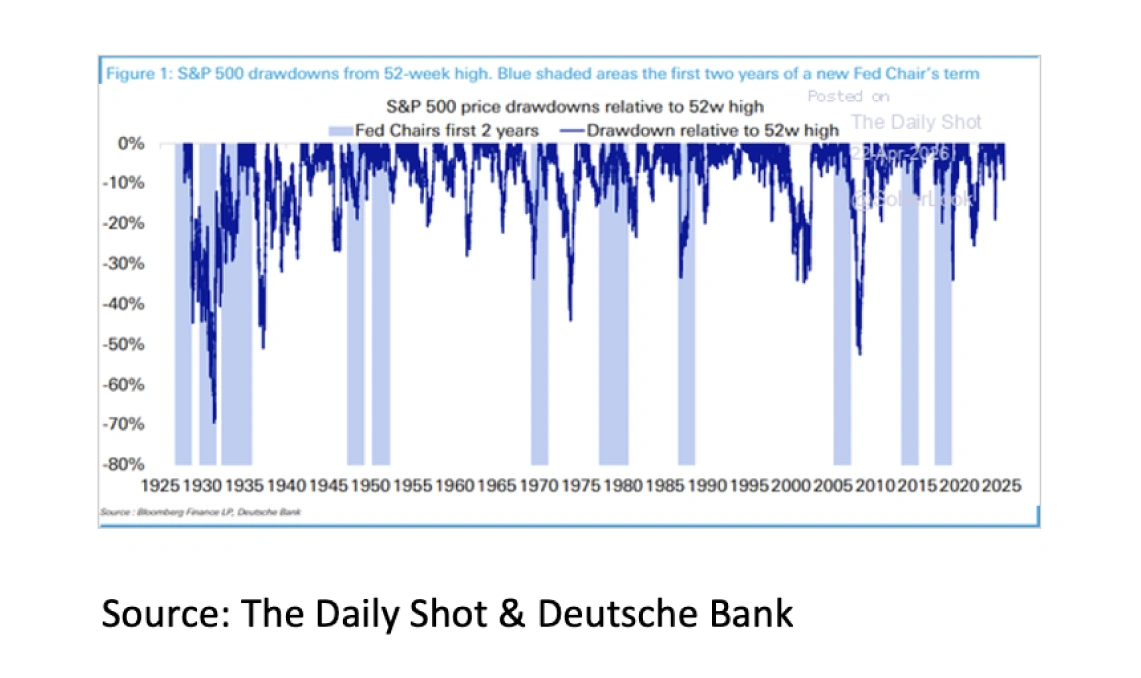
- In addition, the FED will get a new chairman in mid-May, and history shows that the first two years after a new FED Governor takes office are not good years for equities.
ECONOMY
Despite the negative impact of the war in the Middle East, economic growth in 2026Q1 was positive in both the US (+2.0% annualized) and the EU (+0.1% qoq). The negative impact was primarily visible in the inflation figures. In both the US (+3.3% yoy) and the EU (+3.0% yoy), inflation rose and remained significantly above the 2% target. Nevertheless, both the FED (3.75%) and the ECB (2%) decided in late April to leave interest rates unchanged. Particularly noteworthy was the difference in the accompanying commentary from the two central banks. While the FED primarily pointed to the negative impact of the war in Iran on economic growth, the ECB focused mainly on the negative impact on inflation. As a result, financial markets in 2026 are now pricing in interest rate hikes from the ECB, but not from the FED. In addition, Kevin Warsh, expected to succeed FED Chairman Jerome Powell in mid-May, believes that artificial intelligence (AI) will boost labour productivity to such an extent that inflation will be suppressed, which opens up possibilities to lower interest rates sooner than usual.
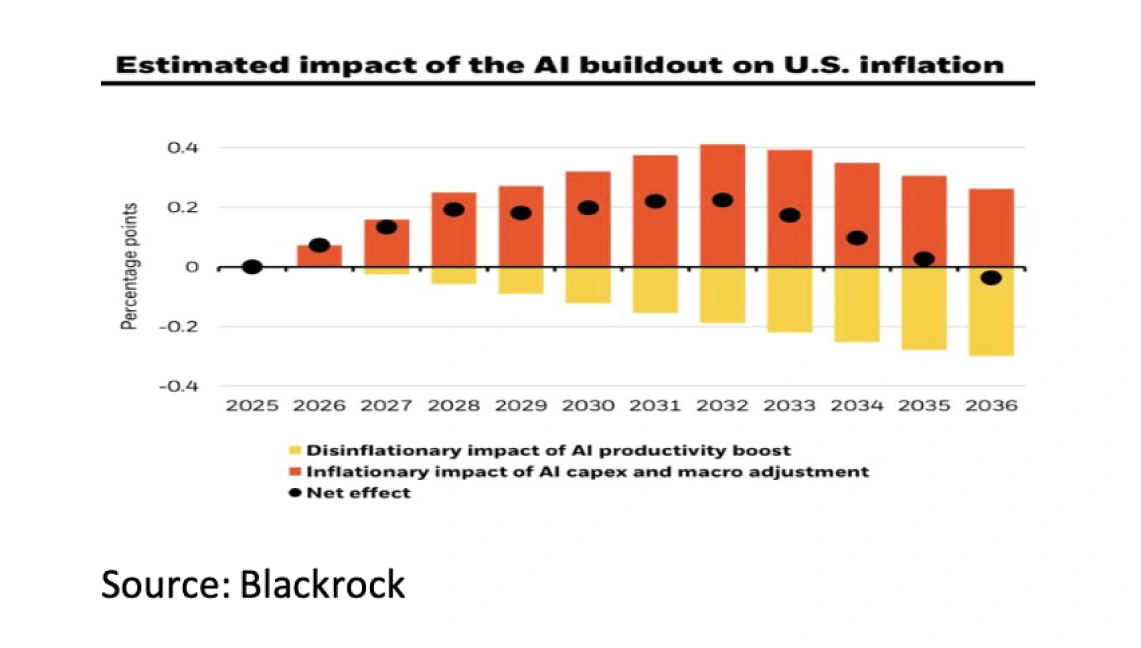
In contrast to this optimistic outlook stands a significantly more pessimistic expectation from Blackrock. They expect the first phase of AI to be both capital-intensive and resource-intensive, and therefore already putting pressure on the prices of electricity, raw materials, and (skilled) labour. Furthermore, considering geopolitical unrest in the world and the (in all likelihood permanently) higher oil prices, it appears that the peak in inflation has not yet been reached for the time being. As a result of the war in the Middle East, the IMF recently revised its forecasts for global economic growth in 2026 downwards by -0.2% to 3.1%. According to Oxford Economics, the IMF is still (slightly) too optimistic with this assessment.
FINANCIAL MARKETS
Although there is still plenty for investors to worry about with the war in both Ukraine and the Middle East, the blockade of the Strait of Hormuz, high oil prices, and rising inflation, April was an exceptionally good month for equity investors. The S&P 500 fell by about 10% between late February and mid-April as a result of the conflict with Iran, but subsequently recovered fully in just 11 trading days. This makes it the fastest V-shaped recovery following a correction of 10% or more this century. It brings the rise of the S&P 500 at the end of April exactly to the average return in the first four months since 1990.
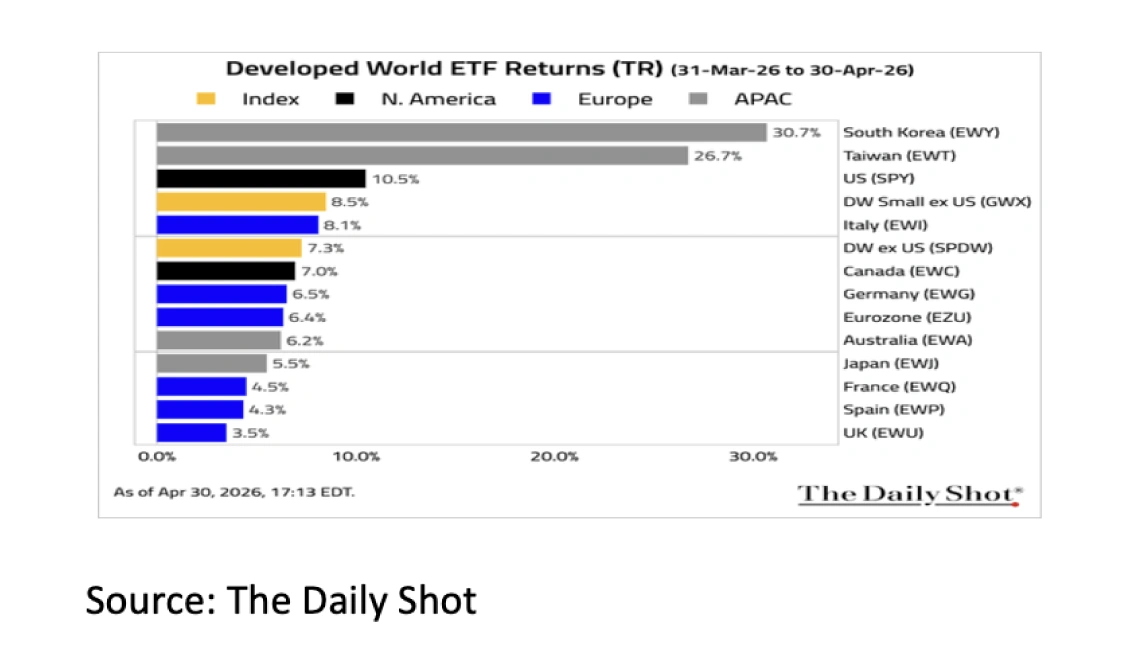
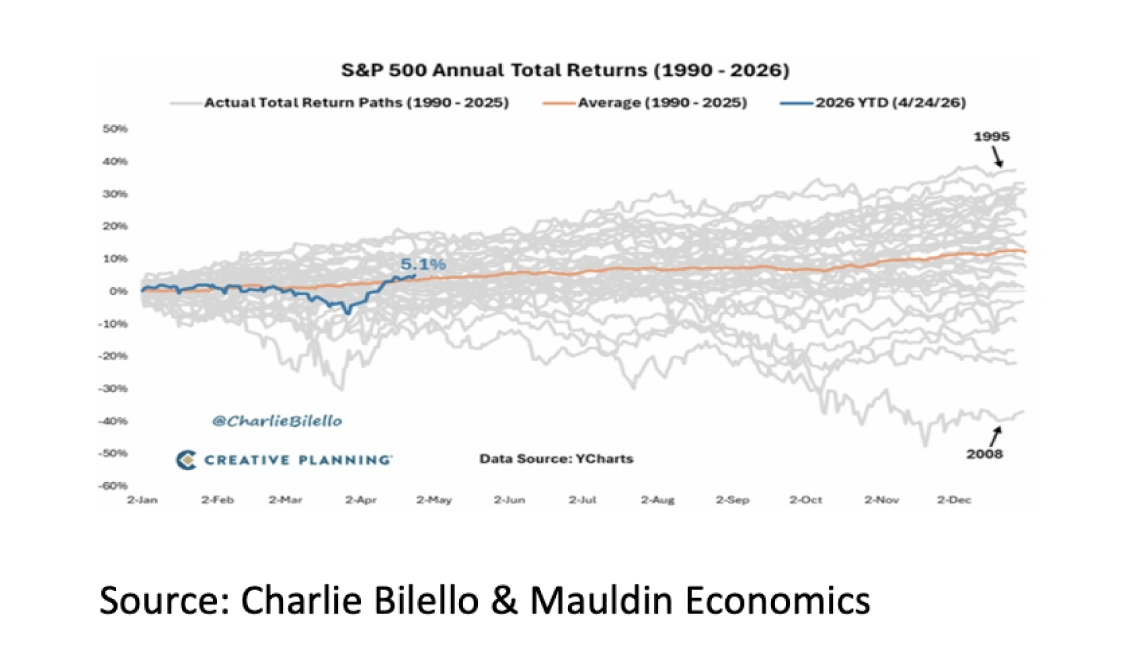
Many pessimistic investors are therefore watching the optimism in the equity markets with increasing astonishment. Yet there is a very good reason behind the recovery in the equity markets. While geopolitical risks, high oil prices, and rising inflation have still not come to an end, ultimately, that is not the most important factor in equity investments. That is, in fact, corporate profits, and these are developing extremely well in 2026, partly thanks to developments in the field of Artificial Intelligence. In the US, the Eurozone, Japan, and Emerging Markets, corporate profit margins are at recordlevels. As long as this trend continues, there is a solid foundation under the equity markets. The main risks are an economic recession and/or significantly higher capital market interest rates. Additionally, the FED will get a new chairman in mid-May, and history shows that the first two years after a new FED Governor takes office are not good years for equities.
Disclaimer:
While the information contained in the document has been formulated with all due care, it is provided by for information purposes only and does not constitute a professional advice. We would encourage you to seek appropriate professional advice before considering a transaction as described in this document. No liability is accepted whatsoever for any direct or consequential loss arising from the use of this document.