

SPEED READ
- The International Energy Agency (IEA) calls the current crisis in the Middle East the worst energy shock in modern history.
- The risk of a prolonged closure of the Strait of Hormuz and an oil price of $150 per barrel remains significant. It would almost certainly plunge the global economy into a recession and cause inflation to rise significantly.
- Central banks such as the FED and the ECB face a major dilemma. Should they quickly raise interest rates to tackle inflation, or lower them to prevent a recession? The risk of a “policy mistake” is significant.
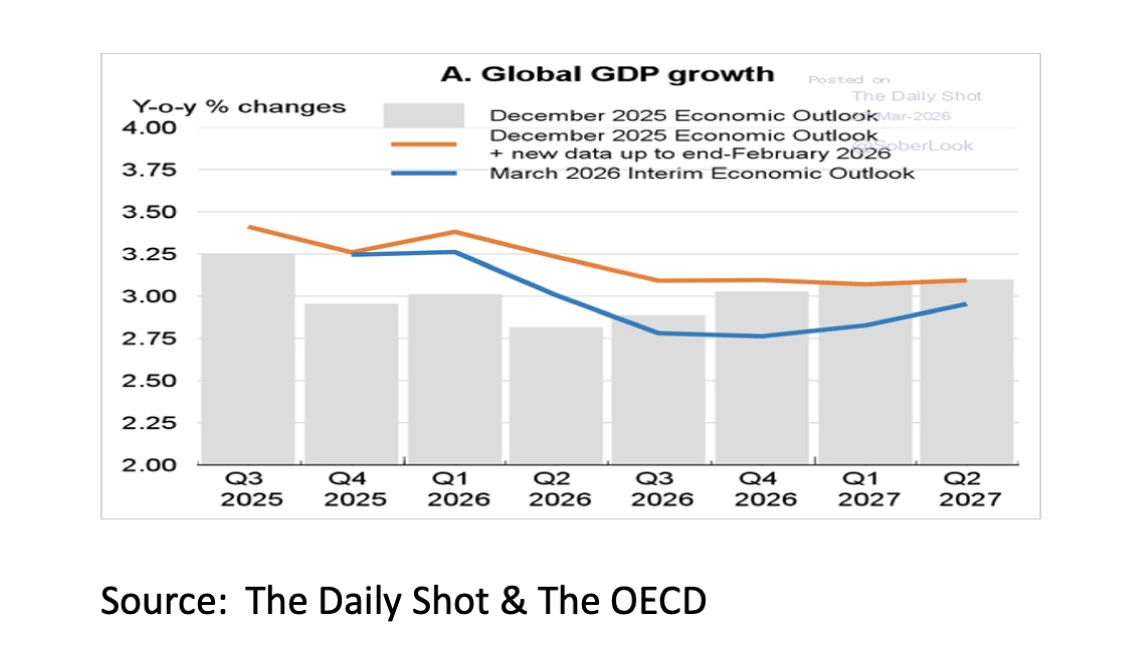
- In its forecasts, the OECD still assumes a relatively short-lived conflict in the Middle East and remains optimistic about the outlook for the global economy for both 2026 and 2027H1.
- However, the OECD significantly raised the G20 inflation forecast for 2026 from 2.2% to 3.1%.
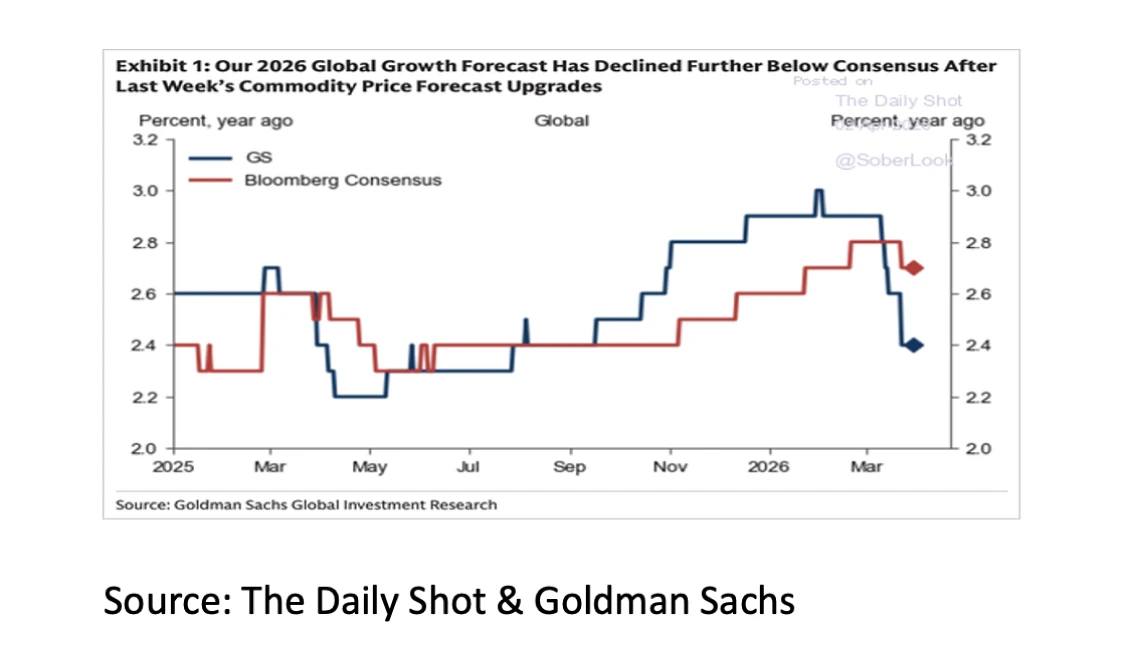
- In contrast to the OECD and the Bloomberg Consensus, Goldman Sachs did significantly revise its forecast for global economic growth in 2026 downwards, although they too do not foresee a recession.
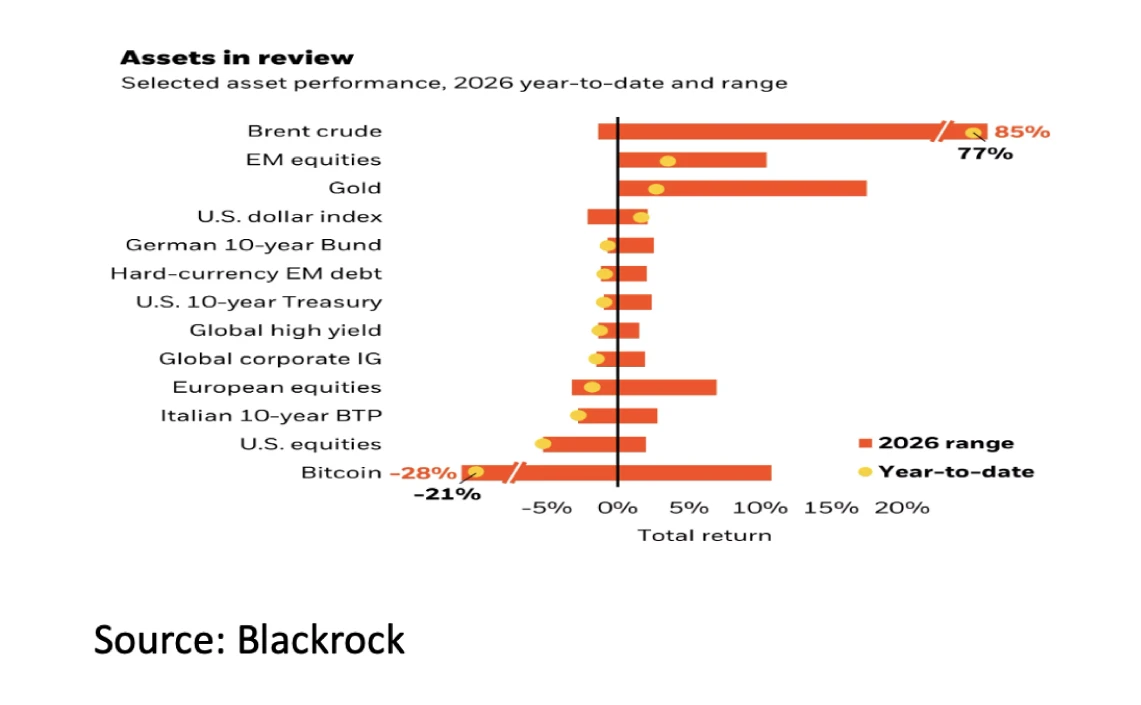
- The war in the Middle East led to a massive shift in the financial markets in March. With the exception of the oil price, the prices of equities, bonds, and gold fell.
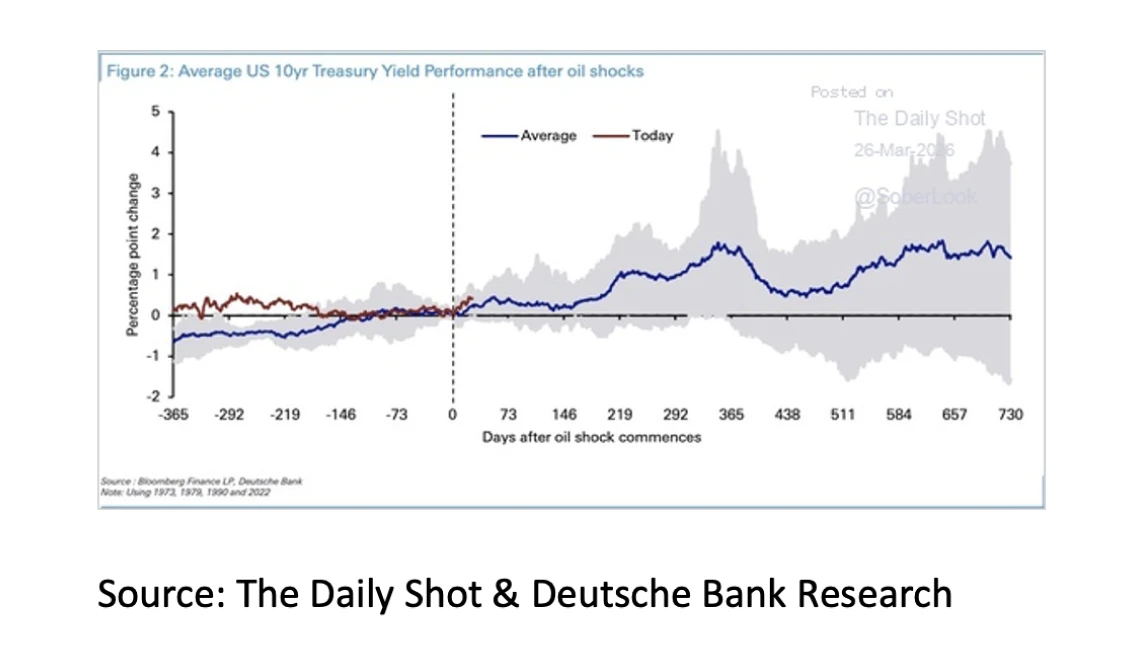
- Even though there is a lot of uncertainty surrounding the war in the Middle East, history shows, for instance, that the S&P 500 is still lower 12 months after an oil price shock, and 10-year interest rates only reach a peak after 12 months.
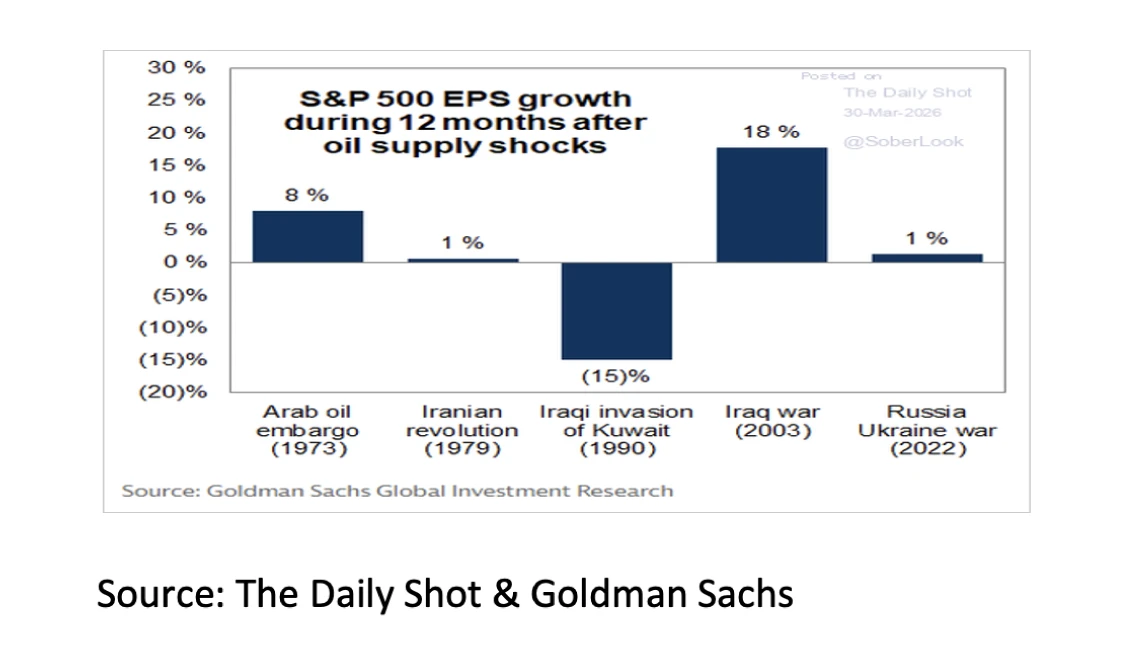
- History also shows that the profits of companies in the S&P 500 generally continued to rise, even during an oil crisis.
ECONOMY
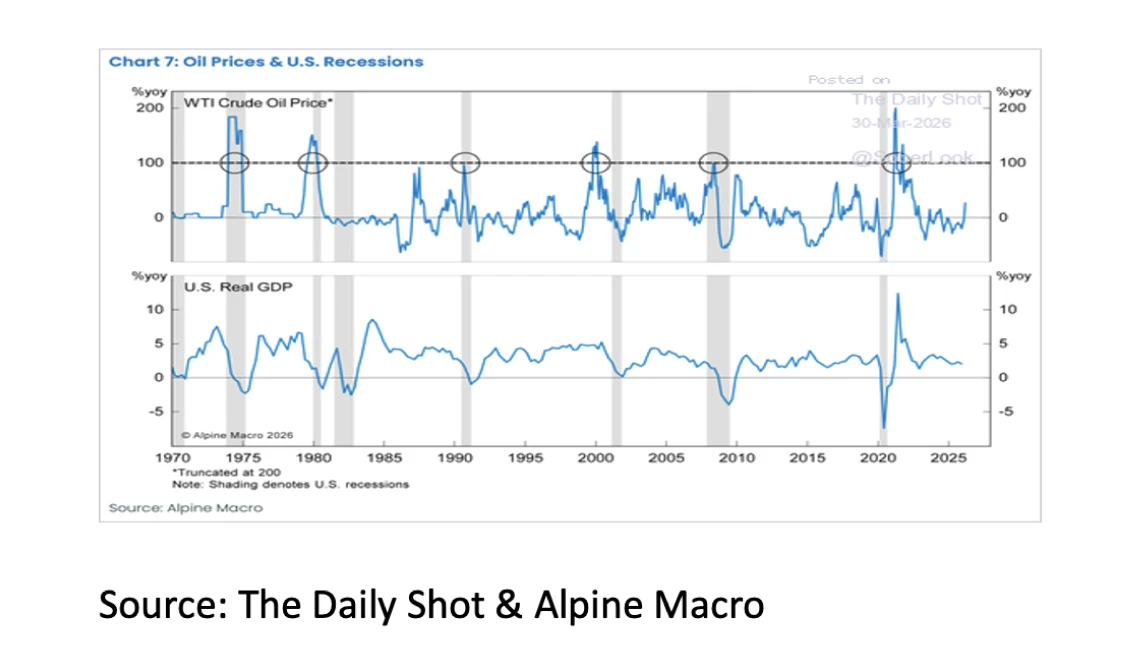
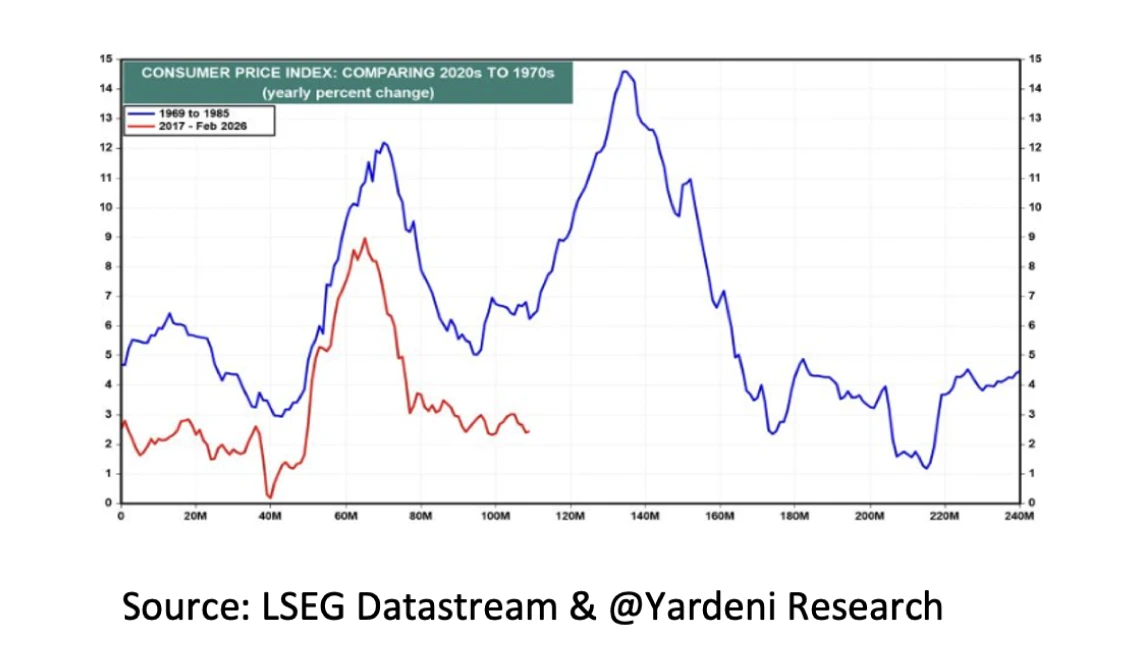
The International Energy Agency (IEA) calls the current crisis in the Middle East the worst energy shock in modern history. Yet, at $100 (March 31), the price of Brent Crude has risen less than expected so far. The oil market is still anticipating a relatively quick end to the war. The risk of a prolonged closure of the Strait of Hormuz however remains significant. In such a scenario, the oil price could reach $150 per barrel. That would almost certainly plunge the global economy into a recession and cause inflation to rise significantly. Every recession in the US since the 1970s has coincided with a doubling of oil prices. In addition, the risk of a repeat of the stagflation of the 1970s has increased considerably recently. Central banks such as the FED and the ECB decided in March to leave interest rates unchanged and face a major dilemma: should they raise interest rates quickly to tackle inflation, or lower them to prevent a recession? The chance of another “policy mistake”, like at the ECB in 2008, 2011, and 2021, is significant.
In its forecasts, the OECD still assumes a relatively short-lived conflict in the Middle East and remains optimistic about the outlook for the global economy for both 2026 and 2027H1. Following the upward revision in February, a limited downward revision followed in March. However, the OECD significantly revised its inflation forecast for the G20 upwards from 2.2% to 3.1%. In contrast to the OECD and the Bloomberg Consensus, Goldman Sachs did already significantly revise its forecast for global economic growth in 2026 downwards. However, also Goldman Sachs does not foresee a recession for the time being.
FINANCIAL MARKETS
The attack on Iran by the US and Israel in March led to a massive shift in the financial markets. With the exception of the oil price, which rose significantly, equity, bond, and gold prices fell. Although many investors hope for a swift end to the war in the Middle East and an equally rapid recovery in equity and bond prices, it remains to be seen whether this hope will materialize. First, President Trump announced in his “Speach to the Nation” on April 1 that the war will last at least another two to three weeks, and it is questionable whether the Strait of Hormuz will reopen quickly after that. Second, history shows that the S&P 500 almost always falls immediately after an oil price shock and remains lower even a year after the initial shock.
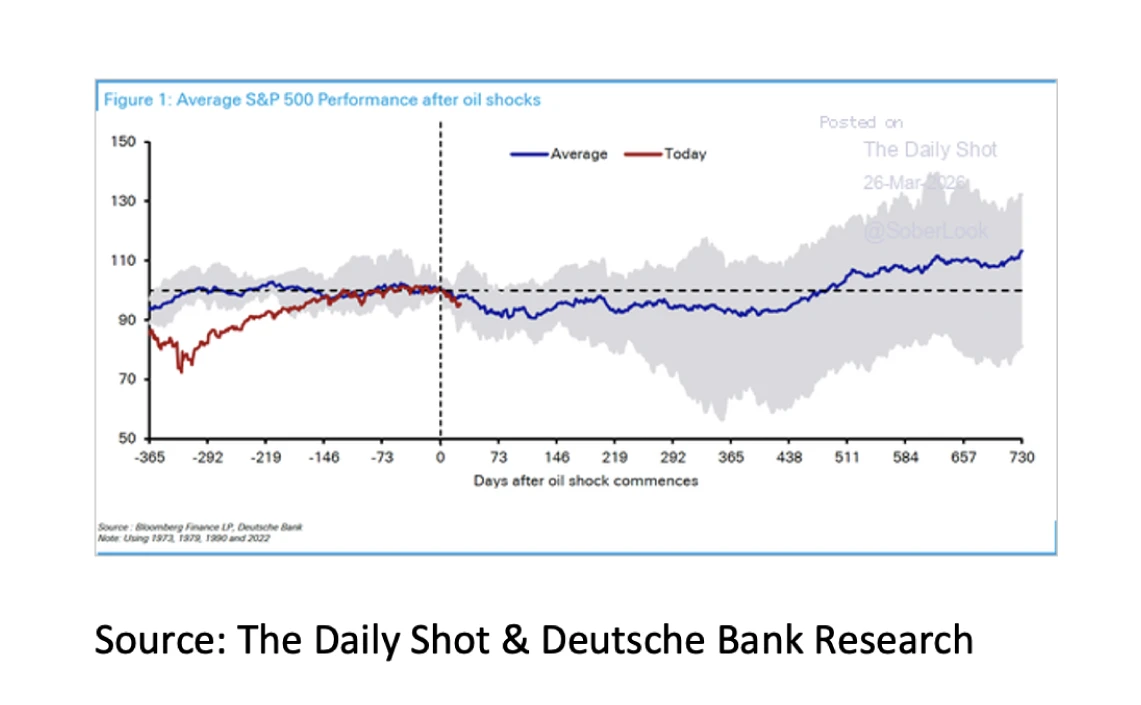
For 10-year UST, it is even the case that interest rates only factored in the rising inflation and reached a peak only a year after the initial oil price shock. There is a lot of uncertainty regarding when the war in the Middle East will end, and it also remains uncertain even after that whether the Strait of Hormuz will reopen immediately and sufficient oil will be available again. However, history shows that the profits of companies in the S&P 500 generally continued to rise, even during an “oil crisis.” The invasion of Kuwait by Iraq in 1990 was the only exception to this.
Disclaimer:
While the information contained in the document has been formulated with all due care, it is provided by for information purposes only and does not constitute a professional advice. We would encourage you to seek appropriate professional advice before considering a transaction as described in this document. No liability is accepted whatsoever for any direct or consequential loss arising from the use of this document.