

SPEED READ
- Partly due to rising energy prices, inflation remained persistently high in the US (3.4%), the EU (3.2%), and the UK (3.1%).
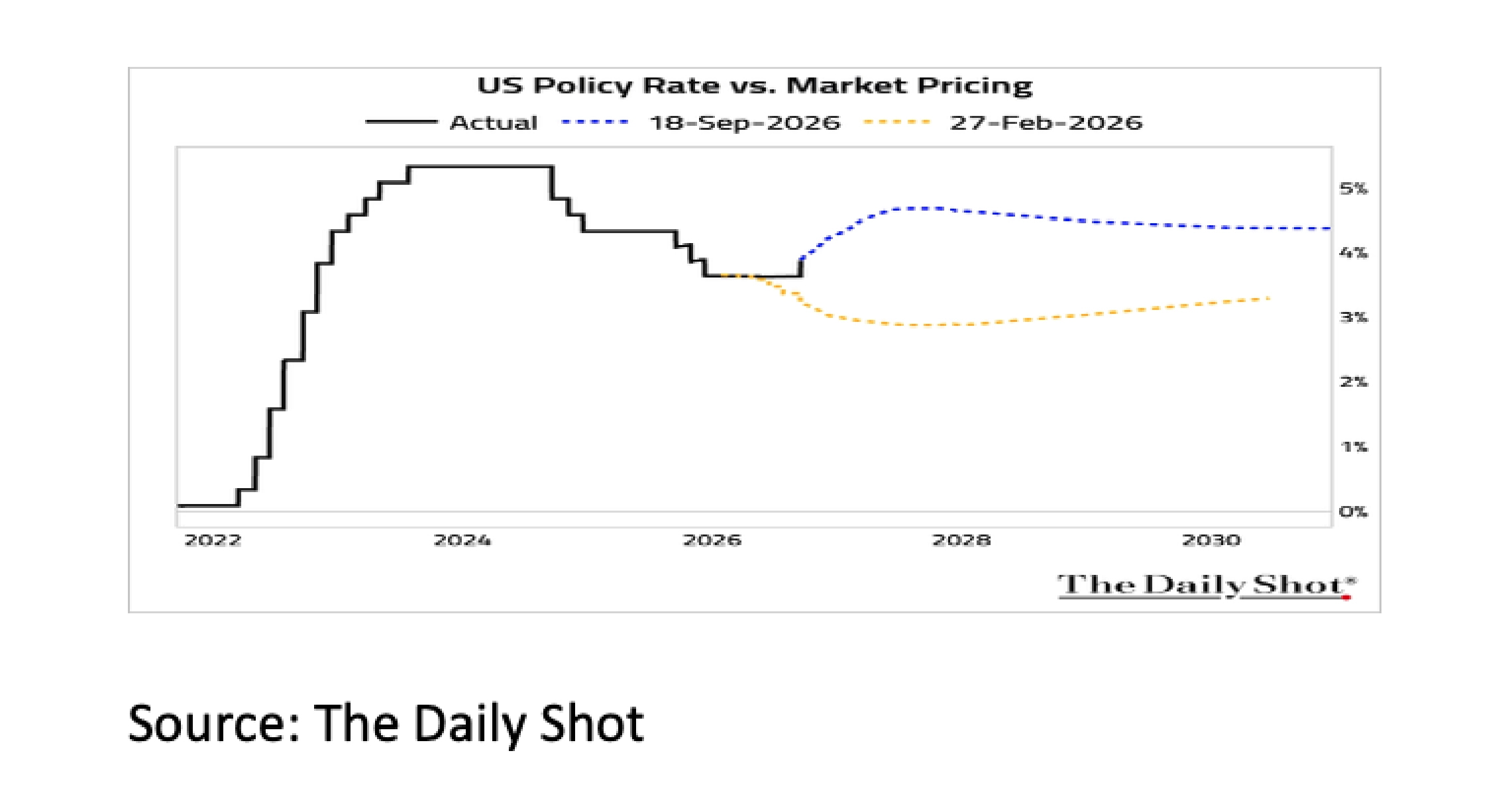
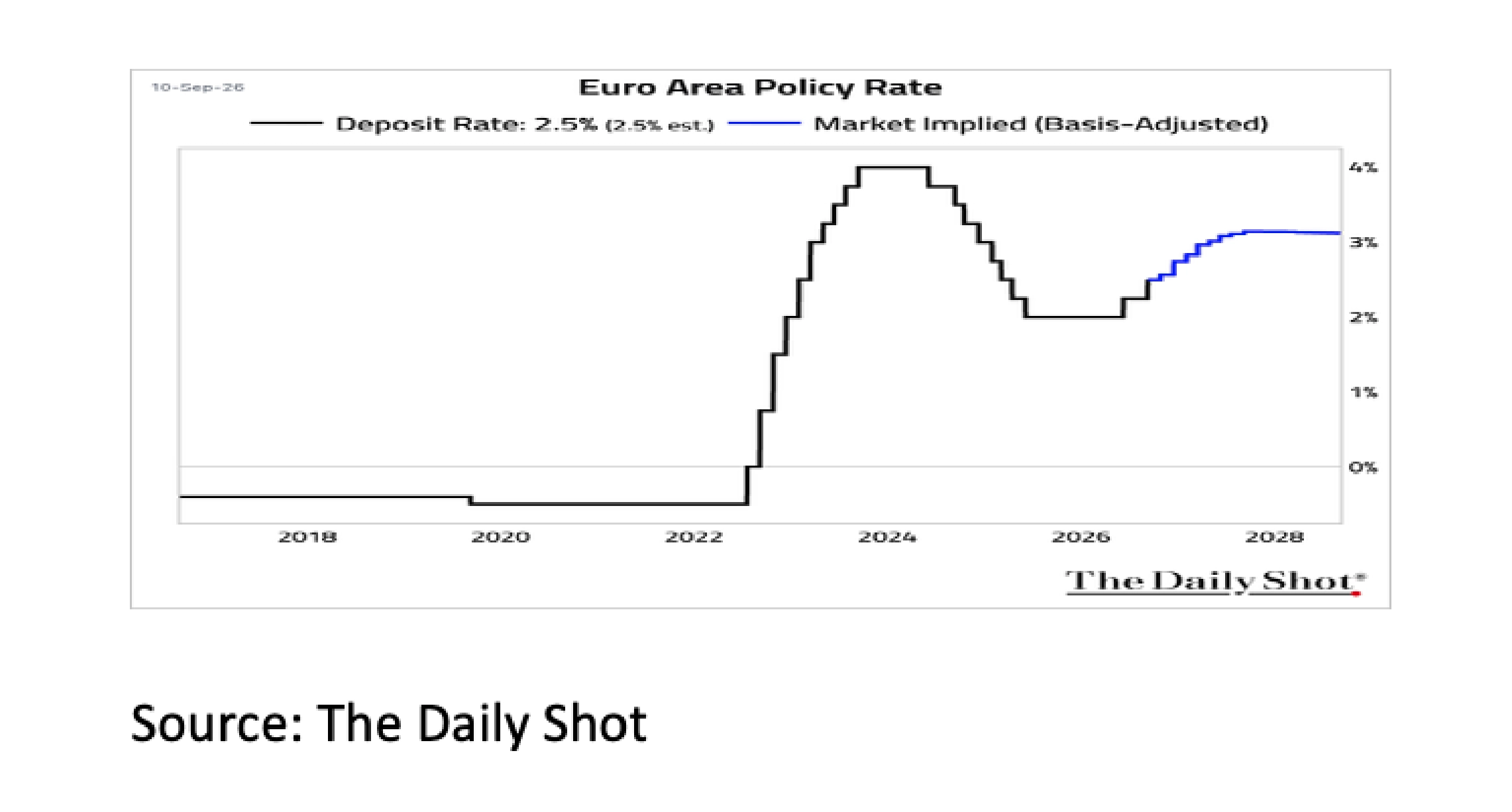
- While the Fed (4.0%), the ECB (2.5%), and the BoJ (1.25%) all raised interest rates by 0.25% in September, the BoE (3.75%) left rates unchanged.
- Financial markets expect central banks to raise interest rates further in the coming months.
- The expected economic growth in the US is +2.1% in both 2026 and 2027. The Eurozone pales in comparison in 2026 (+0.8%) and 2027 (+1.2%).
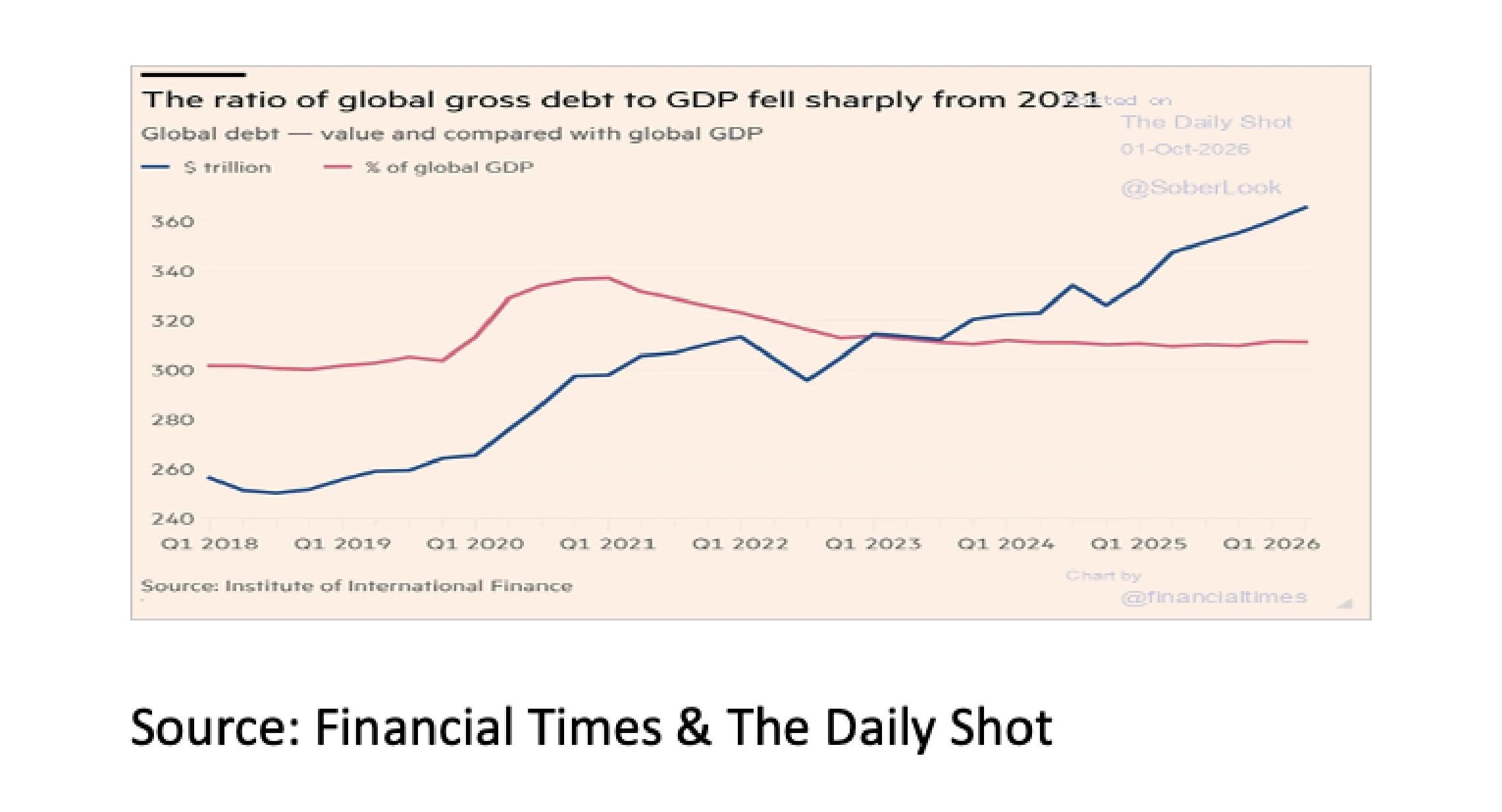
- Economists and financial markets are concerned about the sustainability of excessive (government) debt. However, if we look at debt as a percentage of the global economy (debt-to-GDP), we see that it has fallen significantly since 2021.
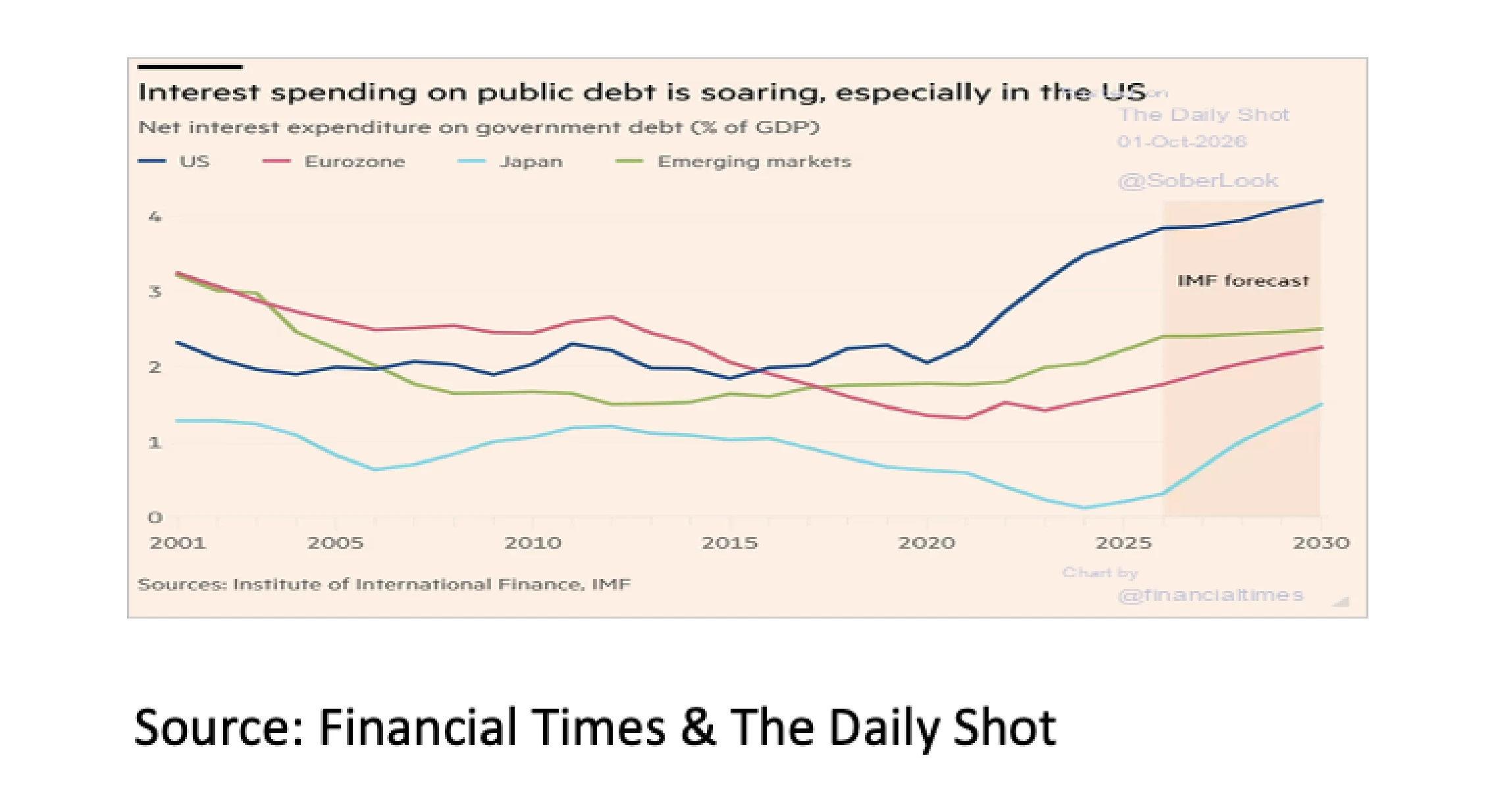
- The problem, therefore, is not so much the level of debt, but the rise in interest rates. The latter appears to be a problem primarily for the US.
- Within the Eurozone, on the other hand, France increasingly appears to be becoming a problem. Financial markets seem poised to test Eurozone solidarity once again.
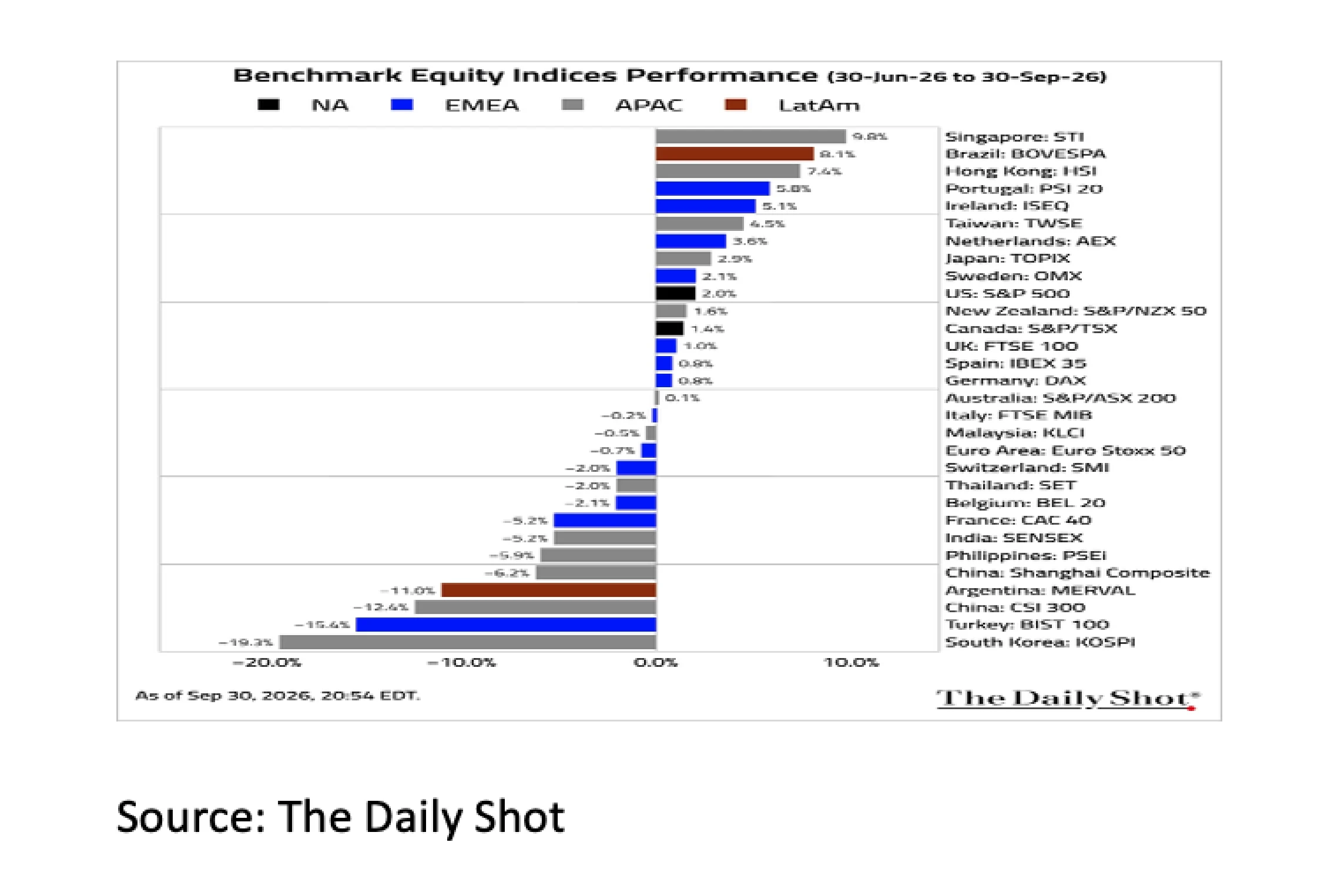
- The third quarter of 2026, saw a very mixed picture in the stock markets; the divergence between Singapore (+9.8%) and South Korea (-19.3%) was particularly striking.
- Investors have recently been concerned about rising interest rates. A key question here is: why are rates rising? This appears to be primarily the result of strong economic growth and investment demand—factors that can perfectly well go hand in hand with higher equity prices.
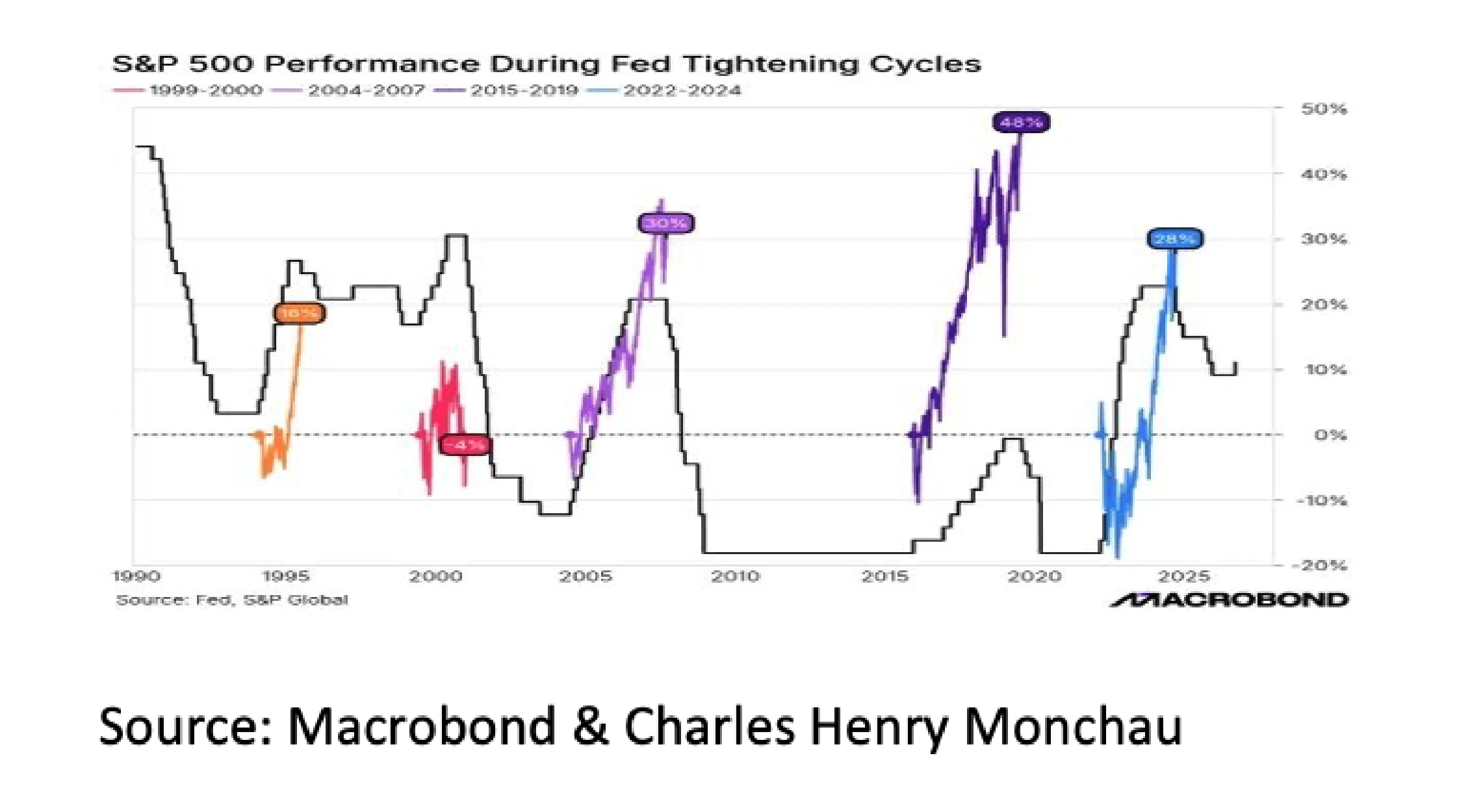
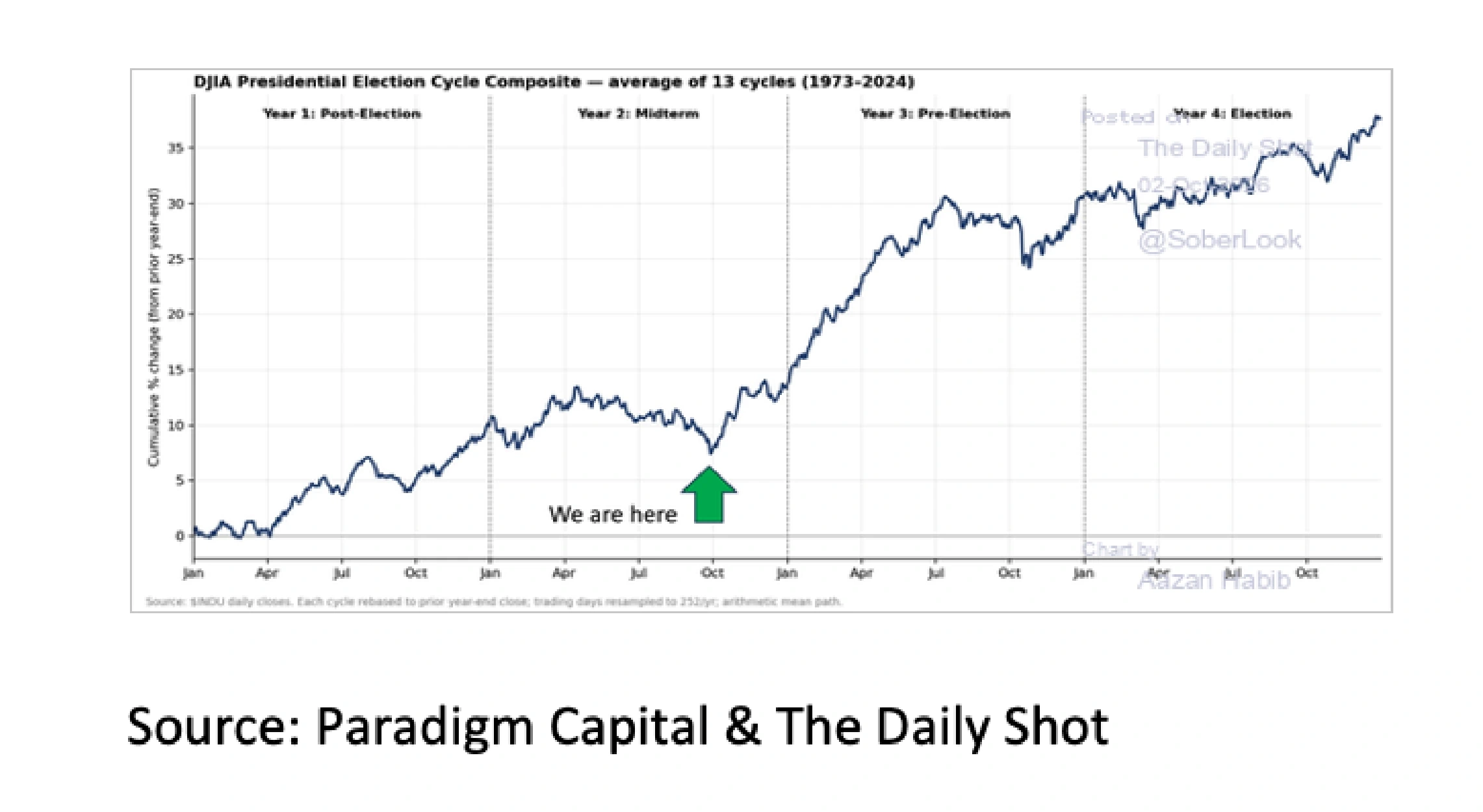
- Interest rate hikes by the Fed and the US midterm elections are generally accompanied by higher equity prices.
ECONOMY
Driven in part by a further rise in energy prices during the third quarter of 2026, inflation remained persistently (and excessively) high in the US (3.4%), the EU (3.2%), and the UK (3.1%). While the Fed (4.0%), the ECB (2.5%), and the BoJ (1.25%) all raised interest rates by 0.25% in September, the BoE (3.75%) left rates unchanged. Financial markets anticipate further rate hikes by central banks in the coming months. Remarkably, despite geopolitical turmoil, high energy prices, and central bank rate hikes, the economic outlook remains undeniably positive. The Atlanta Fed even projects annualized economic growth of 3.7% for the US in the third quarter of 2026, with the consensus forecasting growth of 2.1% for the US in both 2026 and 2027. In stark contrast, the outlook for the Eurozone is considerably weaker, with projected growth of 0.8% in 2026 and 1.2% in 2027.
Even more than concerns regarding the (geo)political situation and high energy prices, economists and financial markets have recently been worried about the sustainability of excessive (government) debt. In terms of absolute figures, global debt has continued to rise unabated since 2018. However, when looking at debt as a percentage of the global economy (debt-to-GDP), we see a significant decline since 2021, driven by economic growth and high inflation. The problem, therefore, appears to lie not so much in the level of debt itself, but rather in steadily rising interest rates. This latter issue seems to be becoming an increasingly significant problem for the US in particular, though it applies to a far lesser extent to the Eurozone and Japan. That said, within the Eurozone, concerns regarding France’s government debt and budget deficit are beginning to emerge as a problem; financial markets appear poised to test Eurozone solidarity once again.
FINANCIAL MARKETS
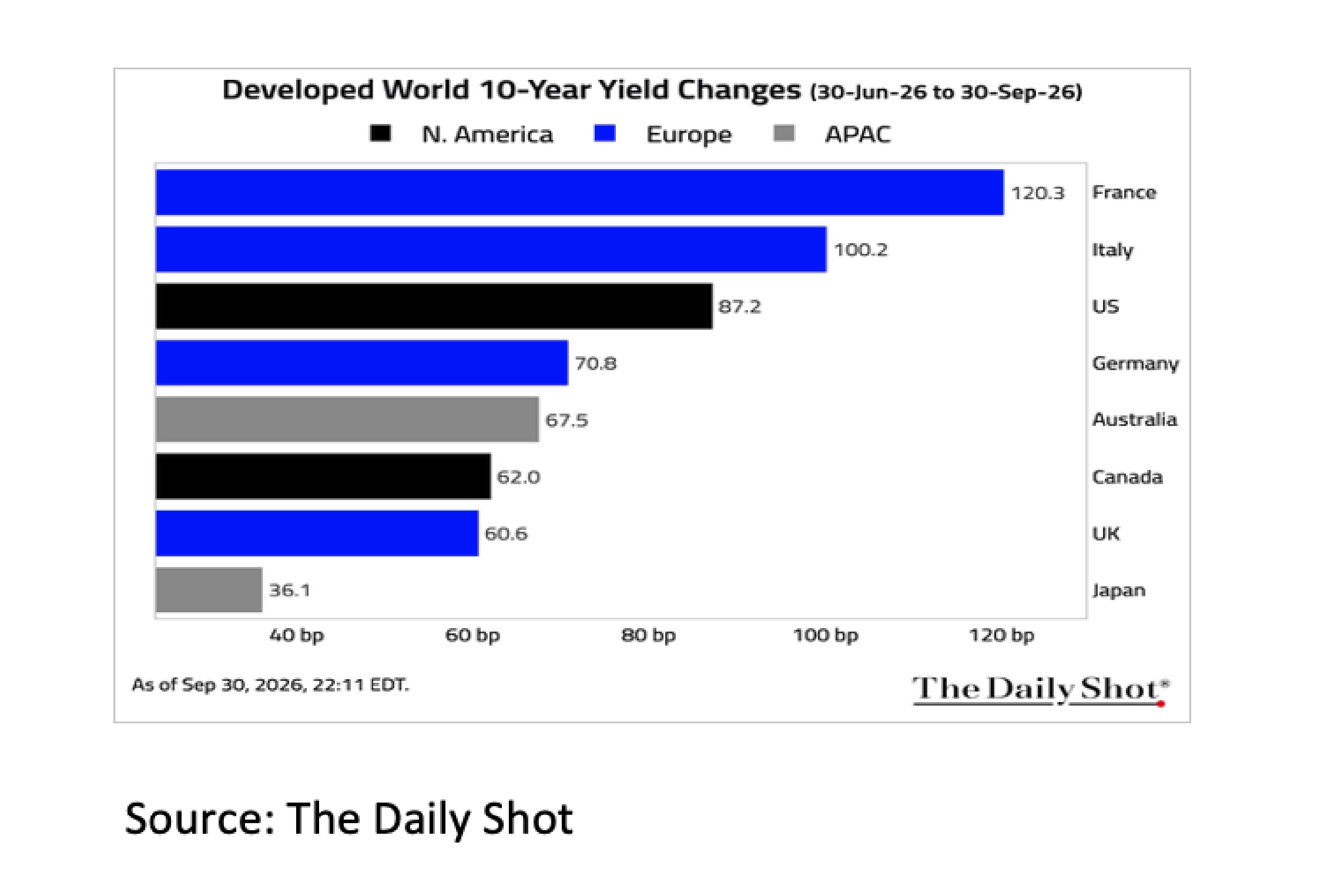
In the third quarter of 2026, equity markets presented a highly mixed picture; the divergence between Singapore (+9.8%) and South Korea (-19.3%) was particularly striking. Furthermore, there was a notable contrast in the US: the stock market—represented by the S&P 500—posted gains (+2.0%), whereas the bond market saw significant price declines with the 10-year US Treasury yield rising by 87.2 basis points. Additionally, the disparity in price performance between WTI crude oil (+35.8%) and natural gas (-13.6%) in the US was remarkable. Recently, investors have become increasingly concerned about rising interest rates. What impact will a yield of 5% or higher on US Treasuries have on the economy and equity markets? However, higher interest rates do not automatically spell bad news.
The key question is: why are interest rates rising? Higher real interest rates driven by rising inflation and/or widening budget deficits are usually bad news for equities; however, when driven by strong economic growth and investment demand, they can perfectly well coincide with rising equity markets. Currently, the latter scenario appears to be the primary driver. That said, with interest rates at 5% or higher, portfolio selection becomes increasingly important. Companies with solid earnings growth and healthy balance sheets are more capable of absorbing higher financing costs. It therefore seems premature to turn bearish on equities—especially given that history shows equities generally rise during periods when the Fed is hiking rates (the dot-com crisis being the sole exception). Furthermore, from a historical perspective, the current stage of the midterm election cycle is a favorable time for equity investors.
Disclaimer:
While the information contained in the document has been formulated with all due care, it is provided by for information purposes only and does not constitute a professional advice. We would encourage you to seek appropriate professional advice before considering a transaction as described in this document. No liability is accepted whatsoever for any direct or consequential loss arising from the use of this document.