

SPEED READ
- July was a month in which “The Strait of Hormuz” was open one moment and closed the next, and in which President Trump alternately announced an attack on Iran and then spoke about negotiations.
- In which economic growth in 2026Q2 in both the EU (+0.4% qoq) and the US (+0.4% qoq) did not disappoint, inflation in the EU (+2.9%) and the US (+3.5%) remained high and both the FED (3.75%) and the ECB (2.25%) left interest rates unchanged.
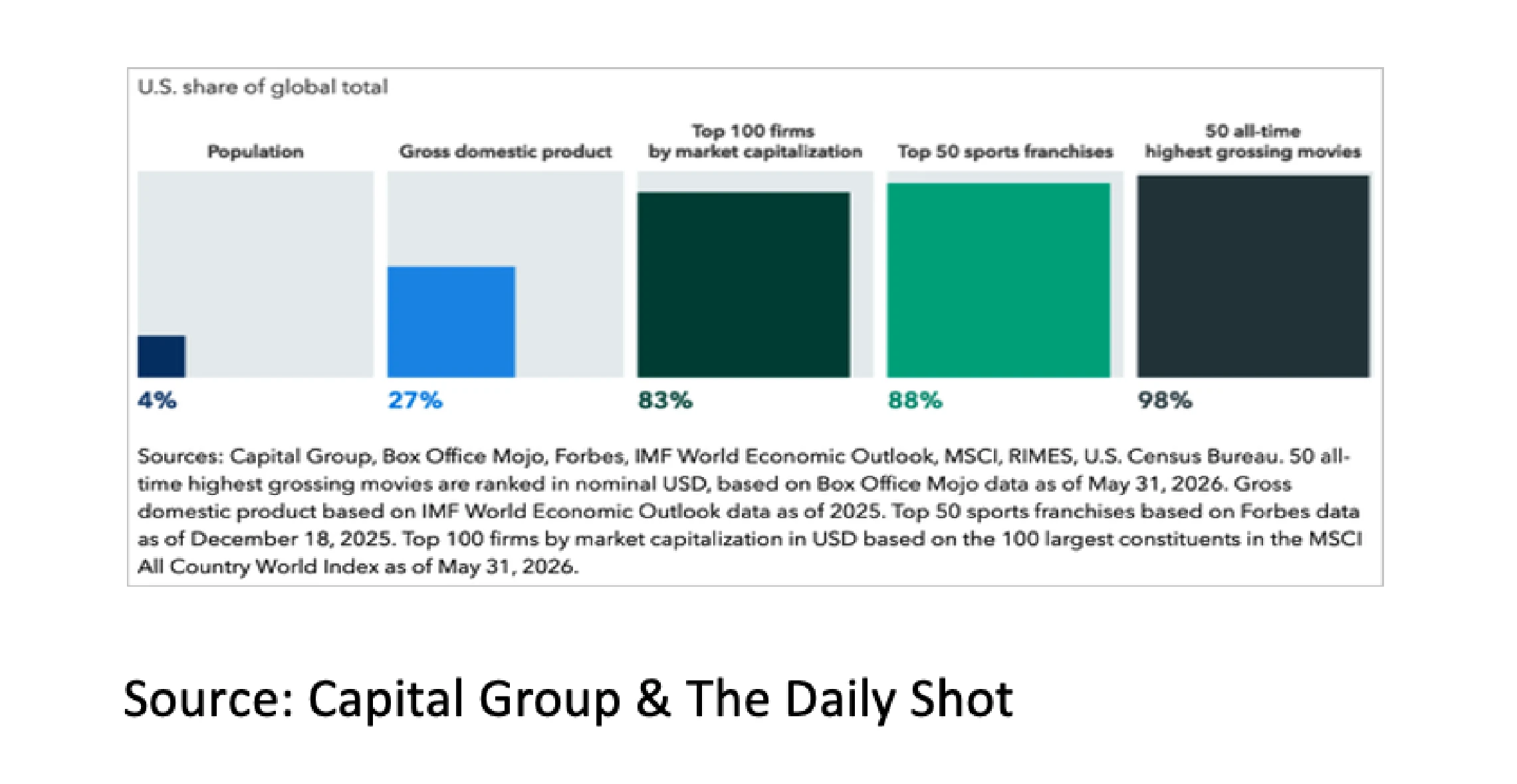
- July was also the month in which the US celebrated its 250th anniversary. A country where 4% of the world’s population lives, that accounts for 27% of the global economy, and where 83% of the top 100 companies by market capitalization, 88% of the top 50 most valuable sports teams, and 98% of the most successful movies originate.
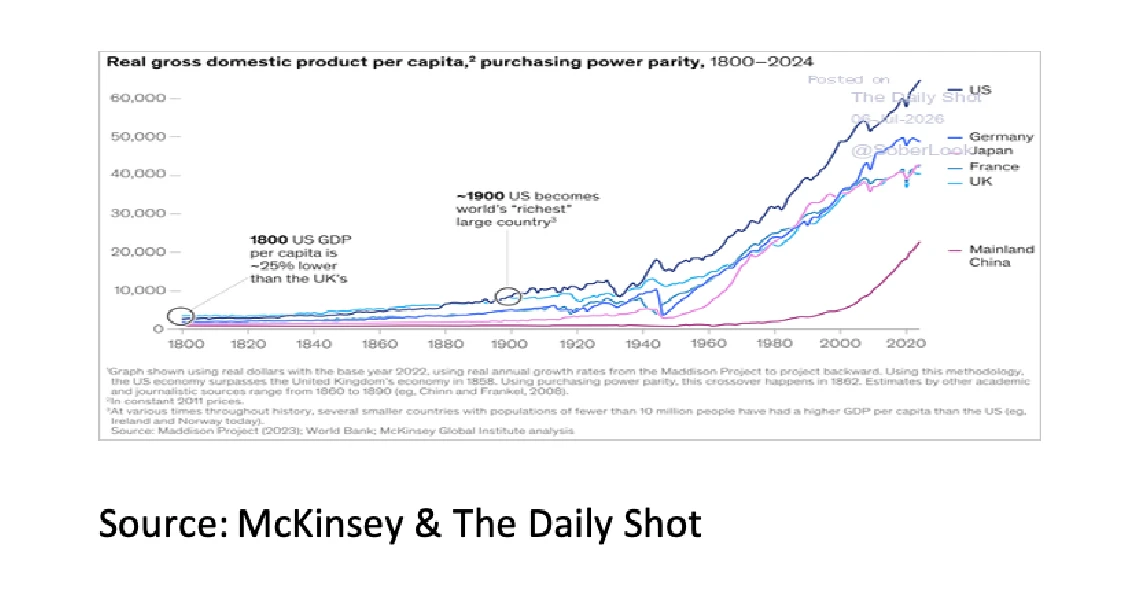
- With this, the US leaves all other major countries far behind. However, US hegemony has been declining for quite some time. For instance, the US economy accounted for 45% of the global economy in the early 1950s, whereas now it is “only” 27%.
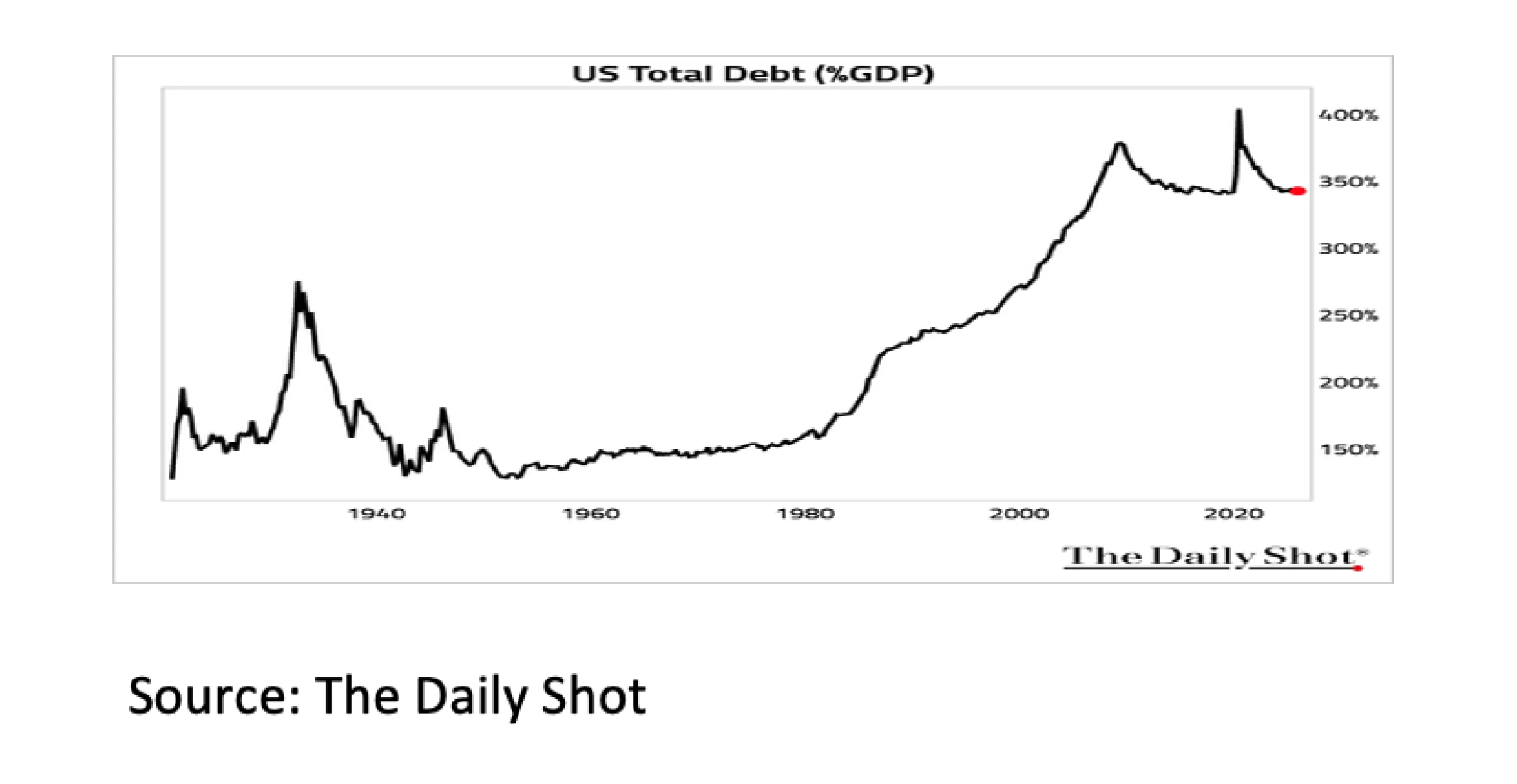
- Moreover, US growth over the last 45 years has been accompanied by an enormous increase in the debt-to-GDP ratio, particularly in the government sector in recent years. Policymakers in the US have virtually no other option than to accept structurally higher inflation.
- In July, the net return (in USD) on the DAX (+2.5%) and the FTSE 100 (+3.5%) was better than on the S&P 500 (-0.1%). 10-year interest rates rose in the US (+32bp), Germany (+28.5bp), and the UK (+27bp). The price of oil (WTI +23%) rose significantly, while the price of gold (+0.6%) stabilized.
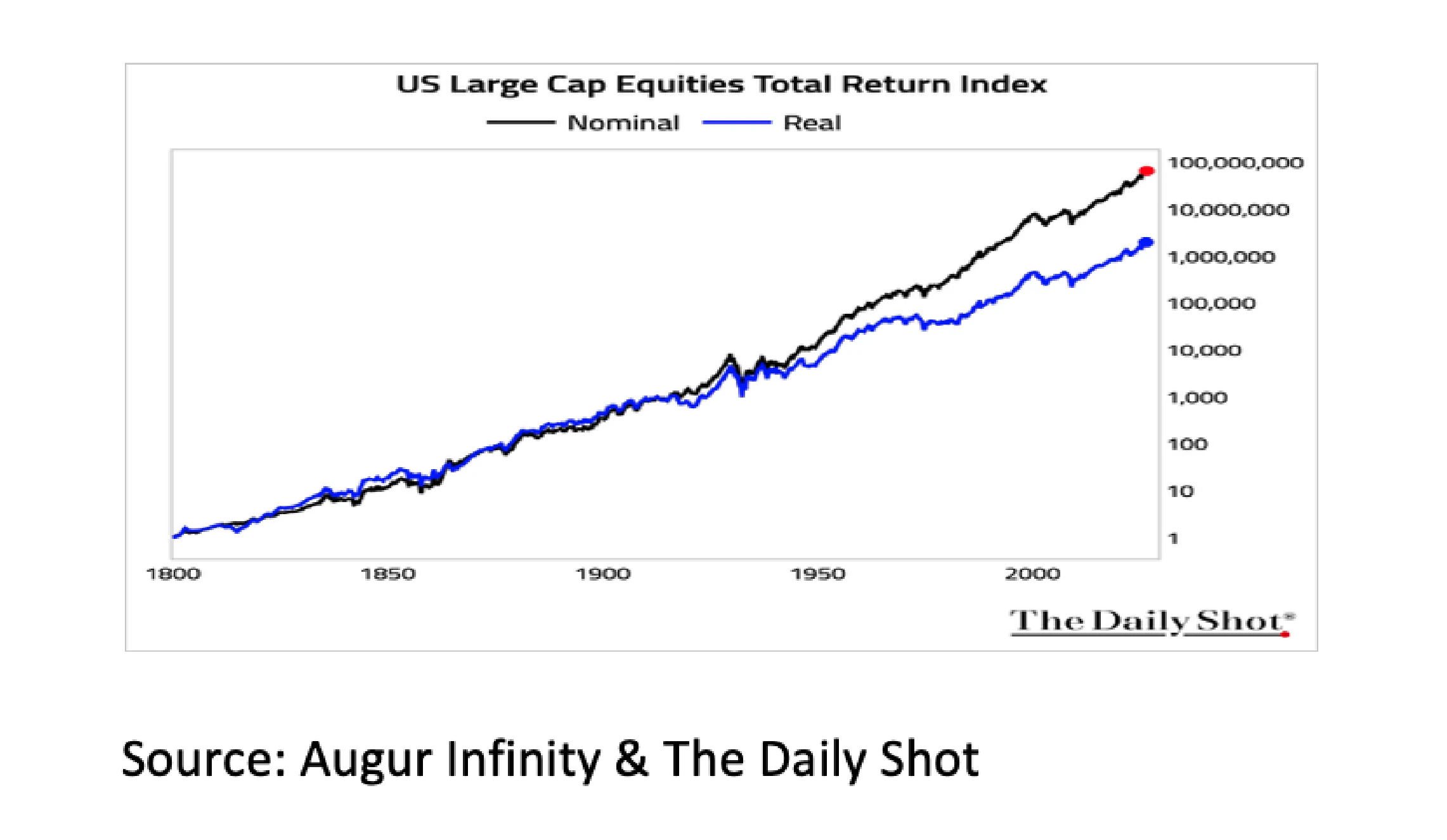
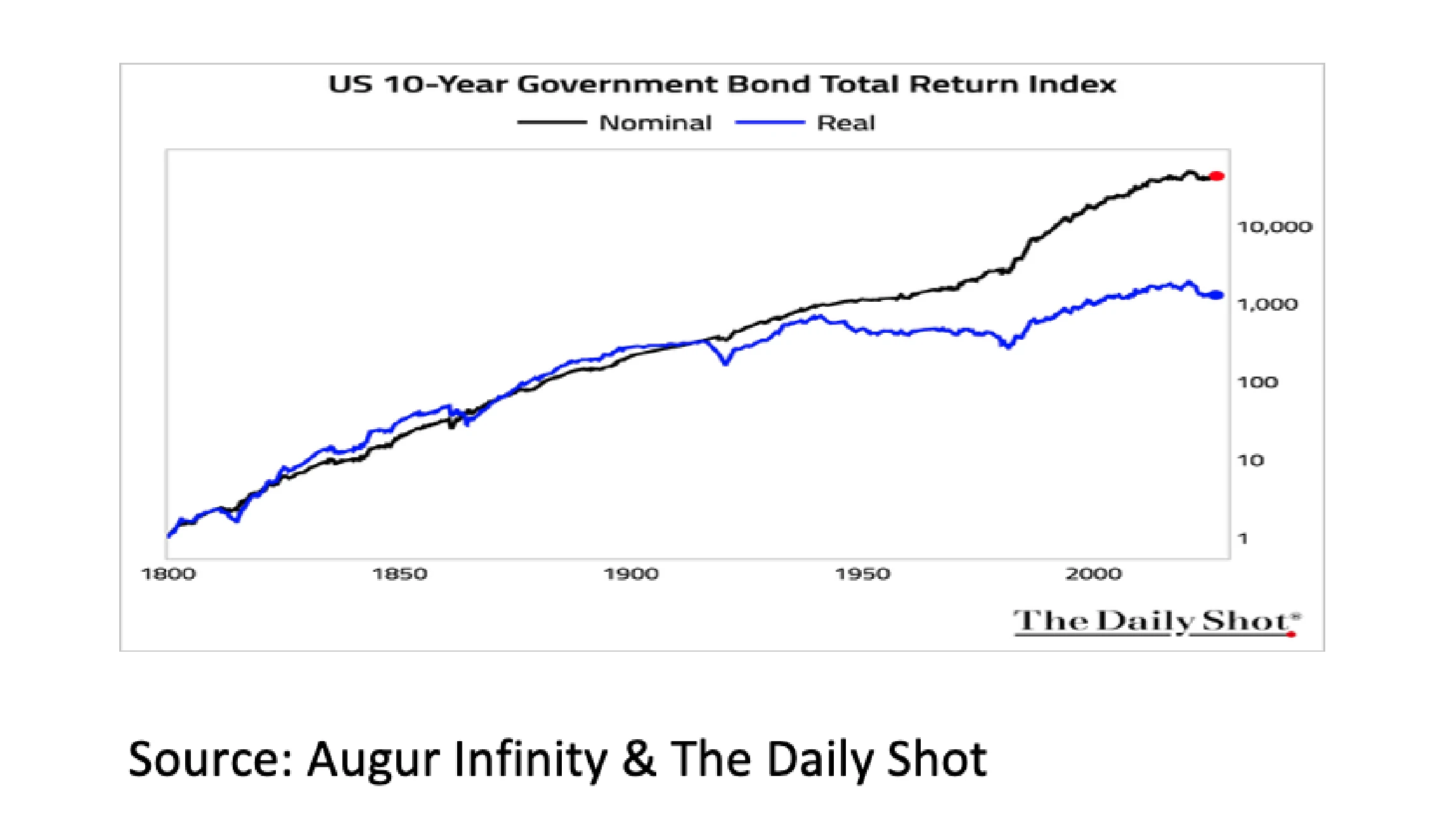
- If we also look back at the 250th anniversary of the US-financial markets, we see that the compound annual return on equities was +8.3% and on bonds +4.8% (UST10). Adjusted for inflation (1.6%), these figures were +6.6% and +3.2%, respectively.
ECONOMY
July was a month in which “The Strait of Hormuz” was alternately open and closed. A month in which President Trump alternately announced an attack on Iran and then spoke of negotiations. A month in which economic growth in 2026Q2 in both the EU (+0.4% qoq) and the US (+0.4% qoq) did not disappoint. A month in which inflation remained high in both the EU (+2.9%) and the US (+3.5%), and in which both the FED (3.75%) and the ECB (2.25%) left interest rates unchanged. However, July was also the month in which the US celebrated its 250th anniversary. A fitting moment to take a closer look at the US. 4% of the world’s population lives in the US. The US economy, on the other hand, accounts for 27% of the global economy and has grown more than 4,000 times larger in those 250 years, an average annual growth of +3.6%. In the top 100 companies by market capitalization, 83% are from the US. In the top 50 most valuable sports teams, 88% are from the US, and of the most successful movies, 98% are from the US.
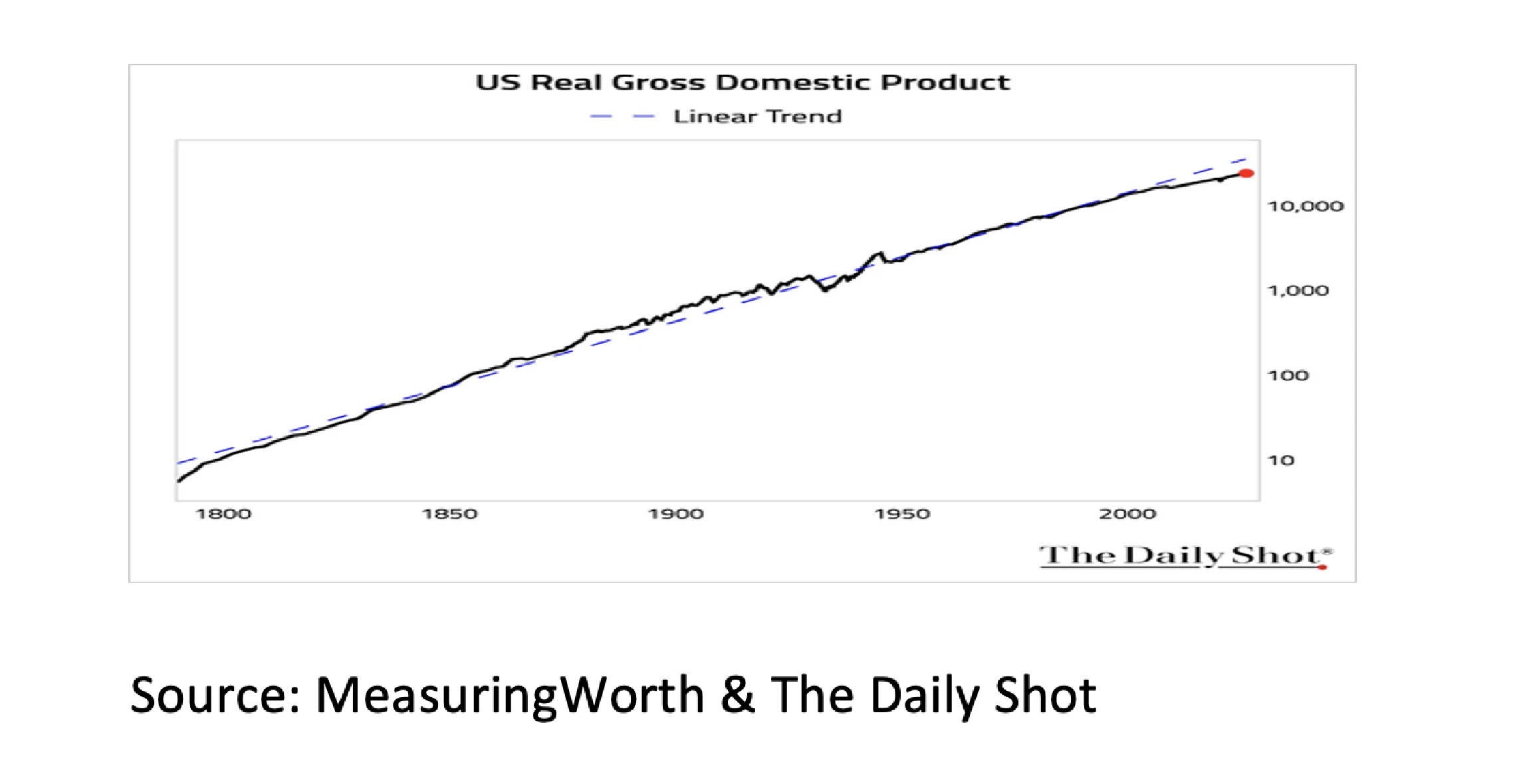
With this, the US leaves all other major countries far behind. However, US hegemony has been declining for quite some time. For instance, the US economy accounted for 45% of the global economy in the early 1950s, whereas now it is “only” 27%. Furthermore, US growth over the last 45 years has increasingly been accompanied by a massive rise in the Debt-to-GDP ratio, particularly in the government sector in recent years. One way or another, something will therefore have to happen. Ultimately, there are five solutions: debt reduction, accepting bankruptcy, extremely low-interest rates, higher economic growth, or inflation. Historically, governments never pay off their debts, they try to avoid their own bankruptcy at all costs, the era of 0% interest rates is long behind us, and economic growth is structurally too low. Consequently, policymakers in the US have virtually no other option than to accept structurally higher inflation.
FINANCIAL MARKETS
For investors, the month of July was above all a volatile one, in which prices were significantly influenced by announcements from President Trump, in which he alternately announced new bombings against and peace negotiations with Iran. On balance, the return (in USD) in Germany (DAX +2.5%) and the UK (FTSE 100 +3.5%) was better than in the US (S&P 500 -0.1%). The 10-year interest rate rose in the US (+32bp), Germany (+28.5bp), and the UK (+27bp). The price of oil (WTI +23%) rose significantly, while the price of gold (+0.6%) stabilized. Looking back at the 250th anniversary of the US-financial markets, we see that the compound annual return on equities was +8.3% and on bonds (UST10) +4.8%. Adjusted for inflation (1.6%), these figures were +6.6% and +3.2%, respectively.
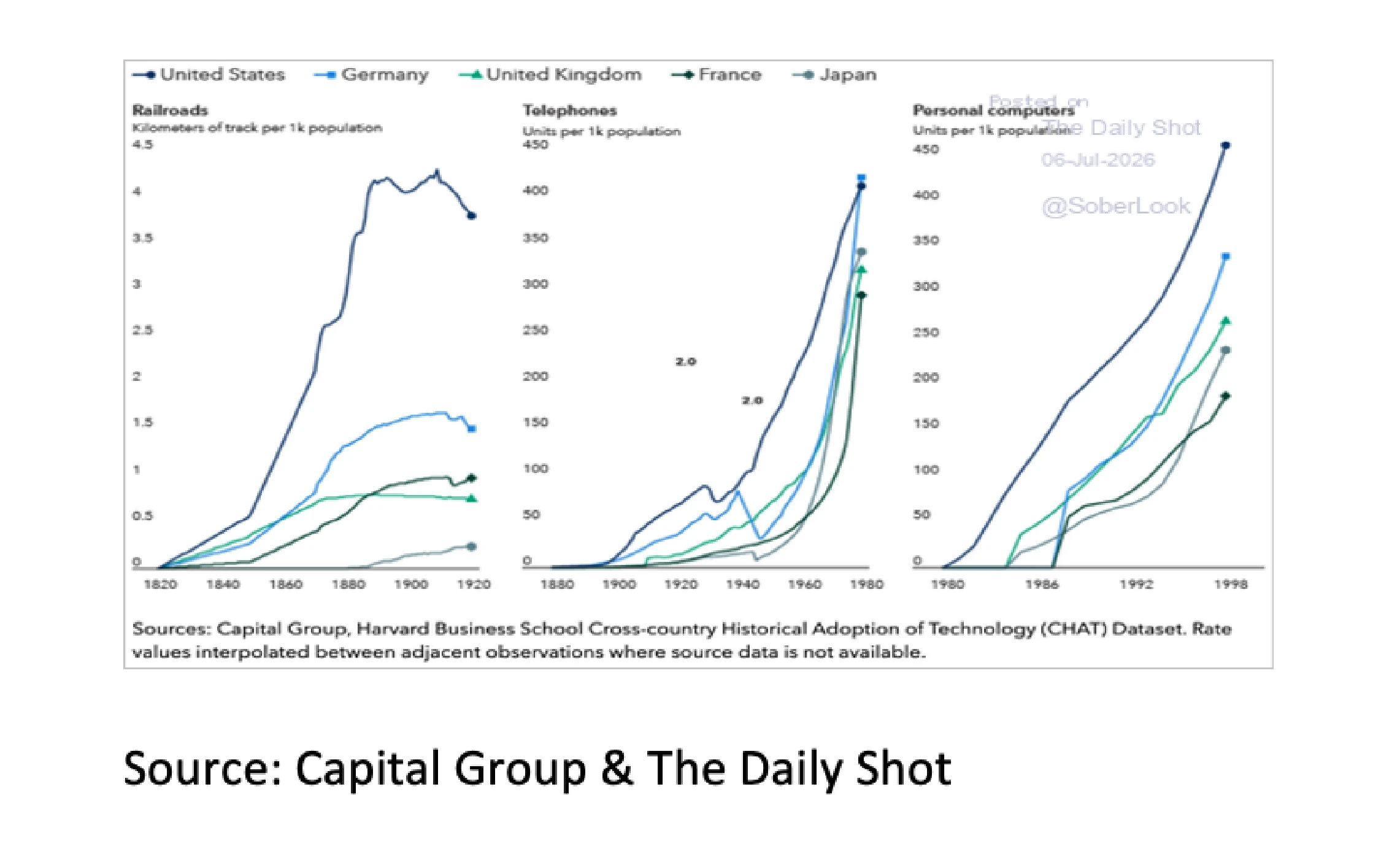
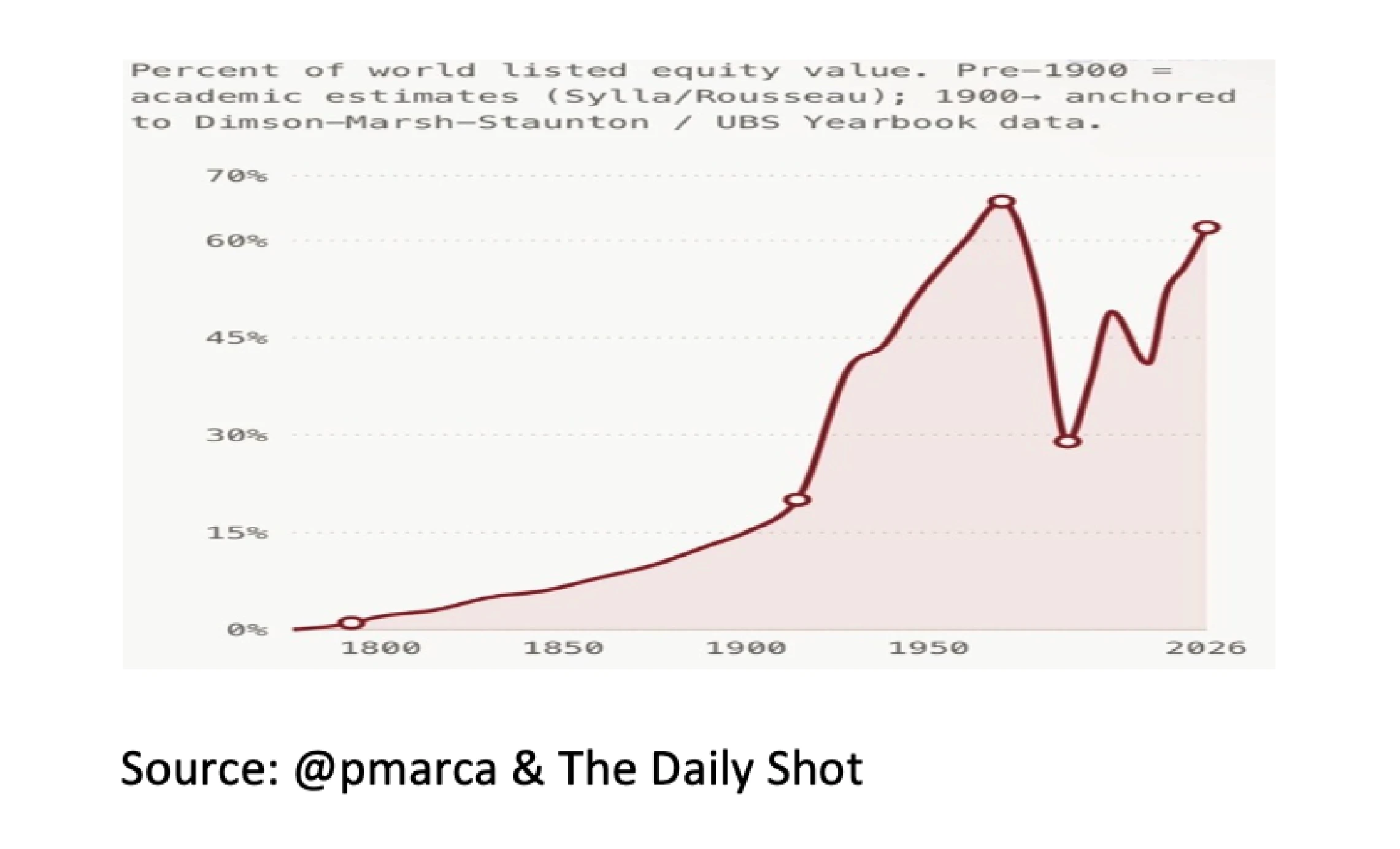
Since the beginning of the 18th century, the US has been regarded as one of the “early adopters” of new technology. This was already the case during the construction of railways, the rise of the telephone, the introduction of the PC and the internet, but it is true again now with investments in Artificial Intelligence (AI). If we look at spending on Research & Development (R&D), it is currently almost as high in the US as in China, the EU, the UK, Japan, and South Korea combined. It is therefore not without reason that US-stockmarkets account for over 60% of global equity market capitalization. After a decline to 30% in the late 1980s during the asset bubble in Japan, US equity market capitalization has nearly returned to its 66% weighting from the mid-1970s.
Disclaimer:
While the information contained in the document has been formulated with all due care, it is provided by for information purposes only and does not constitute a professional advice. We would encourage you to seek appropriate professional advice before considering a transaction as described in this document. No liability is accepted whatsoever for any direct or consequential loss arising from the use of this document.