

SPEED READ
- While economic growth in the Eurozone (+1.2%) in Q3 2026 did not disappoint, growth in the US (+3.4%) once again exceeded expectations.
- On the other hand, inflation in the Eurozone (+3.8%) and the US (+3.7%) proved disappointing once again.
- Nevertheless, both the ECB (2.5%) and the FED (4.0%) left their policy interest rates unchanged in October.
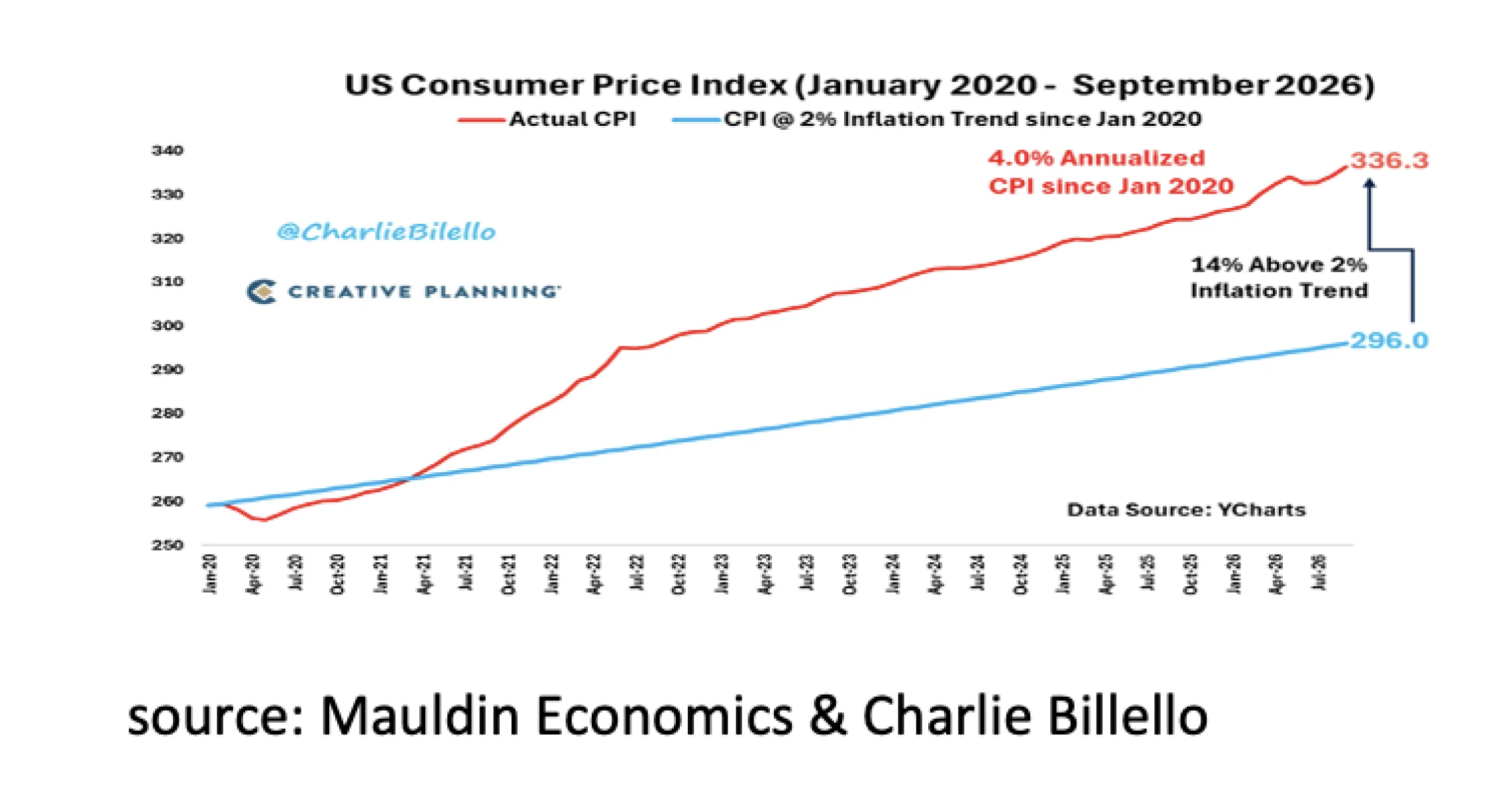
- Since January 2020, inflation in the US and the Eurozone has been at +4.0% and +3.8% annualized, respectively—well above the +2% inflation target.
- Nevertheless, both the FED and ECB are expected to raise interest rates only one or two more times in 2026/27.
- High inflation and declining household purchasing power have recently been leading to increasing social unrest, particularly in France.
- However, the likelihood of a new euro crisis appears small, as the ECB possesses the tools—namely OMT and TPI—to prevent it.
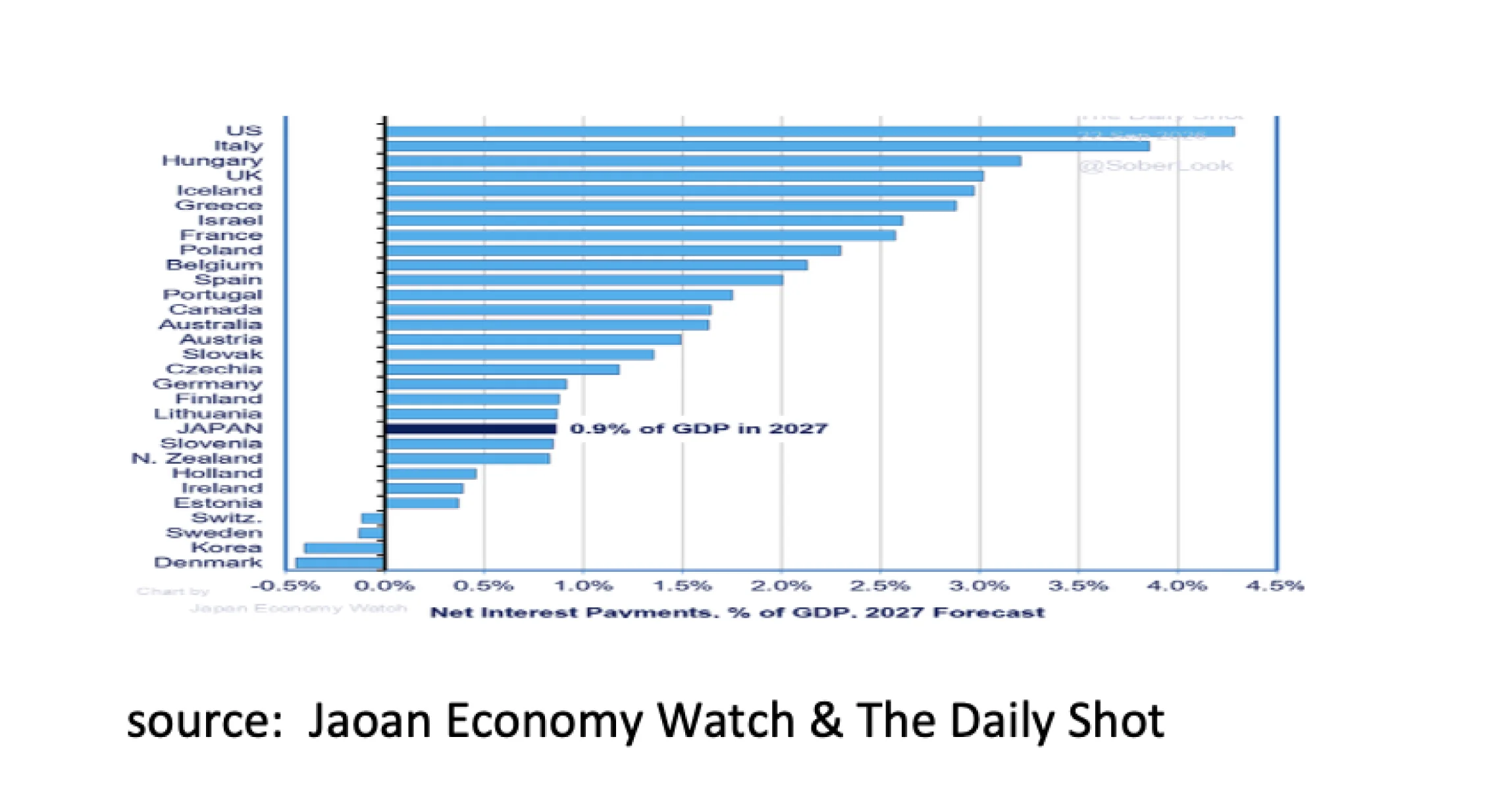
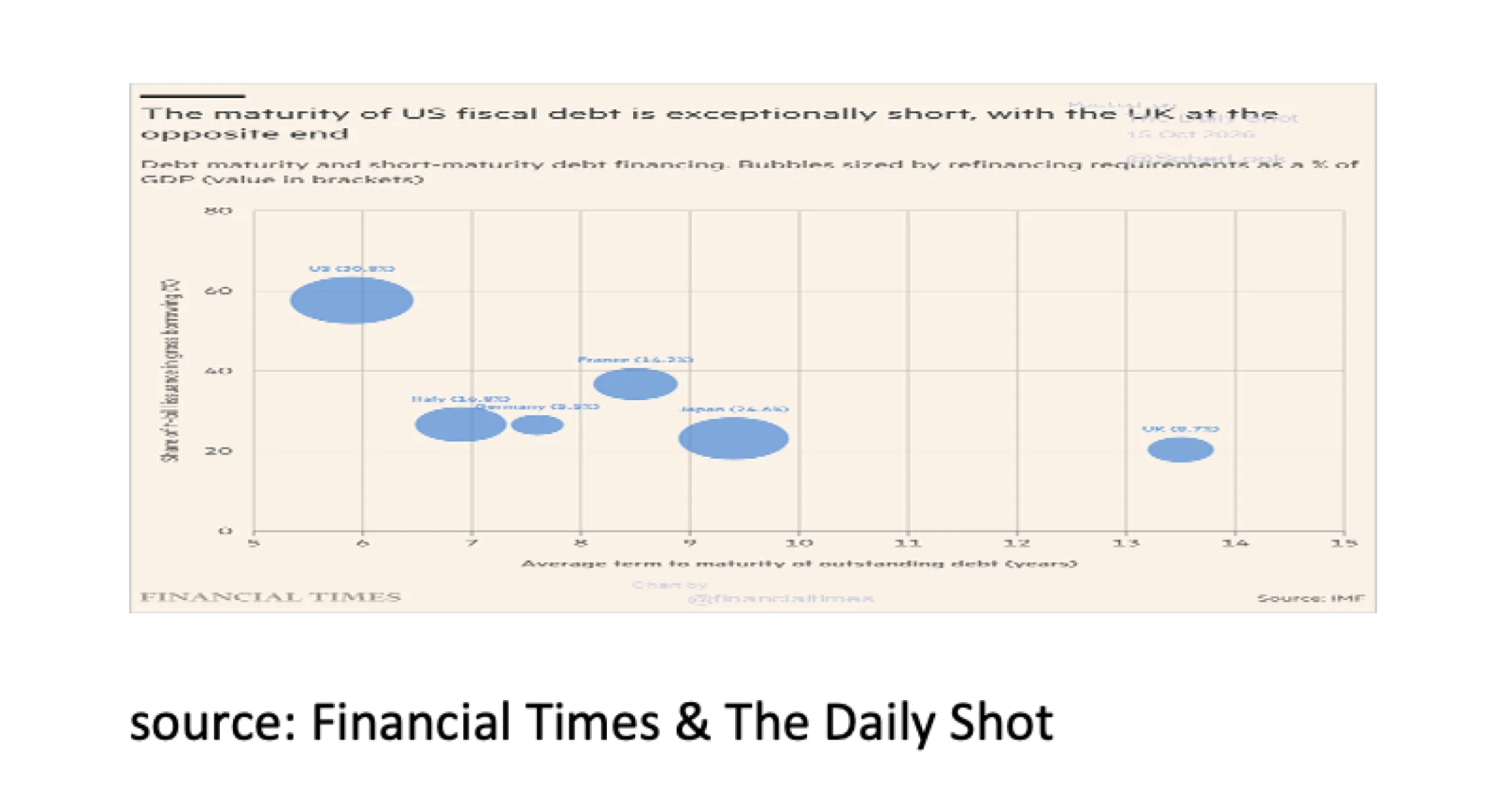
- Moreover, both the budget deficit and the national debt in the US are even higher than in France, as are the interest costs. In addition, nowhere is the national debt financed with such short-term maturities as in the US.
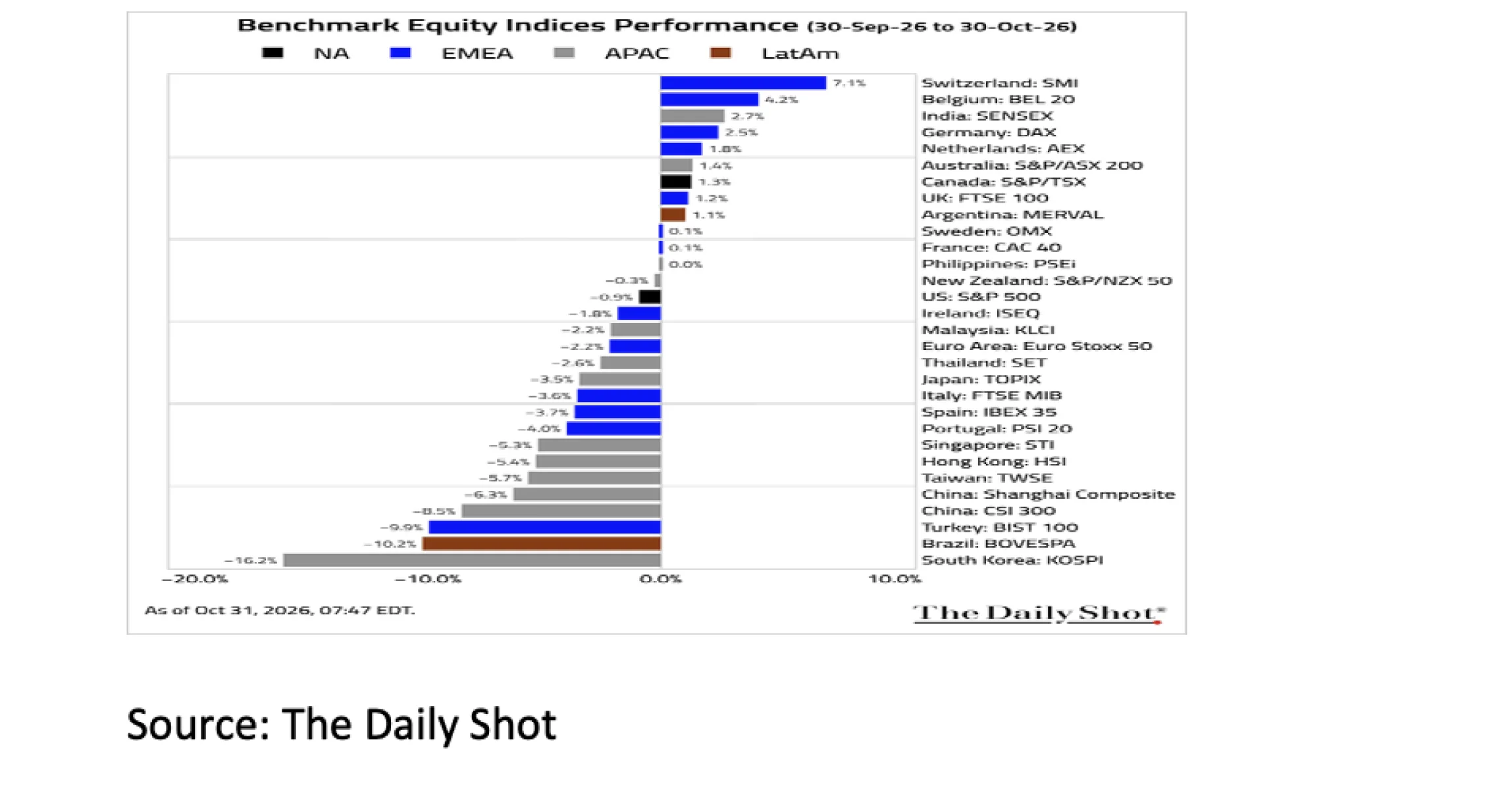
- October presented a mixed picture for equities; the divergence between Switzerland (+7.1%) and South Korea (-16.2%), in particular, was notable.
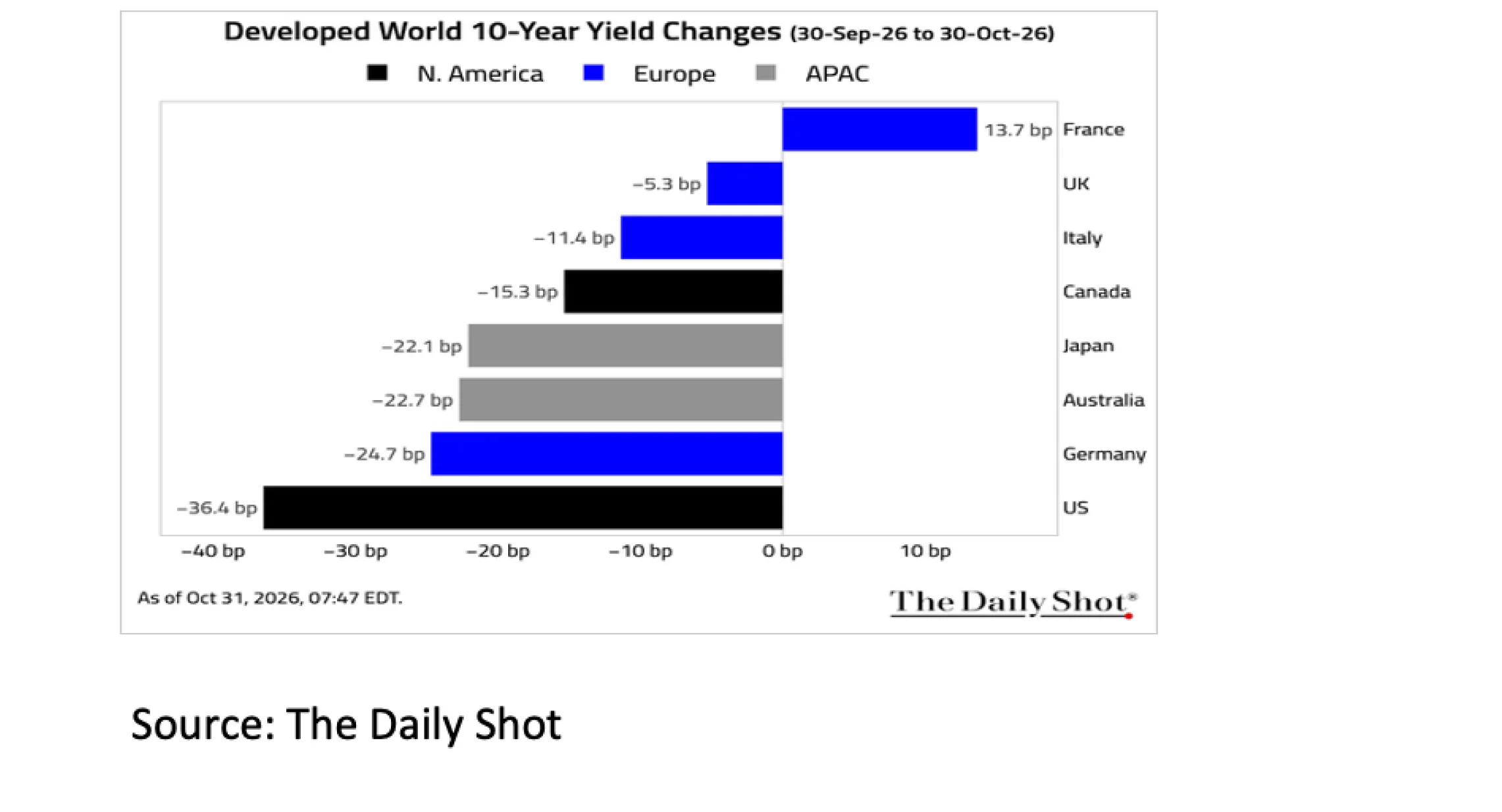
- Furthermore, a divergence was noted between 10-year yields in France (+0.14%) and the US (-0.36%), with concerns regarding France’s public finances playing a particular role.
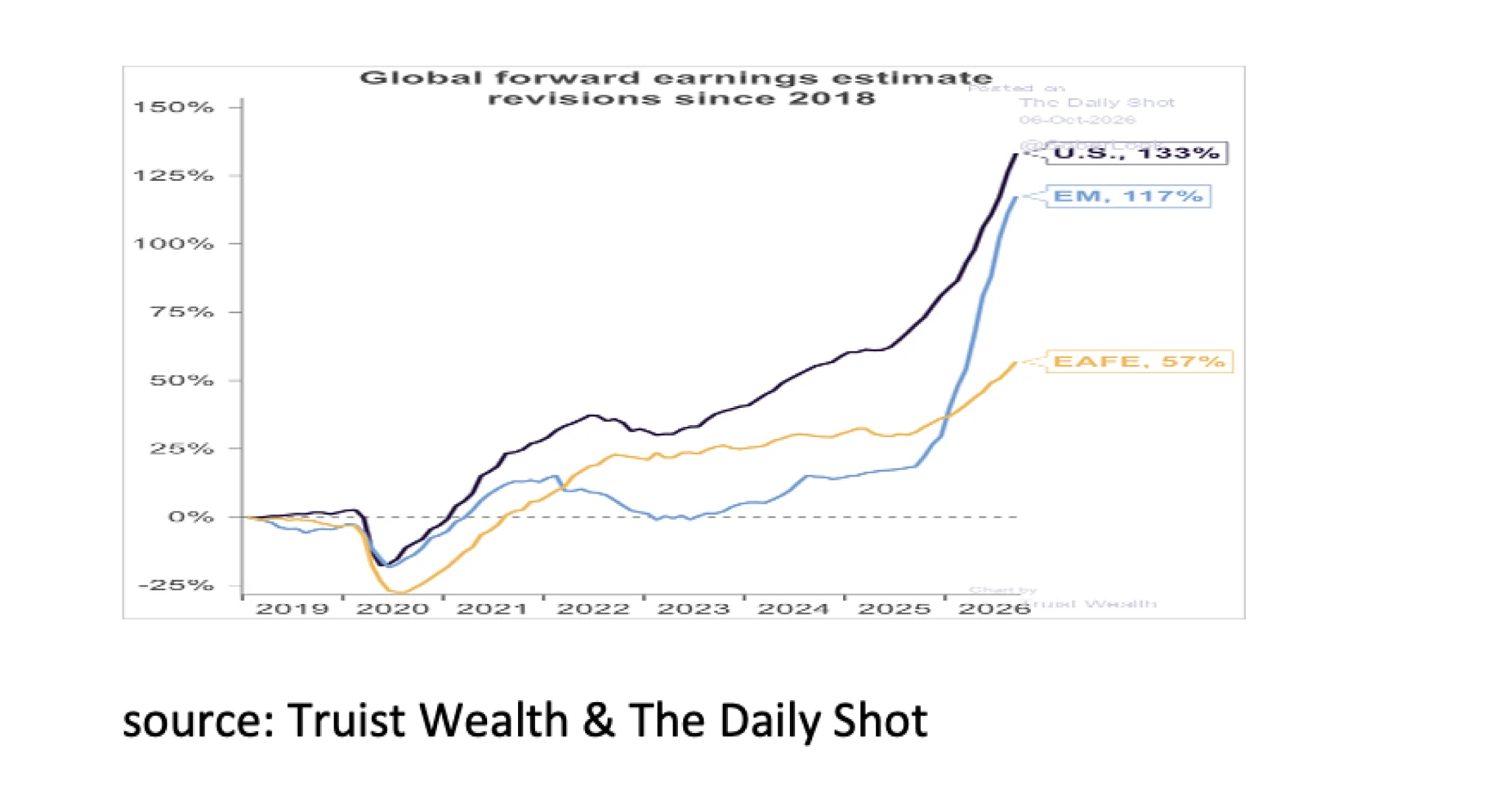
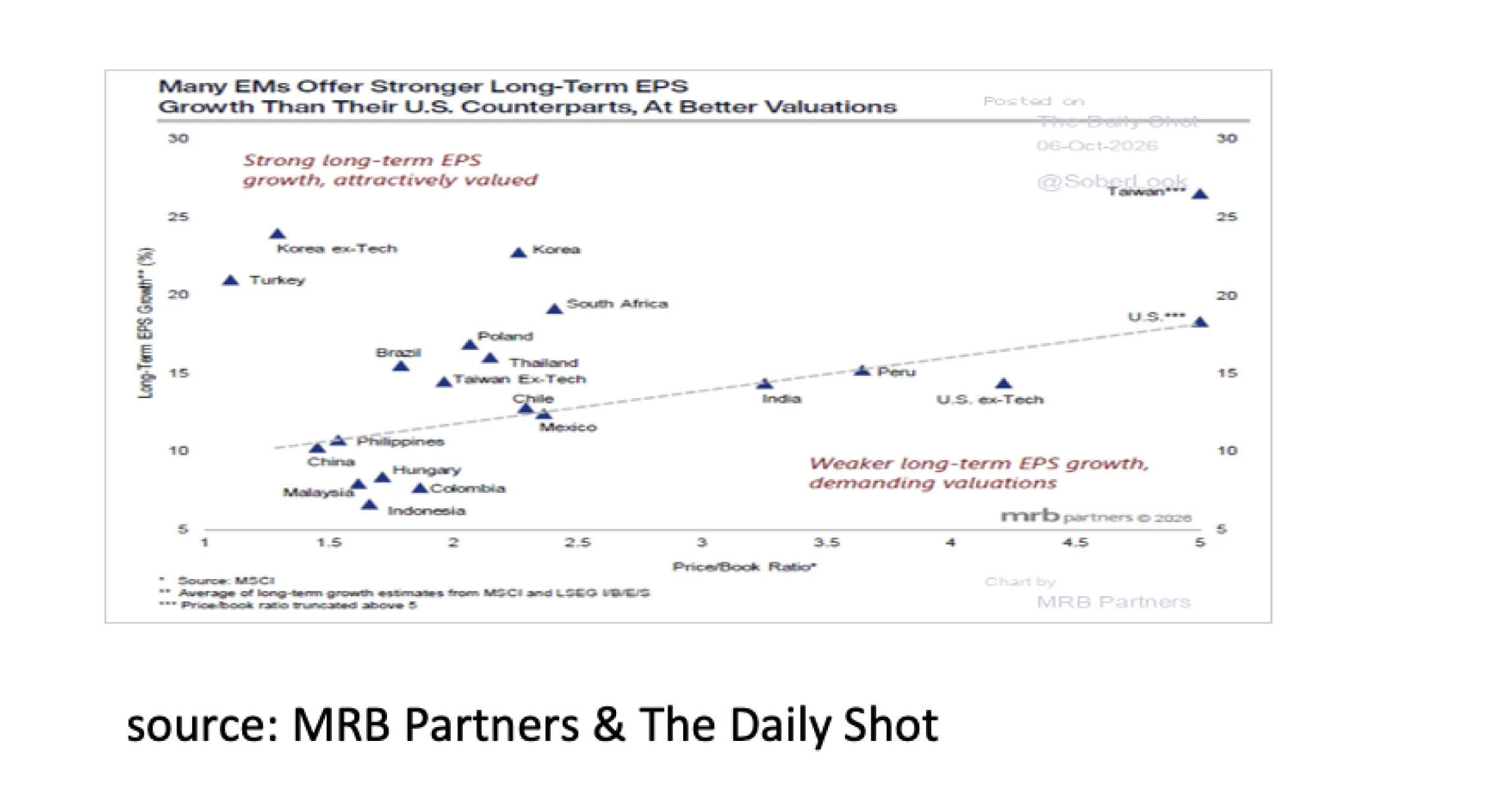
- Since 2019, earnings growth in the US (+133%) and in Emerging Markets (+117%) has been quite similar. However, valuations are more attractive than in the US.
ECONOMY
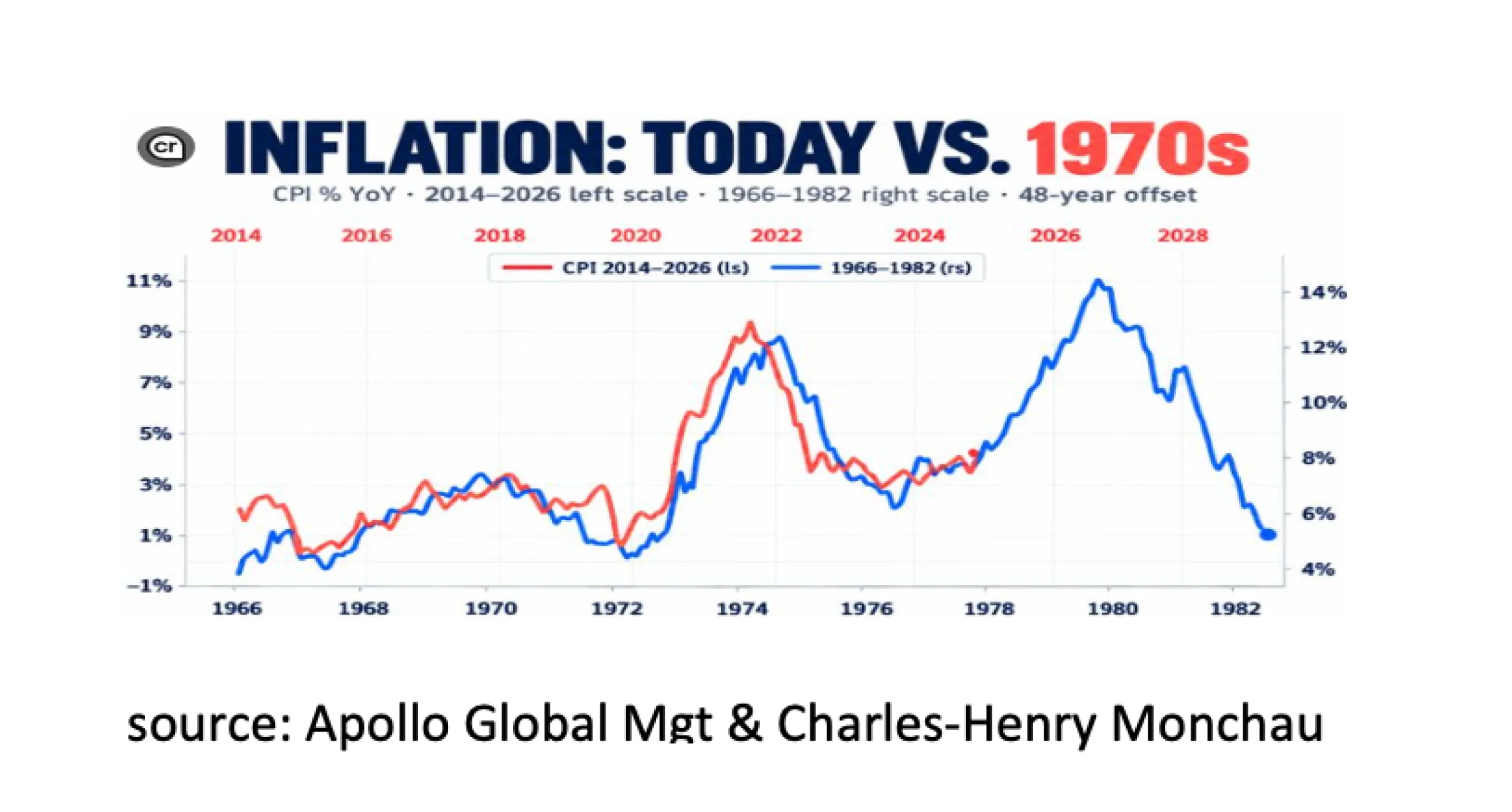
While economic growth in the Eurozone (+1.2%) in the third quarter of 2026 was in line with expectations, growth in the US (+3.4%) proved stronger than anticipated. Conversely, inflation in both the Eurozone (+3.8%) and the US (+3.7%) came in higher than expected. Nevertheless, both the ECB (2.5%) and the Fed (4.0%) kept their policy interest rates unchanged in October. Beyond the various geopolitical challenges, inflation remains a major risk to the economic outlook. Since January 2020, annualized inflation has reached 4.0% in the US and 3.8% in the Eurozone—both well above the 2% inflation targets set by the Fed and the ECB. Despite this, both central banks are expected to raise interest rates only one or two more times throughout 2026/27. This is possible because so far core inflation remains relatively contained in both the US (+2.6%) and the Eurozone (+2.5%); however, if the geopolitical issues are not resolved soon, a further rise in both headline and core inflation appears inevitable. The risk of a second wave of inflation—reminiscent of the 1970s—has not yet been averted.
High inflation and declining household purchasing power have recently led to growing social unrest, particularly in France. Furthermore, sharply rising capital market interest rates have fueled concerns regarding France’s public finances—and potentially a new eurozone crisis. Yet, the likelihood of such an event appears extremely low. Since 2012, the ECB has had the Outright Monetary Transactions (OMT) framework at its disposal, allowing for the unlimited purchase of (short-term) government bonds. Additionally, as of 2022, the ECB possesses the Transmission Protection Instrument (TPI), designed to counter undesirable market movements, being adverse developments in yield spreads. Moreover, while there is frequent discussion surrounding France’s budget deficit and national debt, it is worth noting that both—as well as interest costs—are even higher in the United States. Furthermore, nowhere is national debt financed with such a short-term maturity profile as it is in the U.S.
FINANCIAL MARKETS
In October, we observed a highly mixed picture across equity markets; the divergence between Switzerland (+7.1%) and South Korea (-16.2%) was particularly notable. South Korea’s KOSPI index was hit especially hard by a global sell-off in semiconductor stocks. The S&P 500 (-0.9%) remained essentially flat during the month. In the government bond market, there was a striking contrast between 10-year yields in France (+0.14%) and the US (-0.36%), with concerns regarding France’s public finances playing a key role.
While there has been much talk in recent years about the explosive profit growth of American corporations, it is striking to note that, since 2019, profit growth in the U.S. (+133%) and in emerging markets (+117%) has been quite comparable. In contrast, the EAFE region (Europe, Australia, and the Far East) has lagged significantly, at +57%. For investors who consider U.S. equities too expensive, many emerging markets offer a similar long-term earnings trajectory at more attractive valuations. Furthermore, even within the U.S., the price-to-earnings (P/E) ratio of the tech sector has fallen considerably—driven largely by a massive surge in corporate profits. Unlike the dot-com bubble, the recent share price gains among AI-related companies have been accompanied by substantial increases in earnings. Similarly, the sharp rise in interest rates has coincided with a strong growth in corporate profits, meaning that higher interest expenses have not yet posed a problem for many firms. That said, for many CCC-rated companies, securing financing has indeed become a challenge.
Disclaimer:
While the information contained in the document has been formulated with all due care, it is provided by for information purposes only and does not constitute a professional advice. We would encourage you to seek appropriate professional advice before considering a transaction as described in this document. No liability is accepted whatsoever for any direct or consequential loss arising from the use of this document.