

- The current situation in the world can best be summarised as “Good Economics, Bad Geopolitics”.
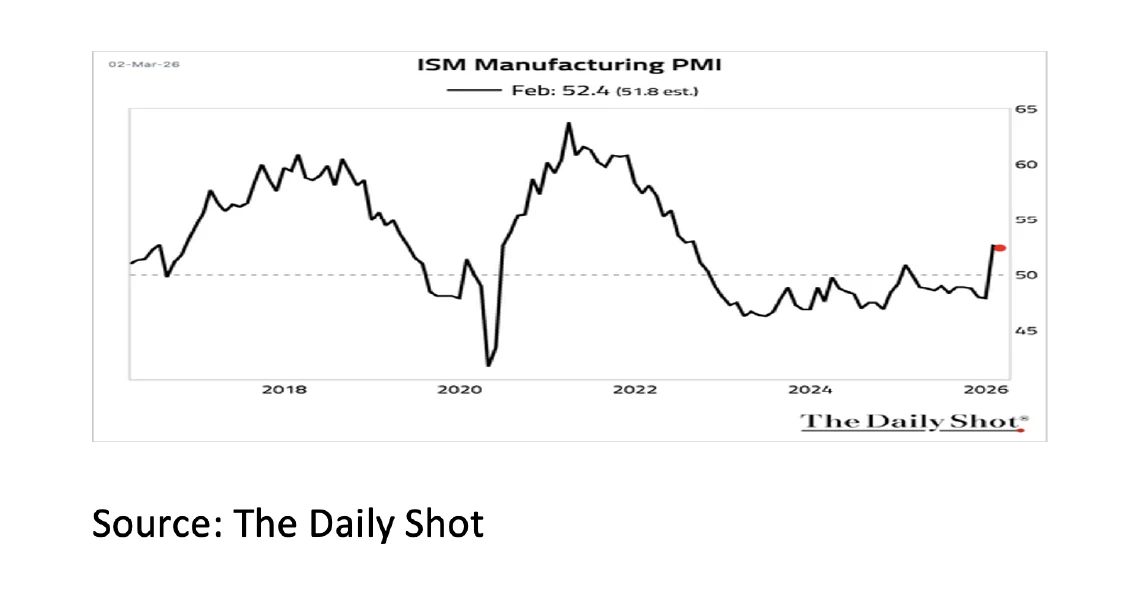
- For example, the ISM manufacturing index in the US (52.4) reached its highest level in 3 years and the German manufacturing index (50.9) even reached its highest level in 4 years.
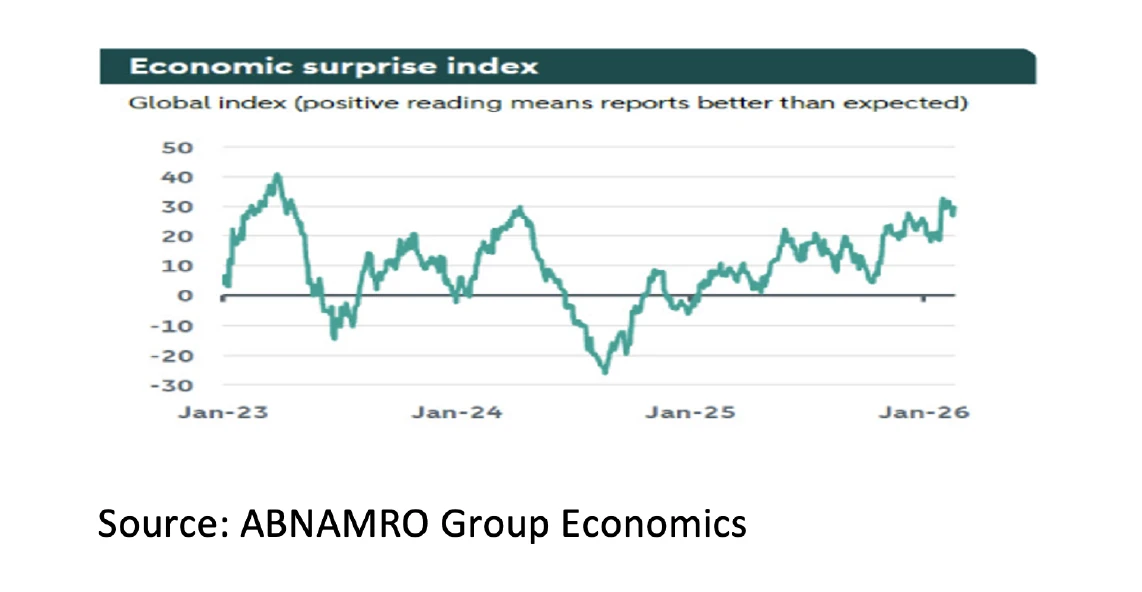
- In addition, the ECB in particular seemed to have finally gotten inflation under control and the Global Economic surprise index also gave a positive picture.
- The war in the Middle East, however, makes any prediction uncertain. Especially now that Iran has closed the Strait of Hormuz to all shipping, which immediately caused the prices of Brent Oil (+20%) and Natural Gas (+75%) to rise.
- While the Western world is mainly affected by the price increases of oil and gas and the associated loss of purchasing power of consumers, Asia is also affected by the decreased availability of oil and gas.
- For now, the global economy seems strong enough to absorb this blow, but the longer this war lasts, the greater the chance of a recession.
- On the other hand, if this war leads to a “regime change” in Iran, this could also have a very positive effect on the global economy and financial markets.
- Despite the growing geopolitical unrest in the Middle East, February was another exceptionally good month for investors. However, the US and Israeli attack on Iran on February 28 and Iran's response to it had a significant impact on financial markets in early March.
- It can be argued that the longer this war lasts, the greater the negative impact will be on both the economy and the financial markets.
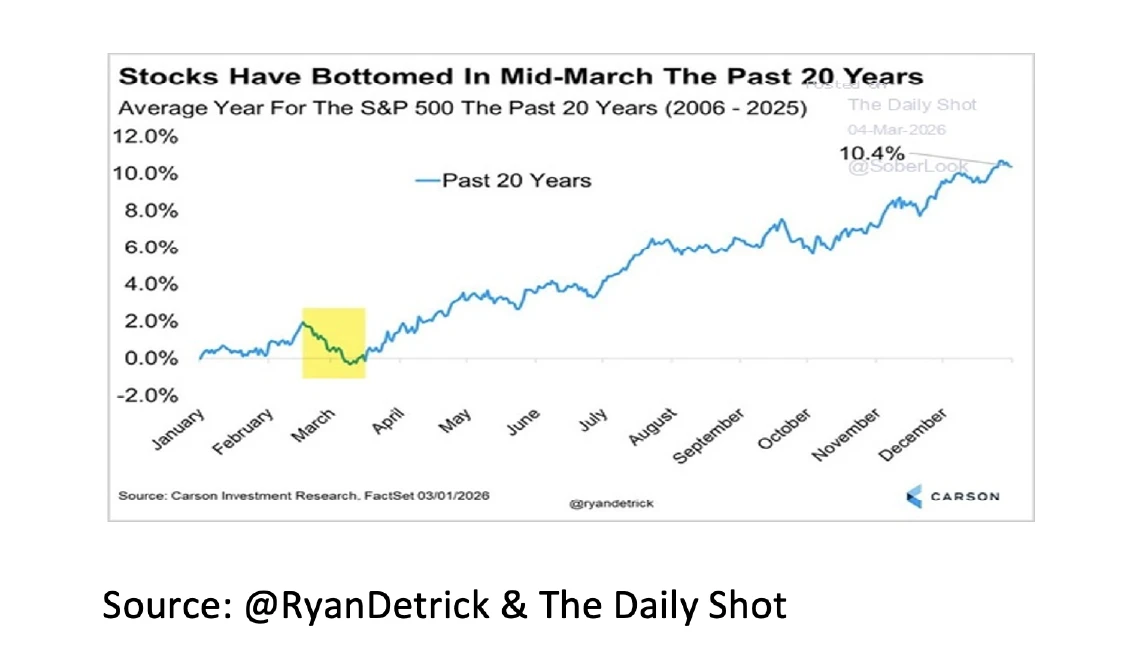
- Historically, wars usually have only a short-lived negative impact on financial markets, and over the past 20 years, mid-March has often presented a good buying opportunity.
The current global situation can best be summarized as "Good Economics, Bad Geopolitics." If the US and Israel hadn't recently attacked Iran, and Iran, in turn, hadn't attacked neighboring countries, we could now paint a reasonably positive picture of the global economy. For example, the ISM manufacturing index in the US (52.4) reached its highest level in three years, and the German manufacturing index (50.9) even reached its highest level in four years. Moreover, the ECB, in particular, seemed to have finally brought inflation under control, with 1.7% in January and 1.9% in February, and the Global Economic Surprise Index also painted a positive picture of the global economy. However, the war in the Middle East makes any prediction for economic growth and inflation uncertain, especially now that Iran has closed the Strait of Hormuz to all shipping, immediately causing the price of Brent Oil (+20%) and Natural Gas (+75%) to rise. Are we heading for a new energy crisis? If so, a recession cannot be ruled out. If not, the rise in oil and gas prices could lead to higher inflation, albeit temporarily.
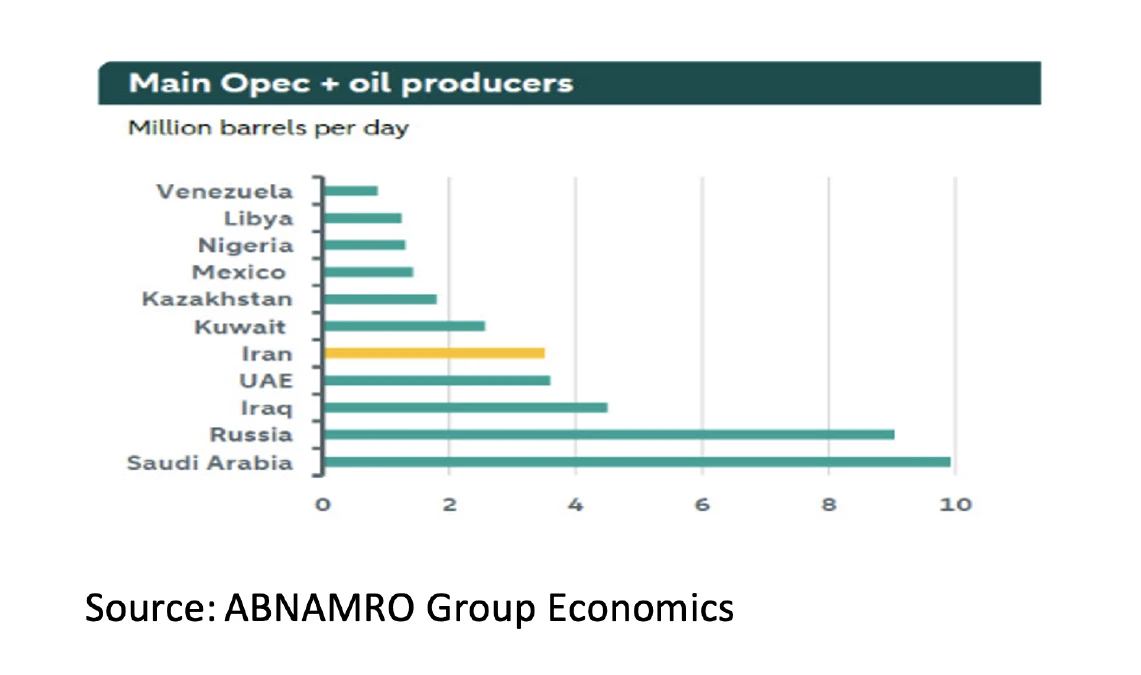
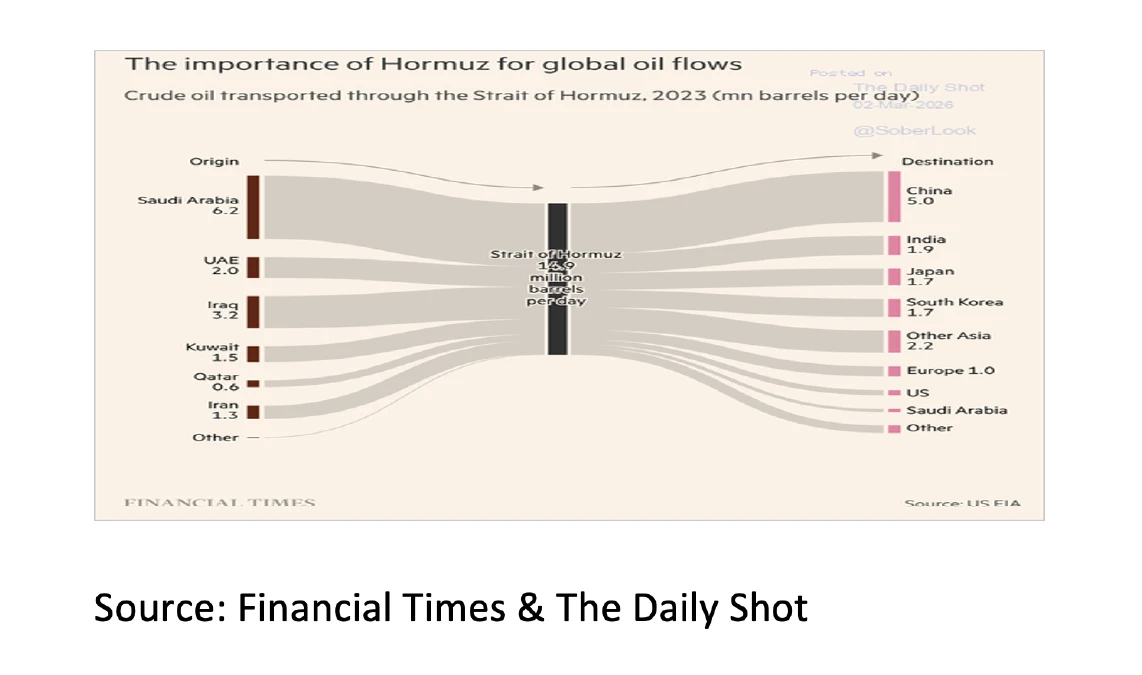
The Strait of Hormuz transports 20% (14.9 million barrels) of the world's oil production daily. Of this, 12.5 million barrels are destined for Asia, including 5 million barrels for China. While the Western world is primarily affected by rising oil and gas prices and thus by consumers' loss of purchasing power, Asia, and China in particular, is also affected by the reduced availability of oil and gas. For now, the global economy appears strong enough to absorb this blow, but the longer this war continues, the greater the chance of a recession. On the other hand, if this war leads to regime change in Iran, this could actually have quite a positive impact on the global economy.
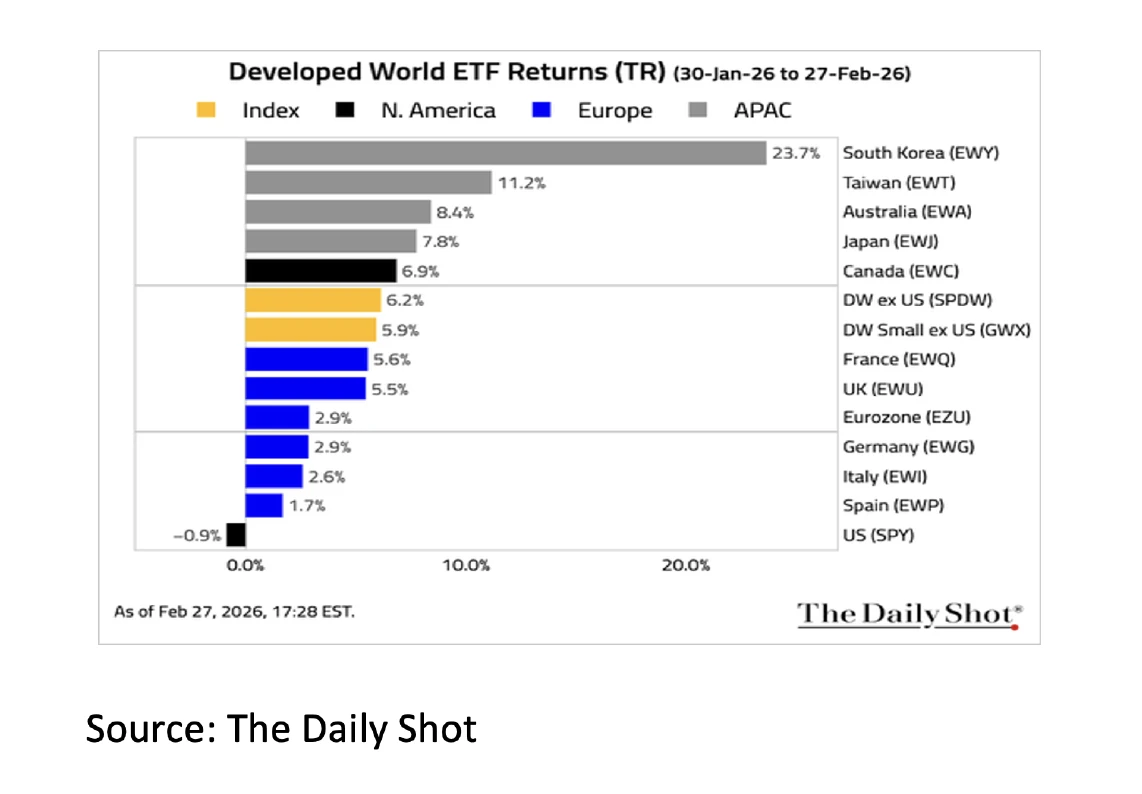
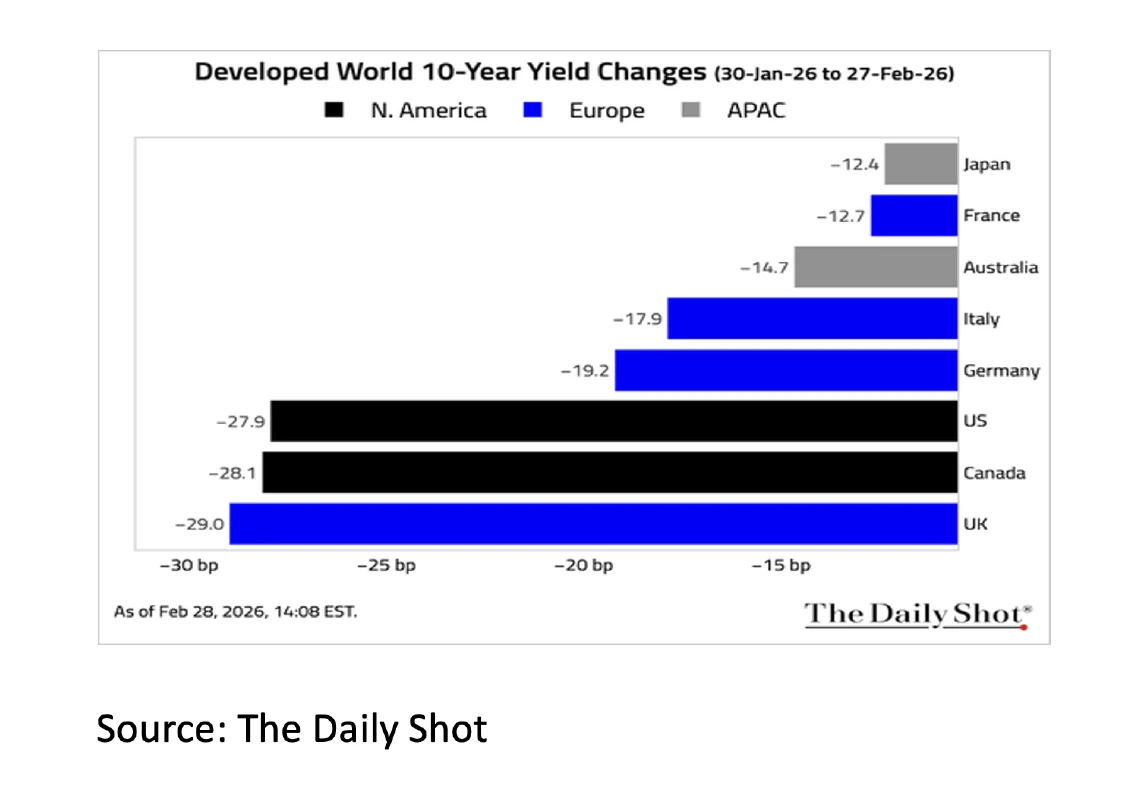
Despite the already growing geopolitical unrest in the Middle East, February was another exceptionally good month for investors. With the exception of US stocks (-0.9%), all major stock markets rose, and the 10-year yield fell almost everywhere. In addition, gold (+10.9%) and silver (+18.2%) prices also rose significantly.
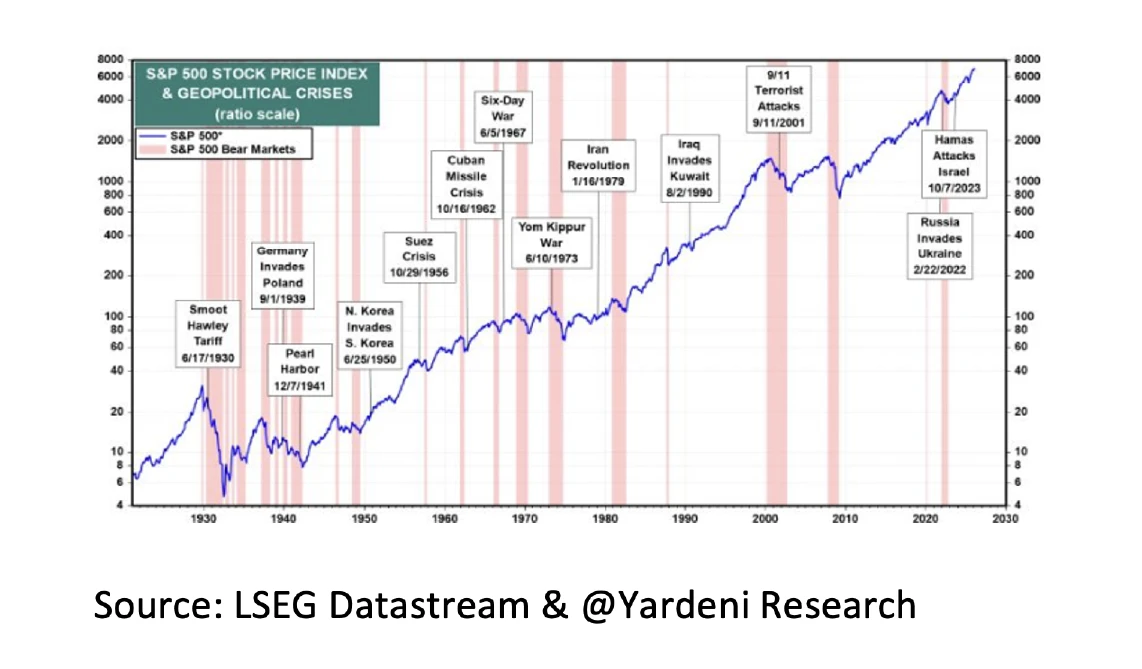
The US and Israeli attack on Iran on February 28th and Iran's response to it had a significantly negative impact on the financial markets in early March. The S&P 500 is now down almost 3%, the UST10 is up 13bp, Brent Crude Oil is up 20%, Natural Gas is up 75%, and the EUR/USD is down 2%. It's safe to say that the longer this war continues, the bigger the negative impact on both the global economy and the financial markets will be. At the same time, if all this leads to a regime change in Iran, the financial markets would, most likely, see that as very positively. Historically, wars usually have only a short-lived negative impact on financial markets, and over the past 20 years, mid-March has often presented a good buying opportunity.
Disclaimer:
While the information contained in the document has been formulated with all due care, it is provided by for information purposes only and does not constitute a professional advice. We would encourage you to seek appropriate professional advice before considering a transaction as described in this document. No liability is accepted whatsoever for any direct or consequential loss arising from the use of this document.
RECEIVE OUR INVESTMENT NEWSLETTER IN YOUR INBOX




© 2025 TRUSTMOORE.