

SPEED READ
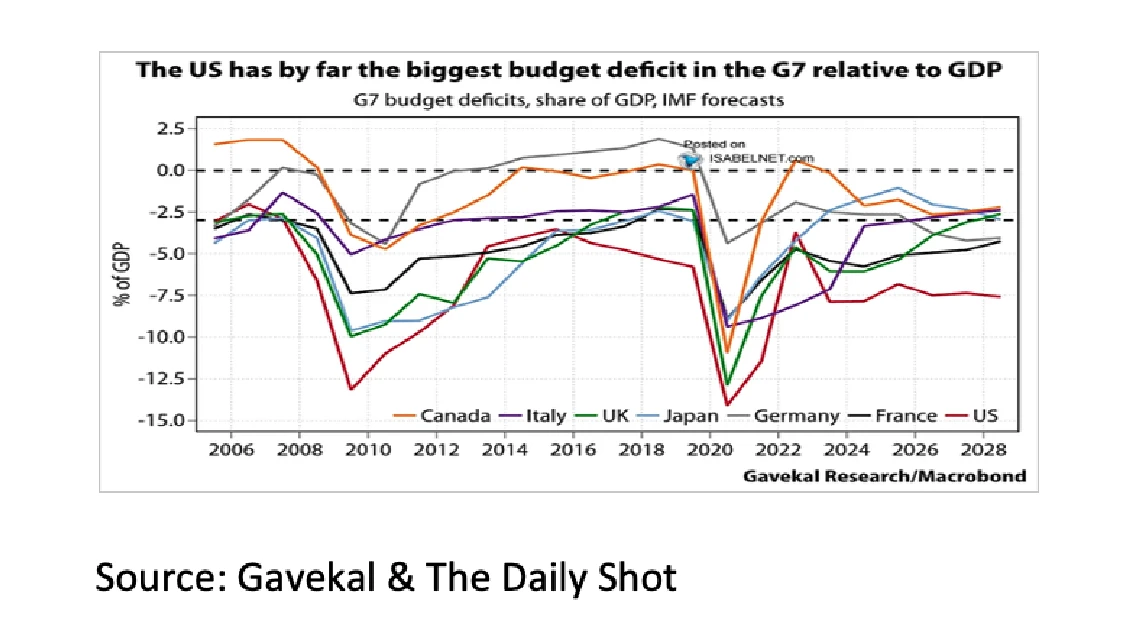
- While there appears to be an increasing degree of getting ussed to geopolitical unrest, high inflation (US +3.4%, EU +2.9%), and better-than-expected economic growth (US ‘26 Q3e +4.8% qoq annual), growing concerns are gradually emerging about the sustainability of government debt.
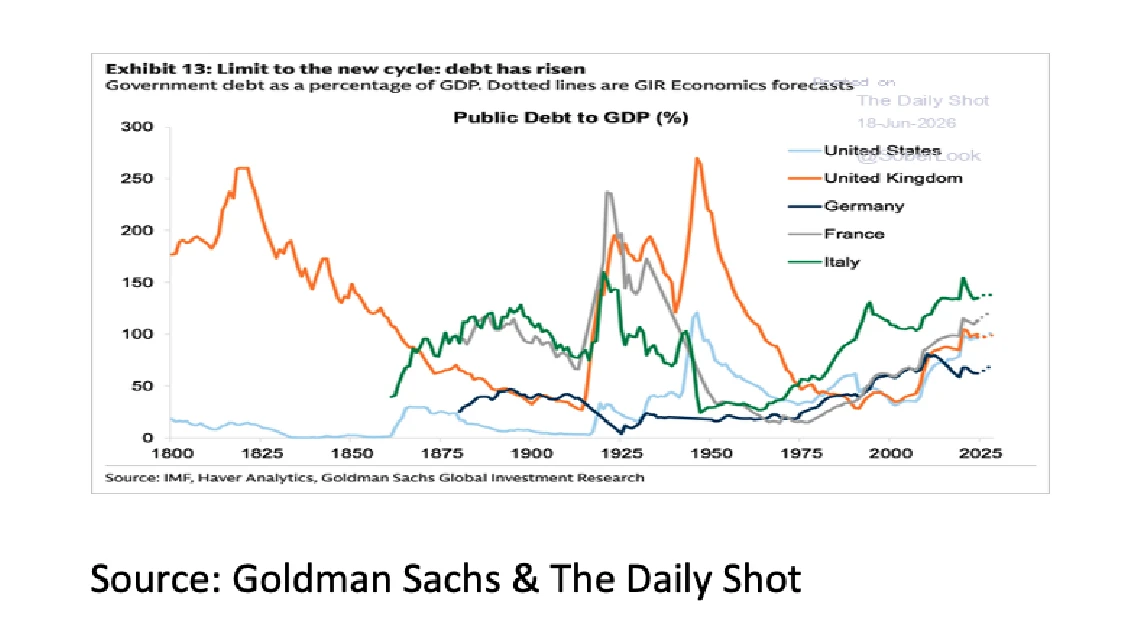
- Looking at history, we see that current government deficits and debts are certainly not unique and were resolved in the past primarily through a combination of economic growth and inflation.
- In addition, both the FED and the ECB have the policy tools to prevent a financial crisis. For example, ECB Governor Draghi said on July 26, 2012, “we will do whatever it takes to preserve the euro,” and the FED maintained a 2.5% cap on long-term interest rates in the US from 1942 to 1951.
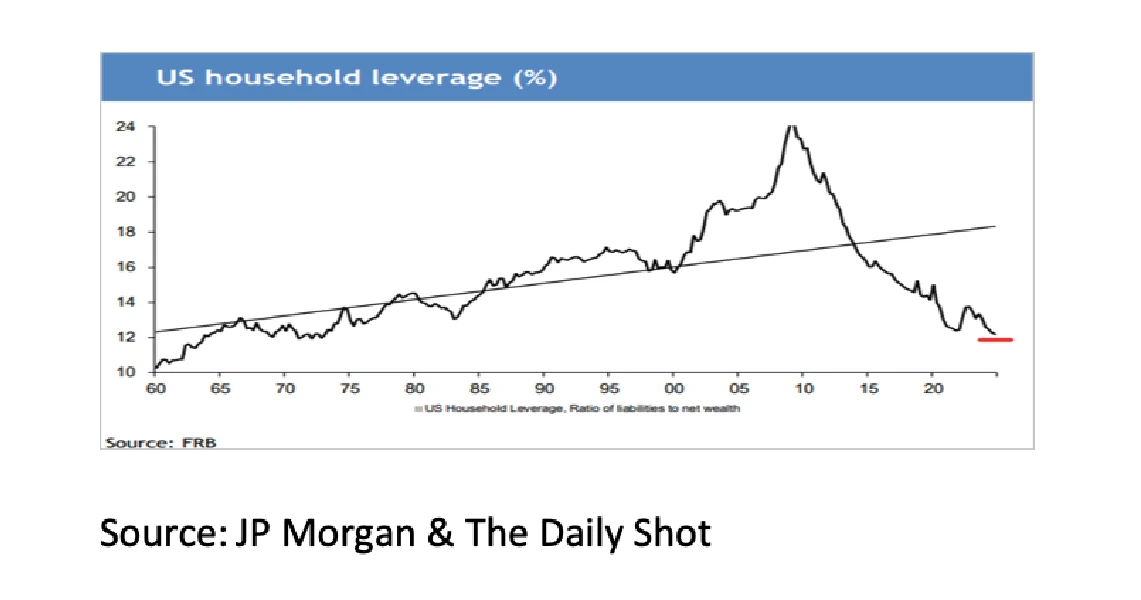
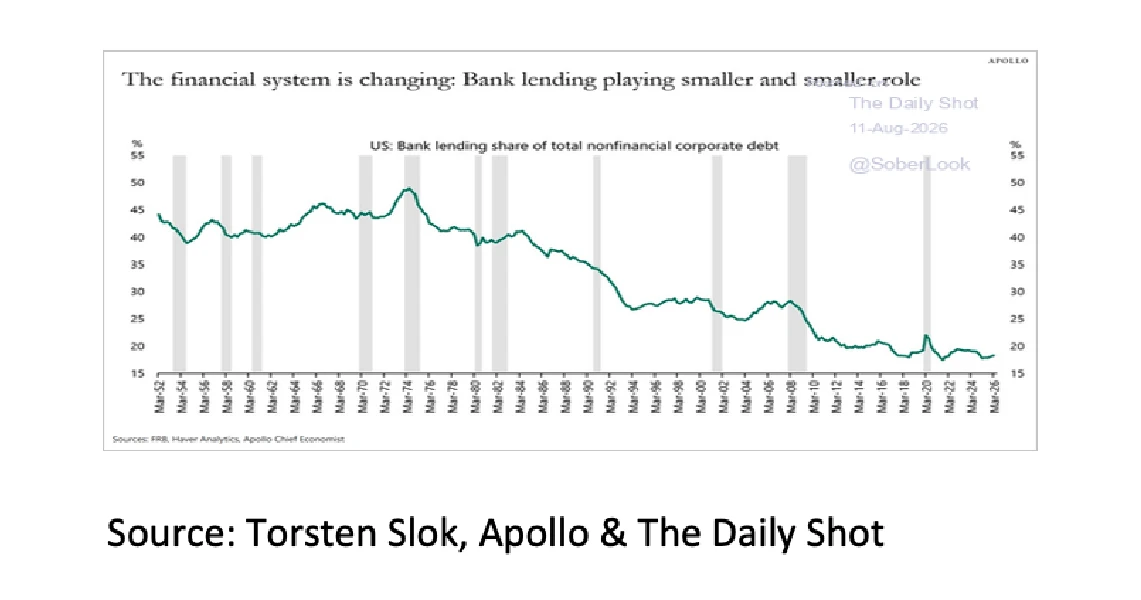
- In contrast to the worrying financial state of a large number of governments, households and banks are currently in a relatively strong position. The likelihood of a banking crisis like the one in 2008 has decreased significantly.
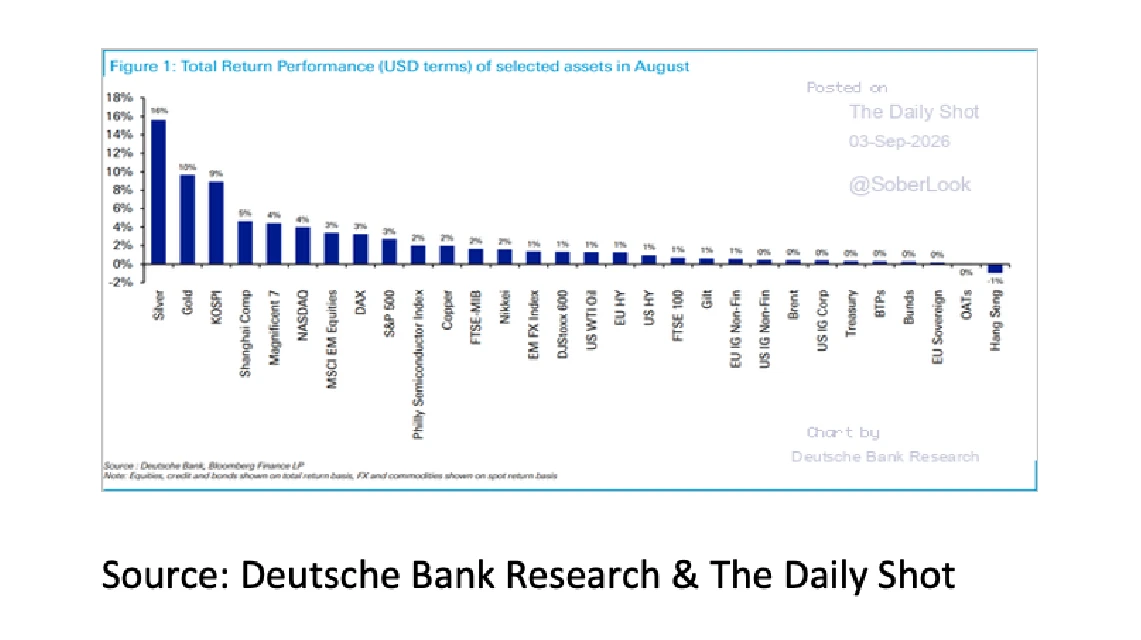
- August was a good month for investors. Silver (+14%) and Gold (+10%) were the star performers, closely followed by the KOSPI (+9%). The Korean index, like the Magnificent 7 (+4%) and the Nasdaq (+4%), benefited from the continuing wave of investment in AI.
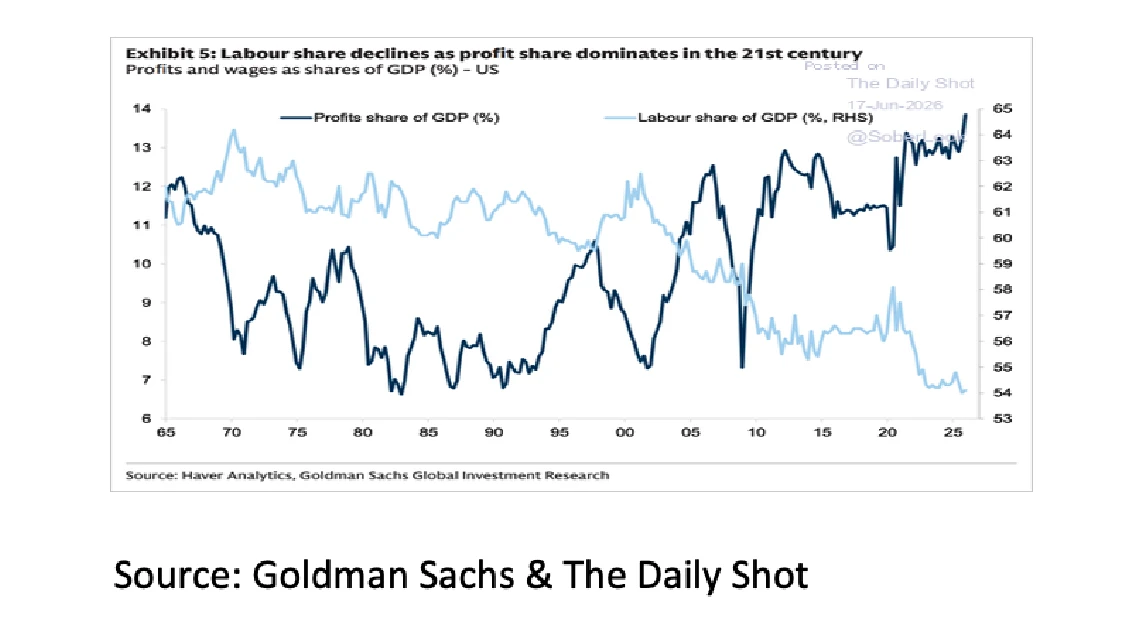
- Corporate profits continue to surprise positively, on the one hand because the economy is growing, and on the other hand because an increasingly large share of that growth is going not to employees, but to employers and thus shareholders.
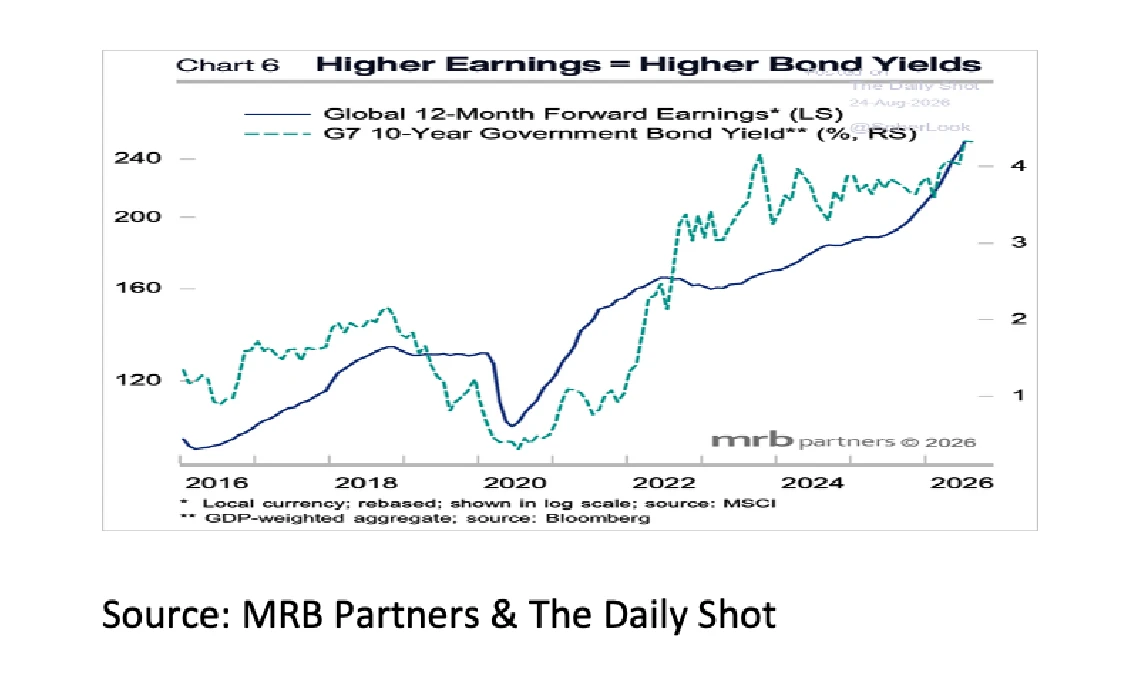
- Concerns about rapidly rising interest rates have so far not led to a correction in the stock markets. For the time being, economic growth is leading not only to higher interest rates but also to significantly higher corporate profits.
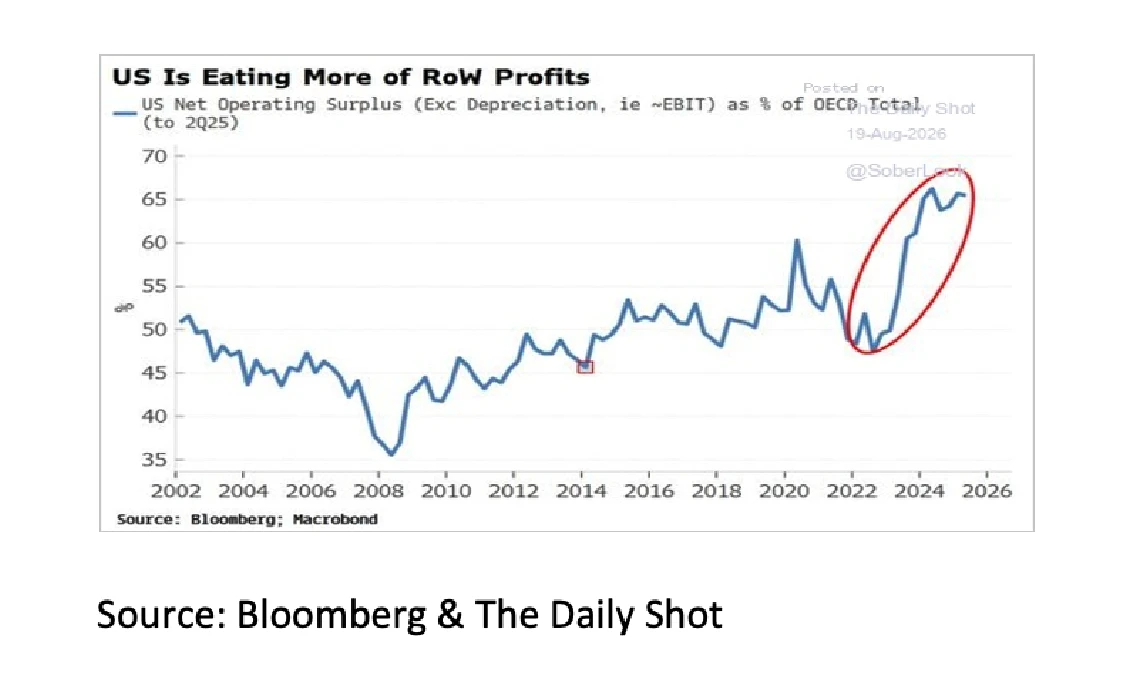
- The high weighting of the US (72%) in the MSCI World index coupled with high profitability (65%) relative to other countries.
ECONOMY
While there appears to be an increasing degree of getting used to geopolitical unrest, high inflation (US +3.4%, EU +2.9%), and better-than-expected economic growth (US ‘26 Q3e +4.8% qoq annual.), concerns are gradually emerging about the sustainability of government debt. In this regard, particular attention is drawn to the combination of a large government deficit and a high Debt-to-GDP ratio in the US and France. However, looking at history, we see that the current deficits and debts are certainly high, but not unique and were resolved in the past primarily through a combination of economic growth and inflation. It is not without reason that policymakers have tolerated the current relatively high inflation more for quite some time than they would have done in the (recent) past. Furthermore, both the FED and the ECB have the policy tools to prevent a financial crisis. For instance, ECB Governor Draghi said on July 26, 2012, “we will do whatever it takes to preserve the euro, and believe me, it will be enough”. In 1942, the FED introduced a 2.5% cap on long-term interest rates in the US with “yield curve control” and did not end it until nine years later, in 1951. Policymakers can therefore prevent a potential crisis at any time, provided they intervene in time.
In contrast to the worrying financial state of a large number of governments, households and banks currently hold a relatively strong position. Since the financial crisis, the household leverage ratio has fallen significantly. Furthermore, banks currently play a considerably smaller role in financing the economy. This role is increasingly being taken over by the financial markets themselves. Consequently, risks are being spread across an increasing number of parties. The likelihood of a banking crisis like the one in 2008, when the bankruptcy of Lehman Brothers led to a major global recession, therefore appears to have diminished considerably.
FINANCIAL MARKETS
August was a good month for investors. Silver (+14%) and Gold (+10%) were the star performers, closely followed by the KOSPI (+9%). The Korean index, like the Magnificent 7 (+4%) and the Nasdaq (+4%), benefited from the continuing wave of investment in Artificial Intelligence (AI). Corporate profitability continues to amaze again and again. However, besides better-than-expected economic growth and massive investments in AI, there is another obvious cause behind the strong profit growth. Economic growth is due, on the one hand, to employers creating jobs and investing in productivity increases, and on the other hand, to employees working and becoming more productive. How this economic growth is subsequently distributed between employers and employees is shown in the “Labour share of GDP” and the “Profit share of GDP”. Looking at the “Labour share of GDP”, we see that in the US it has fallen from 62% in 2000 to 54% now, while the “Profit share of GDP” has risen from 8% to 14%. Corporate profits are therefore rising because the economy is growing, but also because an ever larger share goes to shareholders.
Concerns about rapidly rising capital market interest rates have so far not (yet) led to a correction in the stock markets. In our view, this is currently the case because economic growth not only leads to higher interest rates but also to significantly higher corporate profits. Therefore, higher interest rates are not yet a problem for the business community. Furthermore, there are often concerns regarding the high weighting of US equities (72%) in the MSCI World index. It is worth noting, however, that profitability in the US (65%) is also high compared to other countries.
Disclaimer:
While the information contained in the document has been formulated with all due care, it is provided by for information purposes only and does not constitute a professional advice. We would encourage you to seek appropriate professional advice before considering a transaction as described in this document. No liability is accepted whatsoever for any direct or consequential loss arising from the use of this document.