

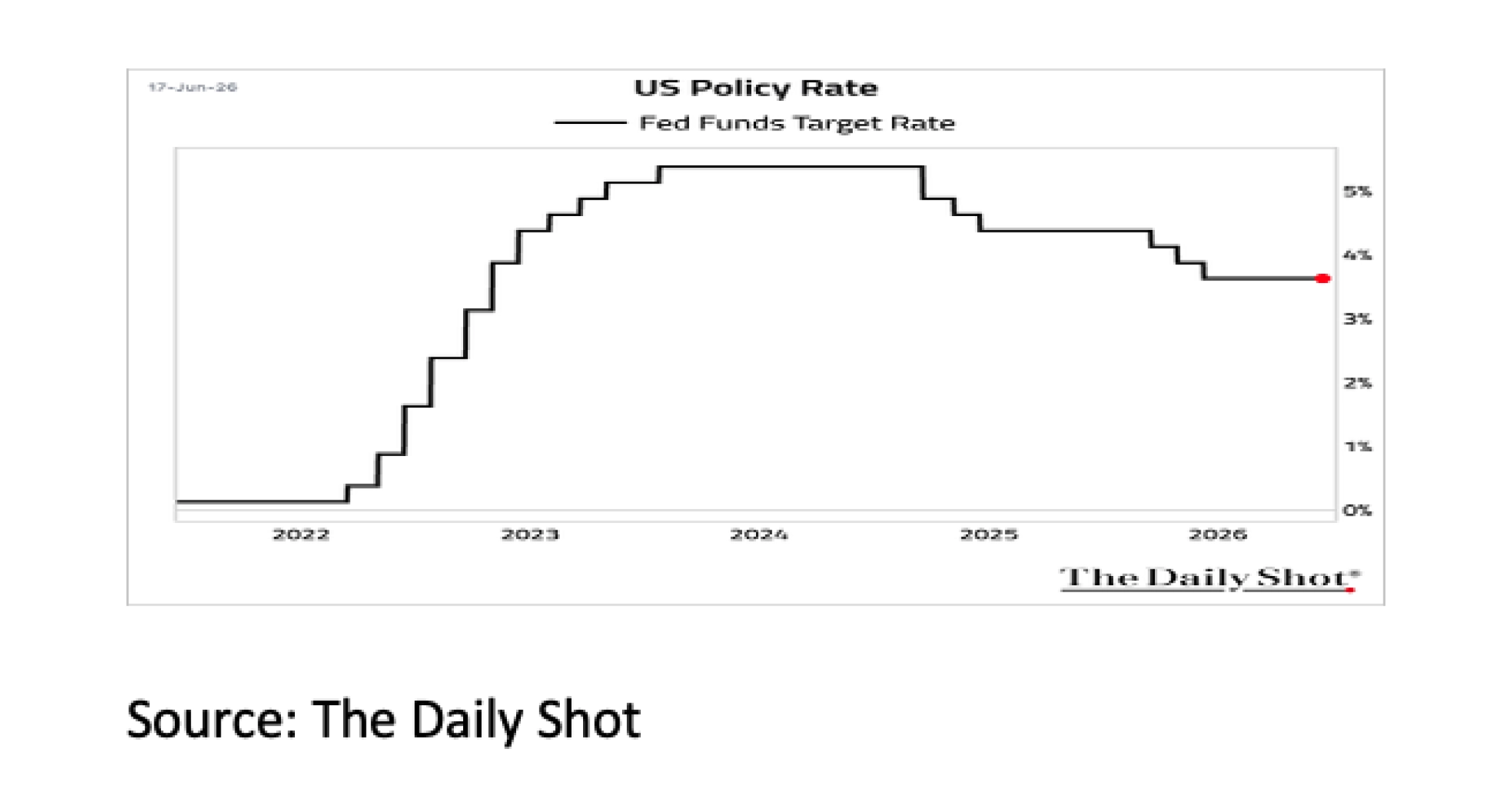
- After inflation had already risen to 3.2% in May, the ECB decided to raise interest rates by 0.25% to 2.25% in June.
- Although inflation in the US was significantly higher at 4.2% than in the Eurozone, the FED decided to leave interest rates unchanged at 3.75%.
- The new FED Governor Kevin Warsh strongly believes in the deflationary impact of Artificial Intelligence (AI) and was appointed by President Trump, who demands lower interest rates from him.
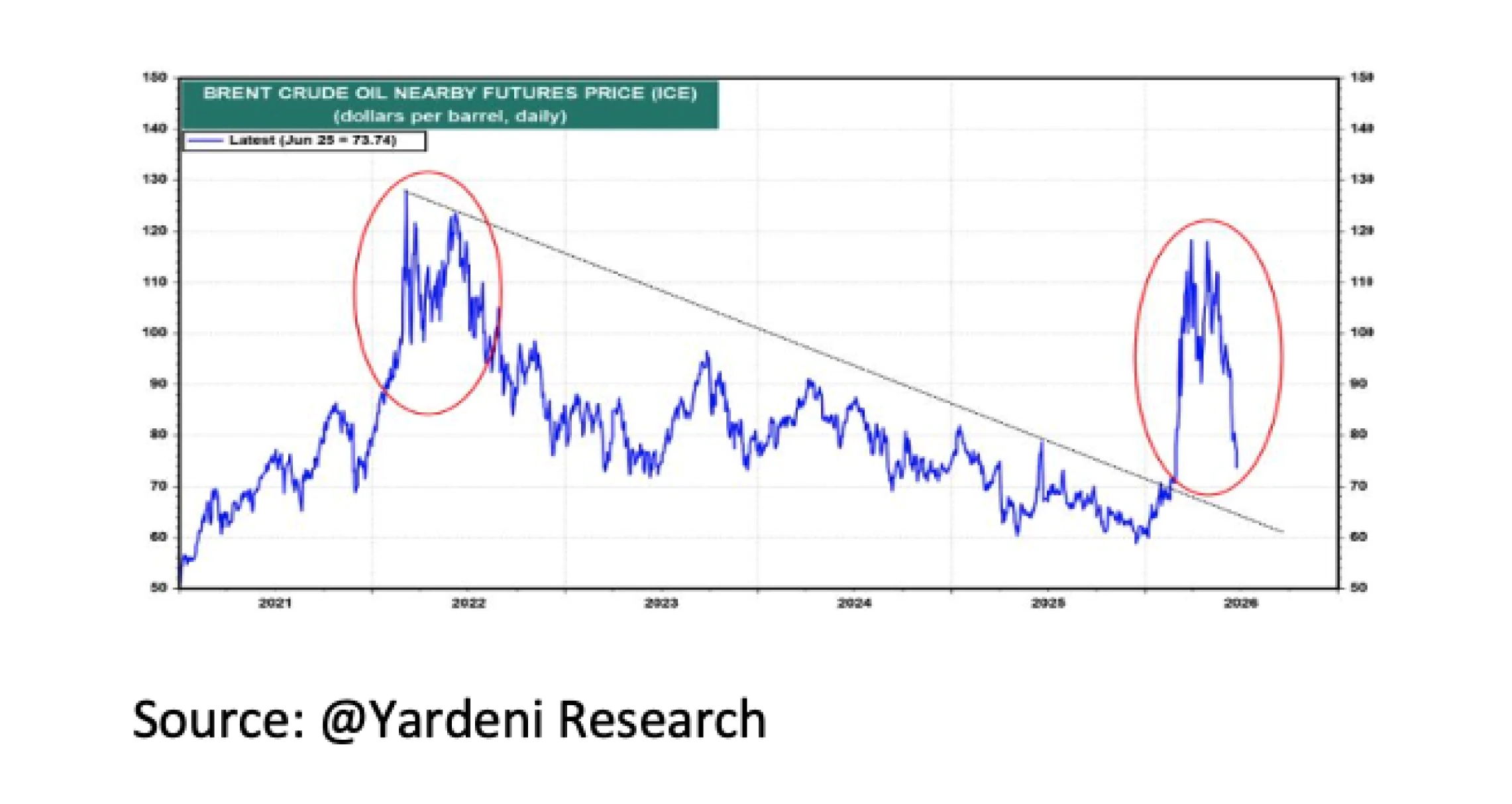
- In addition, a ceasefire between the US and Iran came into effect just before the FED meeting, under which it was agreed that the Strait of Hormuz would reopen, after which oil prices began to fall rapidly.
- According to initial indications from the Atlanta FED, US economic growth in 2026 Q2 was +2.5% (QoQ annual).
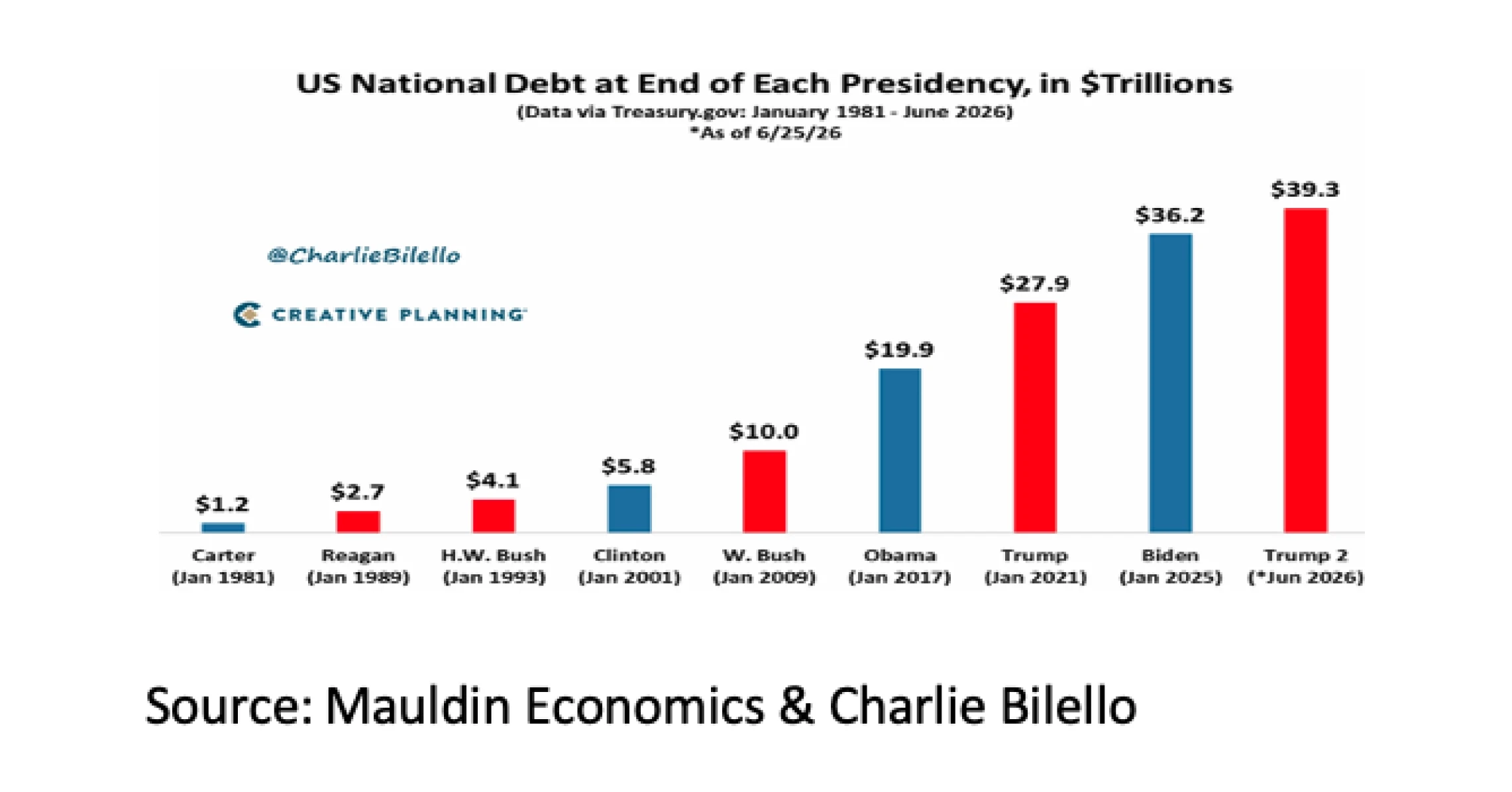
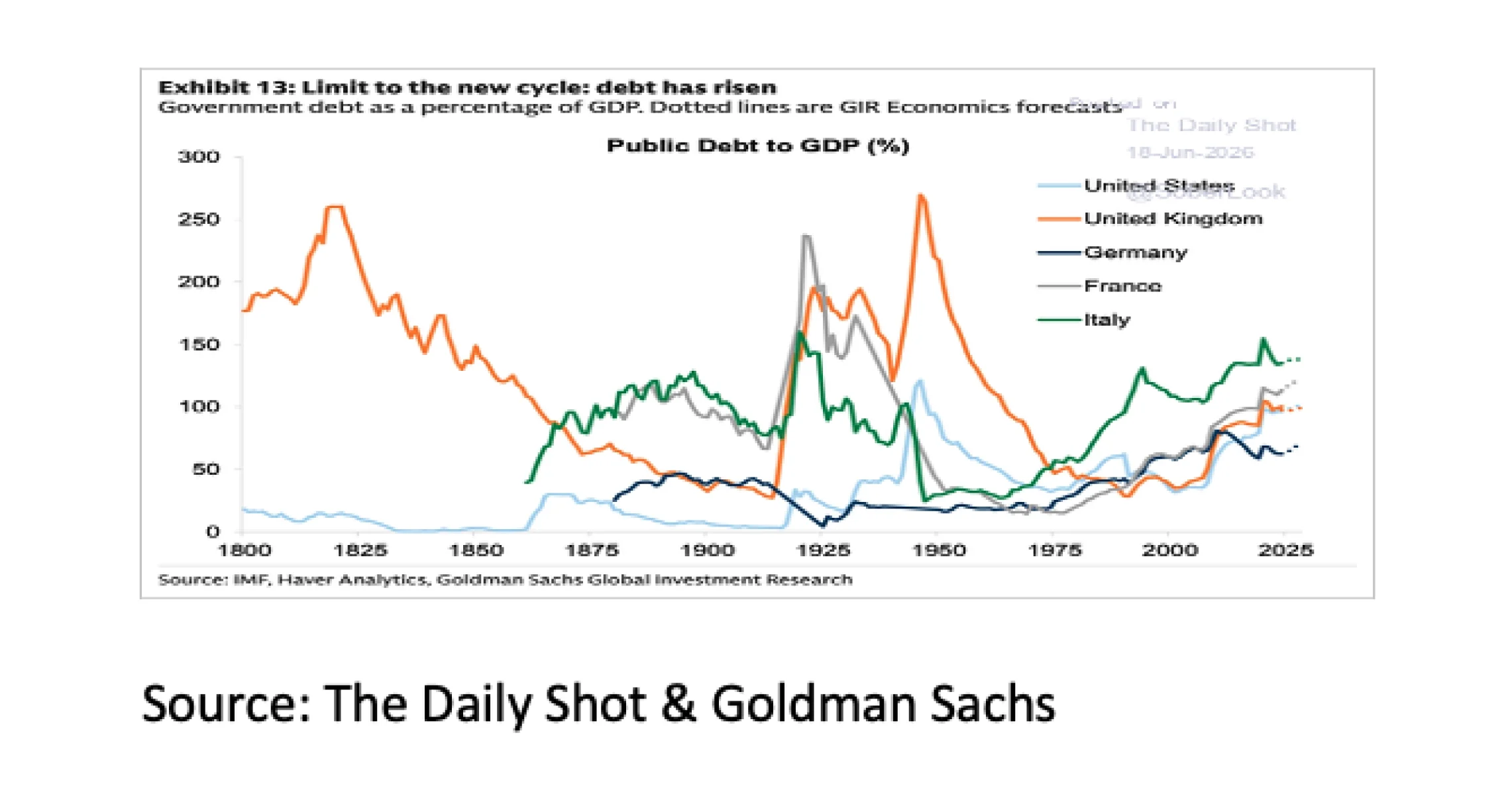
- The fact that government deficits continue to rise is worrying. Incidentally, it seems to make little difference in this regard whether there is a Democratic or a Republican President in the US.
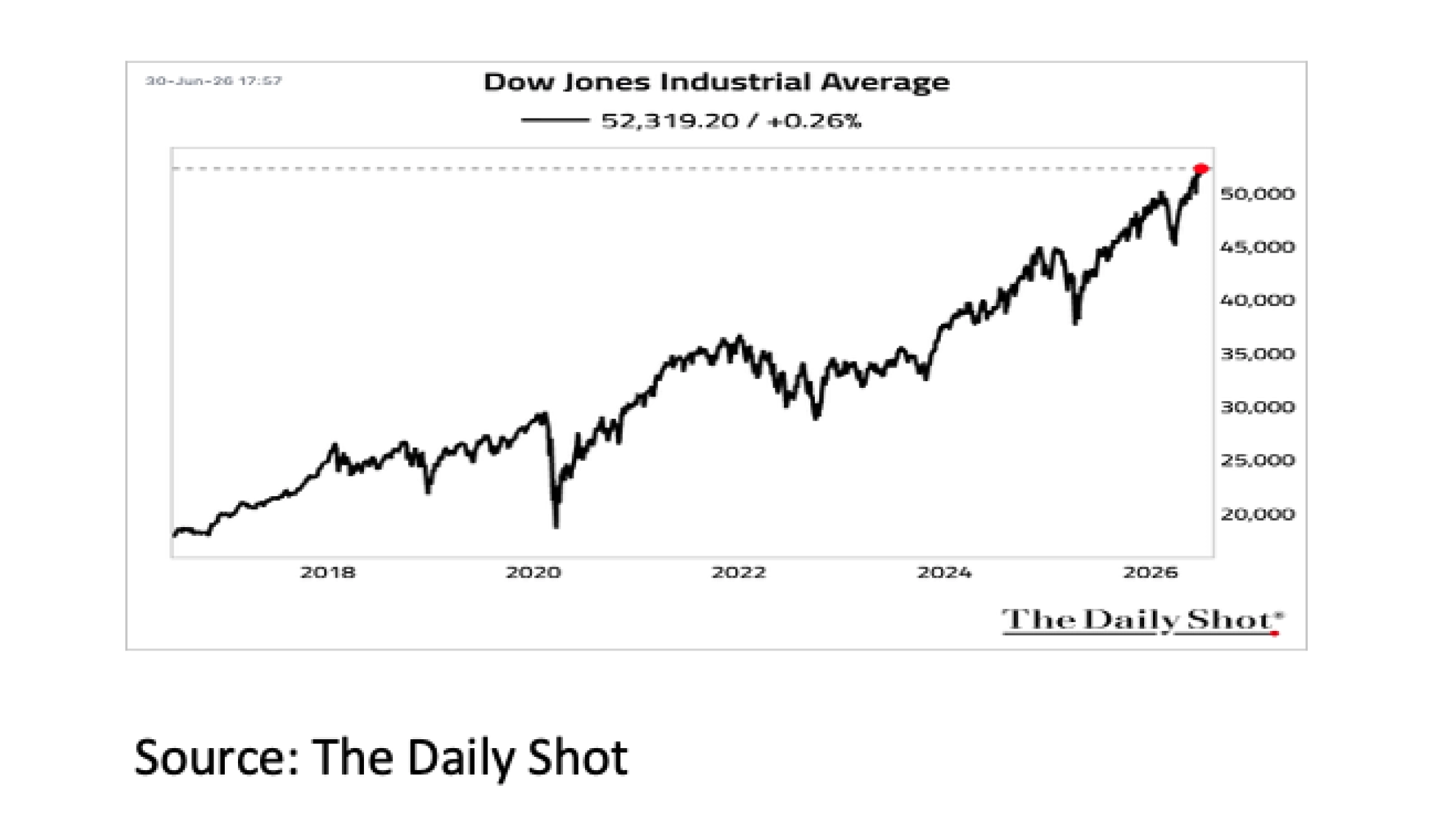
- In a world where there was a war between the US and Iran from February 26 to June 17, the pessimists remained dejected on the sidelines this time as well. The Dow Jones even closed the quarter with a new all-time high of 52,319 (+13%).
- The 10-year interest rate in the US rose by +11.1bp in 2026 Q2, while it fell by -10.6bp in Germany. Perhaps a sign that investors appreciated the ECB's policy in June more than that of the FED after all.
- Although it is true for US stocks that PEs are high, the weighting of the US in the MSCI ACWI is high, and the US index is dominated by the top 10 large stocks, there are also many positive points to be made against this.
After inflation had already risen to 3.2% in May, partly due to high oil prices resulting from the closure of the Strait of Hormuz, the ECB decided to raise interest rates by 0.25% to 2.25% in June. Although inflation in the US was still significantly higher than in the Eurozone at 4.2% in May, the FED, on the other hand, decided to leave interest rates unchanged at 3.75%. The new FED Governor, Kevin Warsh, strongly believes in the deflationary impact of Artificial Intelligence (AI) on the economy and was recently appointed by President Trump, who demands lower interest rates from him. Additionally, a ceasefire between the US and Iran came into effect just before the FED meeting, under an agreement to reopen the Strait of Hormuz, after which oil prices began to fall rapidly again. It therefore seems very likely that inflation will also decline significantly in the coming months.
Although the impact of the Iran war is clearly visible in the inflation figures, it remains remarkable how almost immune the global economy has remained to all geopolitical unrest in the world in recent years. For instance, according to initial indications from the Atlanta FED, economic growth in the US amounted to +2.5% in 2026 Q2 (QoQ annualized). On the one hand, this is a result of the fact that oil consumption as a percentage of the global economy has fallen by no less than 65% between 1970 and 2026. On the other hand, technology as a percentage of investments in the US has risen spectacularly from 15% to 55%, partly thanks to the internet and AI. In addition, a key factor behind the growth is the fact that government deficits continue to rise. Incidentally, it seems to make little difference in this regard whether there is a Democratic or a Republican President in the US. To answer the question of whether the current high levels of government debt are inherently unsustainable, it is worthwhile to also look at historical figures.
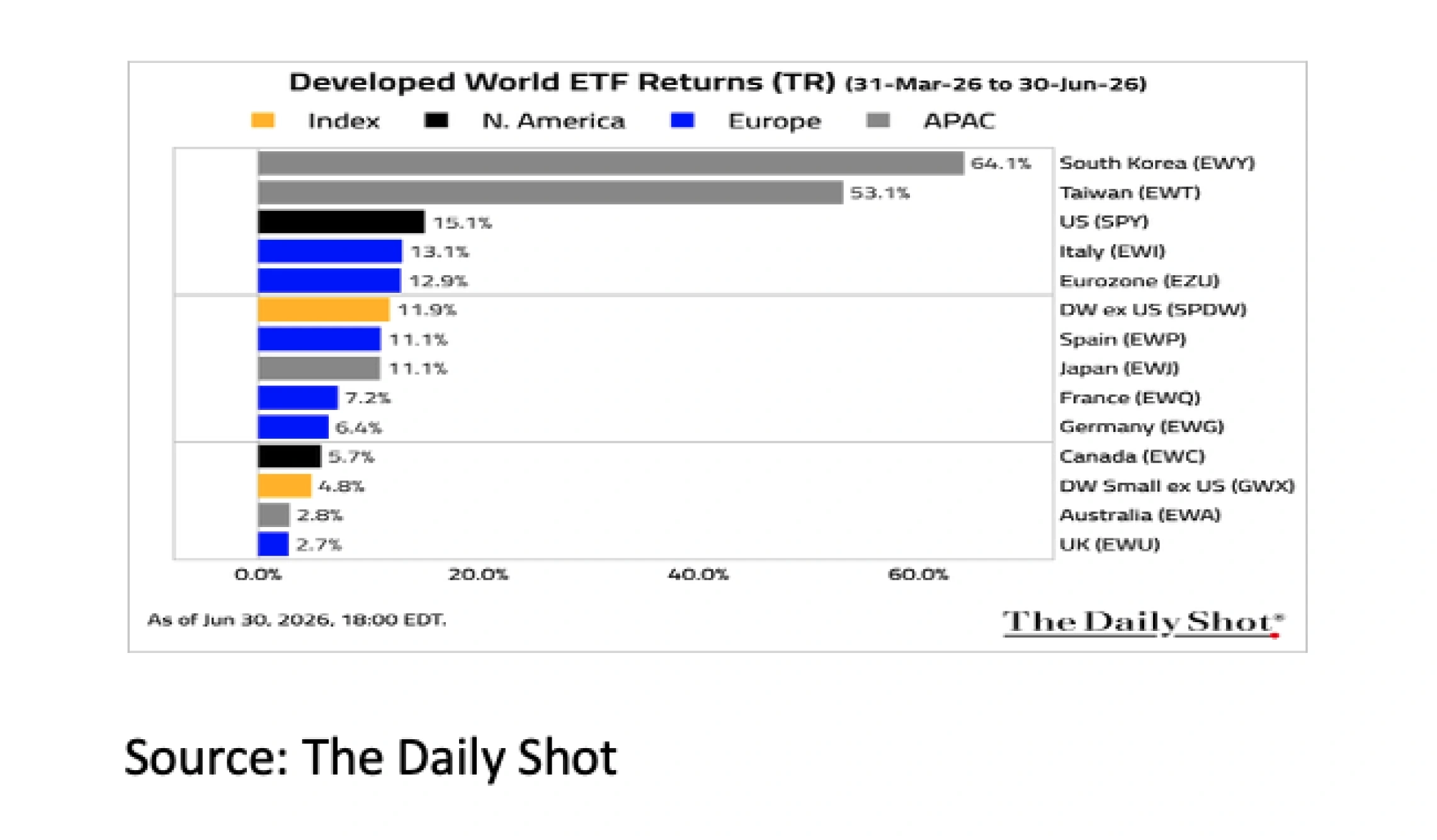
In a world where a war between the US and Iran raged from February 26 to June 17, the Strait of Hormuz was completely closed, and only 80% of normal oil production was available, pessimists remained dejected on the sidelines once again. For instance, US equities rose by no less than +15% in 2026 Q2 (SPY ETF). Additionally, the Dow Jones closed the quarter at a new all-time high of 52,319 (+13%). The difference in capital market interest rates was noteworthy, however. The 10-year US yield rose by +11.1bp in Q2 2026, while the 10-year yield in Germany fell by -10.6bp. Perhaps a sign that investors appreciated the ECB's interest rate hike in June more than the Fed's standstill.
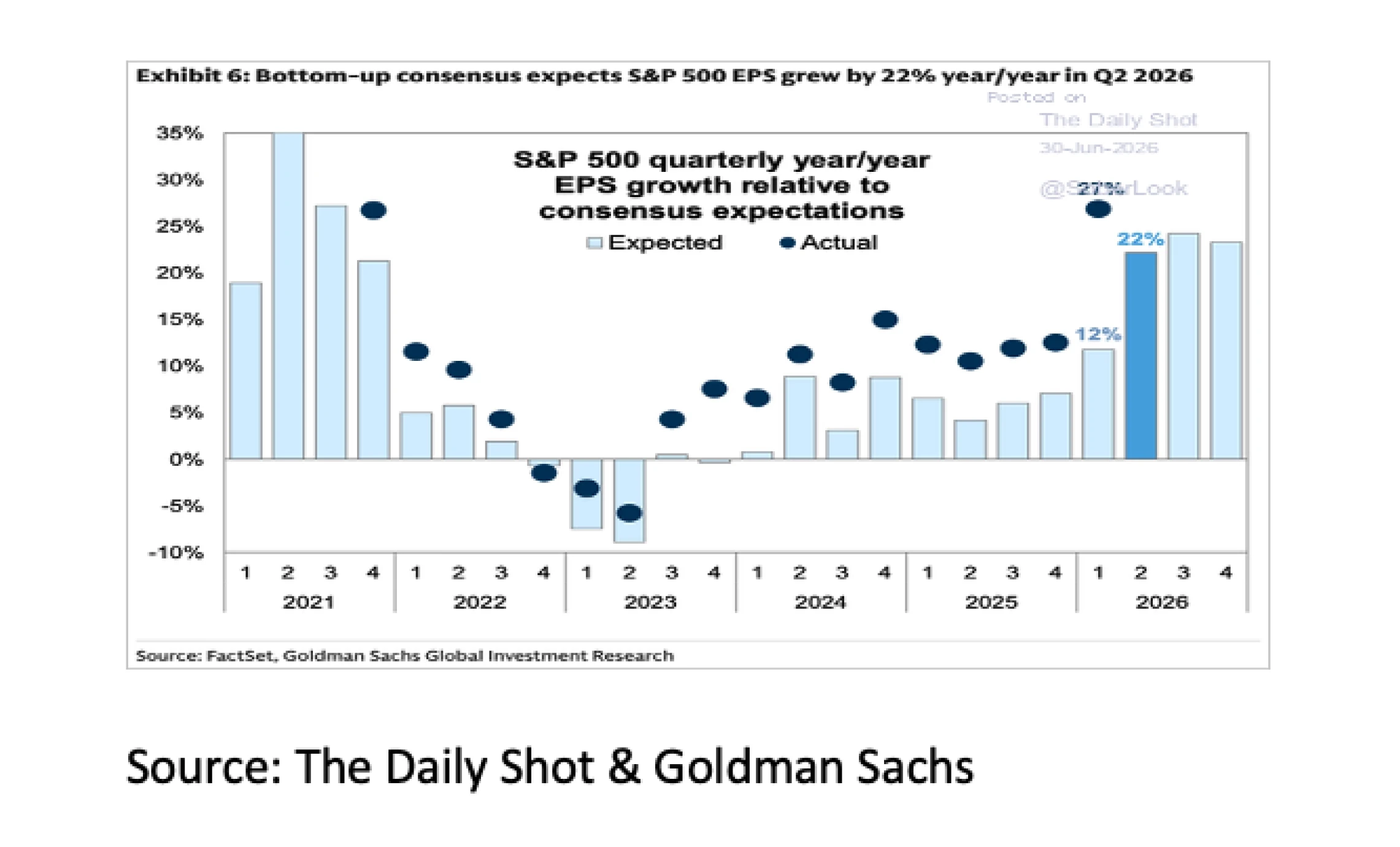
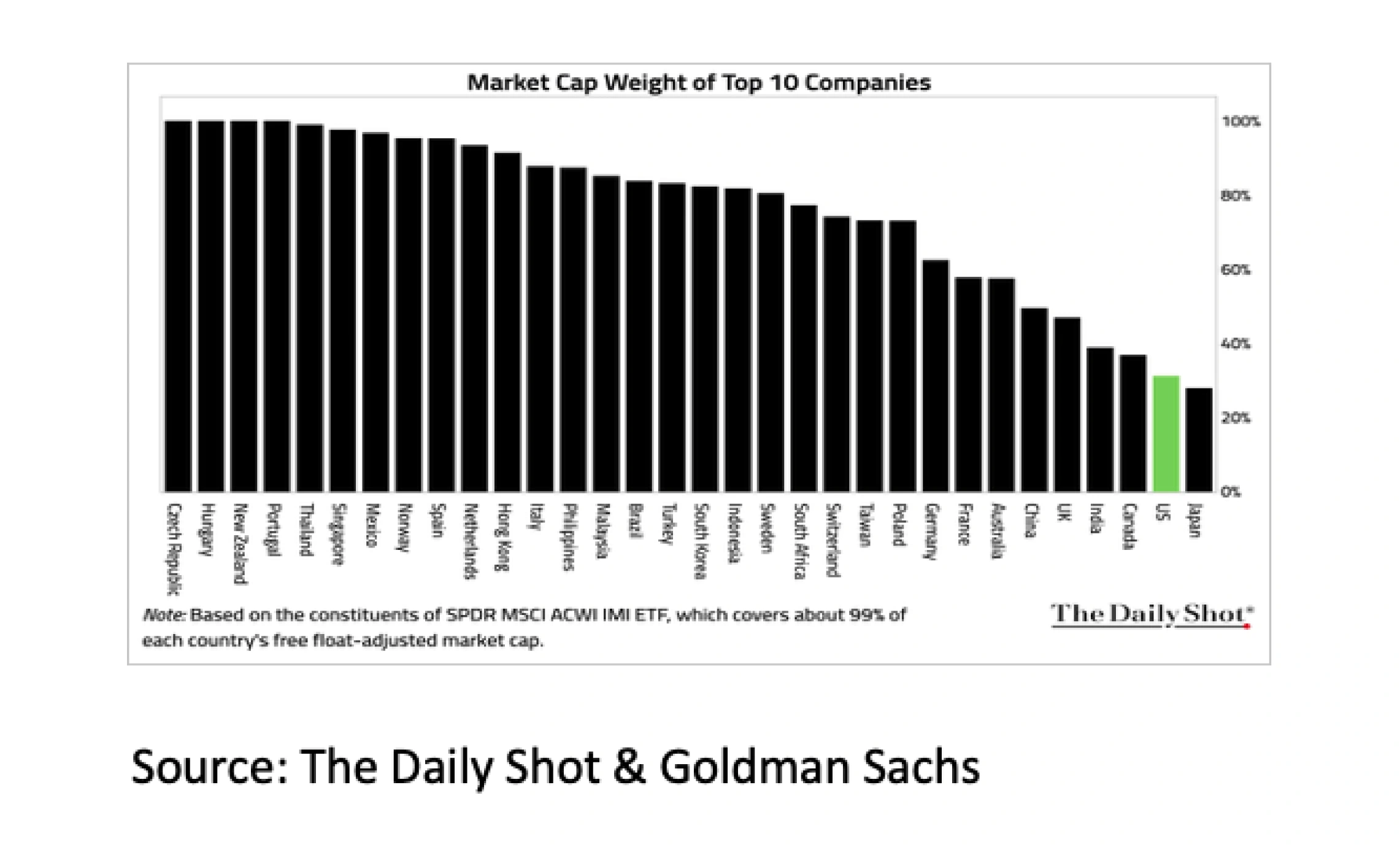
Although distrust of US stocks remains high among many investors because PEs are (too) high, the US weighting in the MSCI ACWI is (too) high, and the US weighting is dominated by the top 10 major stocks, such as Microsoft, NVIDIA, Apple, Amazon, Alphabet, and Meta, there are counterarguments to be made. Much more so than in other countries, such as the Eurozone and the UK, innovation and profitability take precedence in the US. Yes, PEs are higher, but profits have been rising significantly faster than elsewhere and ahead of expectations for many consecutive quarters, particularly in 2026 Q1 (+27%) and 2026 Q2 (+22%). Additionally, at 35%, the market weighting of the top 10 in the US is dominated to a significantly lesser extent than in all other countries, with the sole exception of Japan. Therefore, there are certainly arguments to be made against this distrust.
Disclaimer:
While the information contained in the document has been formulated with all due care, it is provided by for information purposes only and does not constitute a professional advice. We would encourage you to seek appropriate professional advice before considering a transaction as described in this document. No liability is accepted whatsoever for any direct or consequential loss arising from the use of this document.
RECEIVE OUR INVESTMENT NEWSLETTER IN YOUR INBOX




© 2025 TRUSTMOORE.