


- While the fighting in Ukraine and the Middle East continues and the Strait of Hormuz remains closed to virtually all shipping, it seems increasingly like “business as usual” for the global economy and stock markets”.
- The question is therefore being raised ever louder as to whether the global economy has become immune to geopolitical problems and higher oil prices.
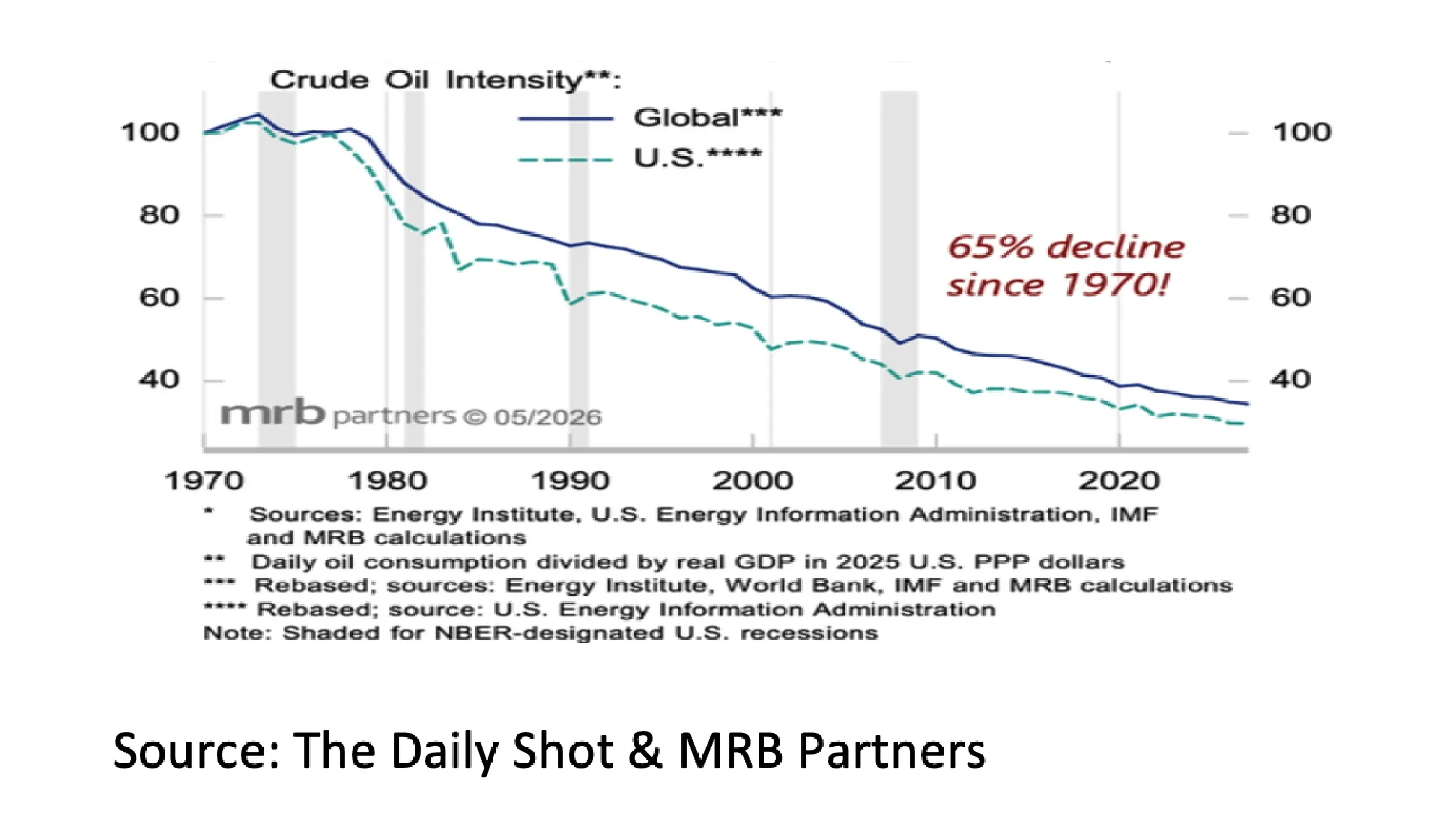
- The answer to that is partly yes. For example, oil consumption as a percentage of global GDP fell by 65% between 1970 and 2026.
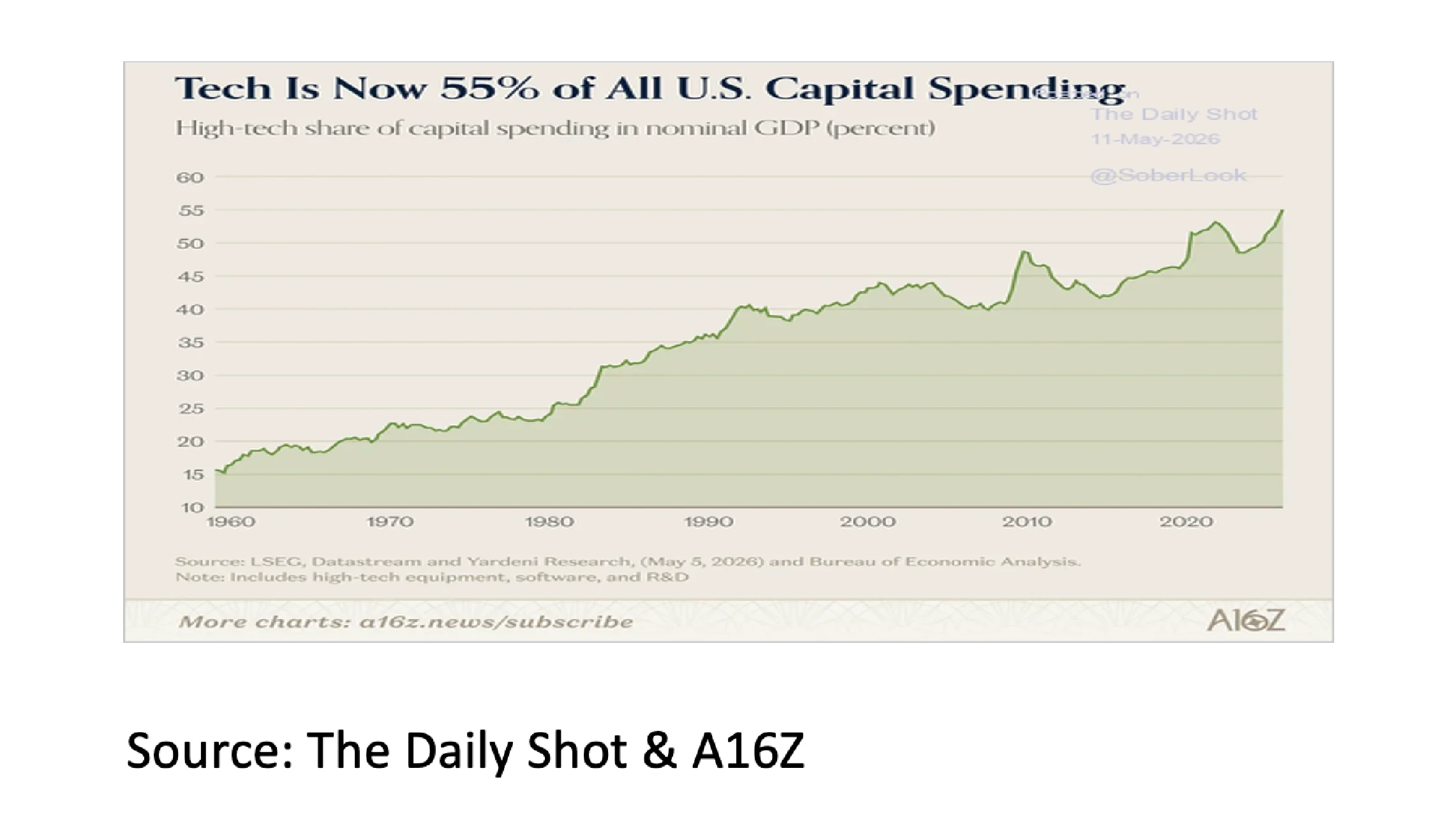
- In addition, technology as a percentage of investments in the US has risen spectacularly from 15% to 55%, partly thanks to the internet and AI.
- However, geopolitical problems have led to companies having to hold larger inventories, import tariffs having increased, and more having to be produced locally.
- In addition, higher oil prices also lead to higher production costs and consequently to higher consumer prices.
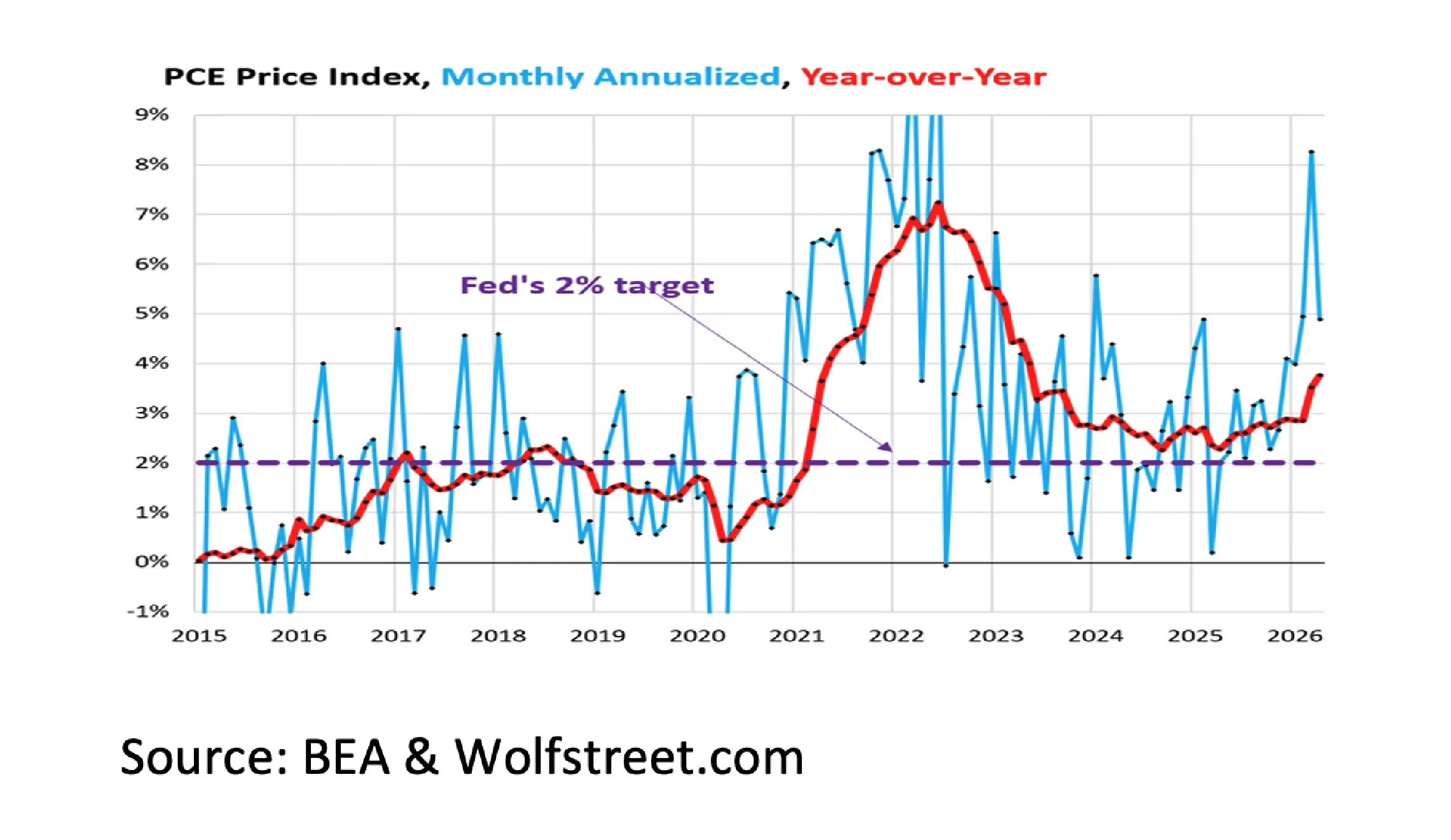
- For years, central banks have failed to keep inflation structurally below their own 2% target. It is therefore almost inevitable that both the FED and the ECB will raise interest rates in June or July.
- With a rise of +9.7% (in USD) in the month of May, Emerging Market Equities leave the stock markets in Japan (+5.3%), the US (+5.1%), and Europe (+2.9%) far behind.
- The strong performance of Emerging Market Equities in 2026 is primarily due to the rise in earnings expectations. While these are already high for the S&P 500 (+23.5%), for Emerging Market Equities they are even +55.9%.
- The surprisingly strong rise in corporate profits is broad-based. As long as corporate profits continue to exceed expectations each quarter, it seems too early for a new bearmarket in equities.
While the conflict in Ukraine and the Middle East continues and the Strait of Hormuz remains closed to virtually all shipping, it seems increasingly to be “business as usual” for the global economy and stock markets. For instance, the Atlanta FED currently estimates that US economic growth in 26 Q2 will reach +3.0% (QoQ annualized), Goldman Sachs has lowered the probability of a US recession in the coming 12 months to 25%, and a total of 300,000 jobs were created in the US during the months of March and April. Consequently, the question is being raised increasingly loudly as to whether the global economy has become immune to geopolitical issues and higher oil prices. The answer to this is partly yes. For instance, oil consumption as a percentage of GDP has fallen spectacularly by 65% between 1970 and 2026. In addition, technology as a percentage of investments in the US has risen spectacularly from 15% to 55%, thanks to the rise of the internet and AI.
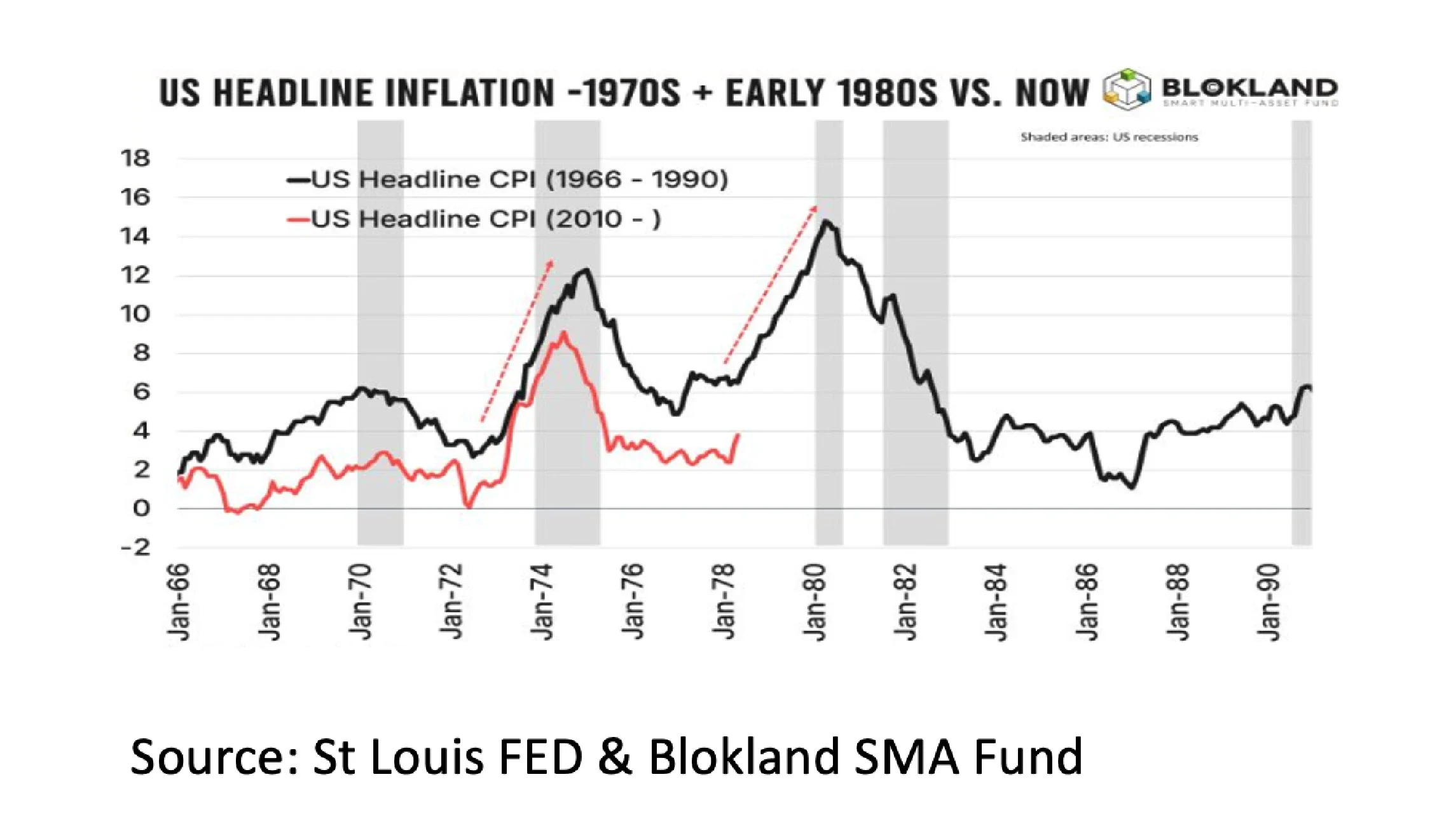
Although the impact of geopolitical issues and higher oil prices on the economy has undoubtedly diminished, this does not mean that there are no concerns at all. For instance, geopolitical issues have led to companies having to hold larger inventories again, import tariffs have risen, and more local production is required. Additionally, higher oil prices continue to lead to higher production costs and, consequently, higher consumer prices. Since 2021, the FED has failed to keep inflation structurally below its own 2% target. Furthermore, the current trend in inflation still bears a worrying resemblance to that of the 1970s. It is therefore almost inevitable that both the FED and the ECB will raise interest rates in June or July.
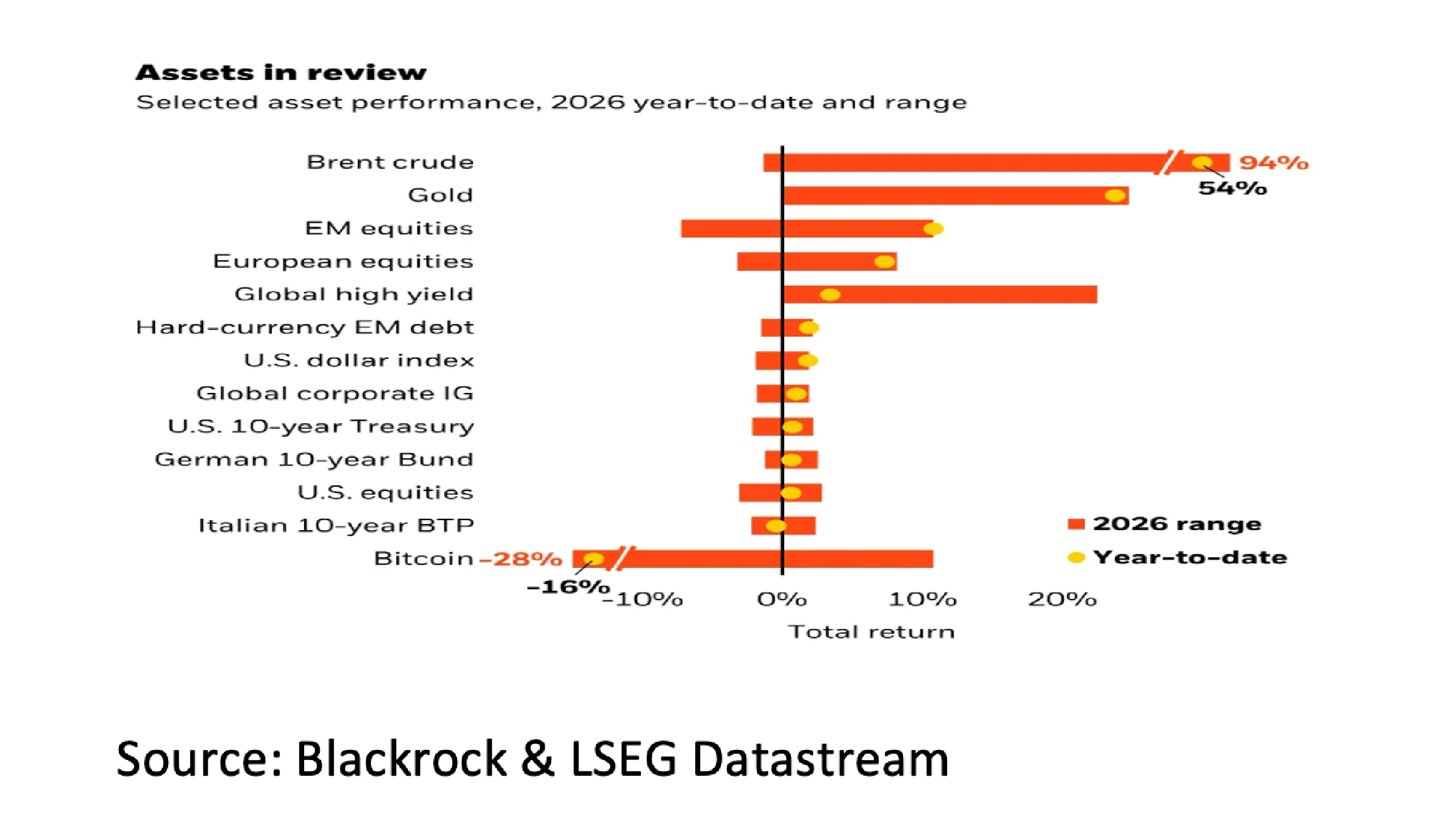
With a rise of +9.7% (in USD) in May, Emerging Market Equities left the stock markets in Japan (+5.3%), the US (+5.1%), and Europe (+2.9%) far behind. Although they remain the biggest gainers year-to-date, Gold (-1.2%) and Energy (-12.5%) in USD showed a decline in May. The strong performance of Emerging Market Equities in 2026 is primarily due to a spectacular rise in earnings expectations. While these are already high for the S&P 500 (+23.5%), they reached an even higher +55.9% for Emerging Market Equities.
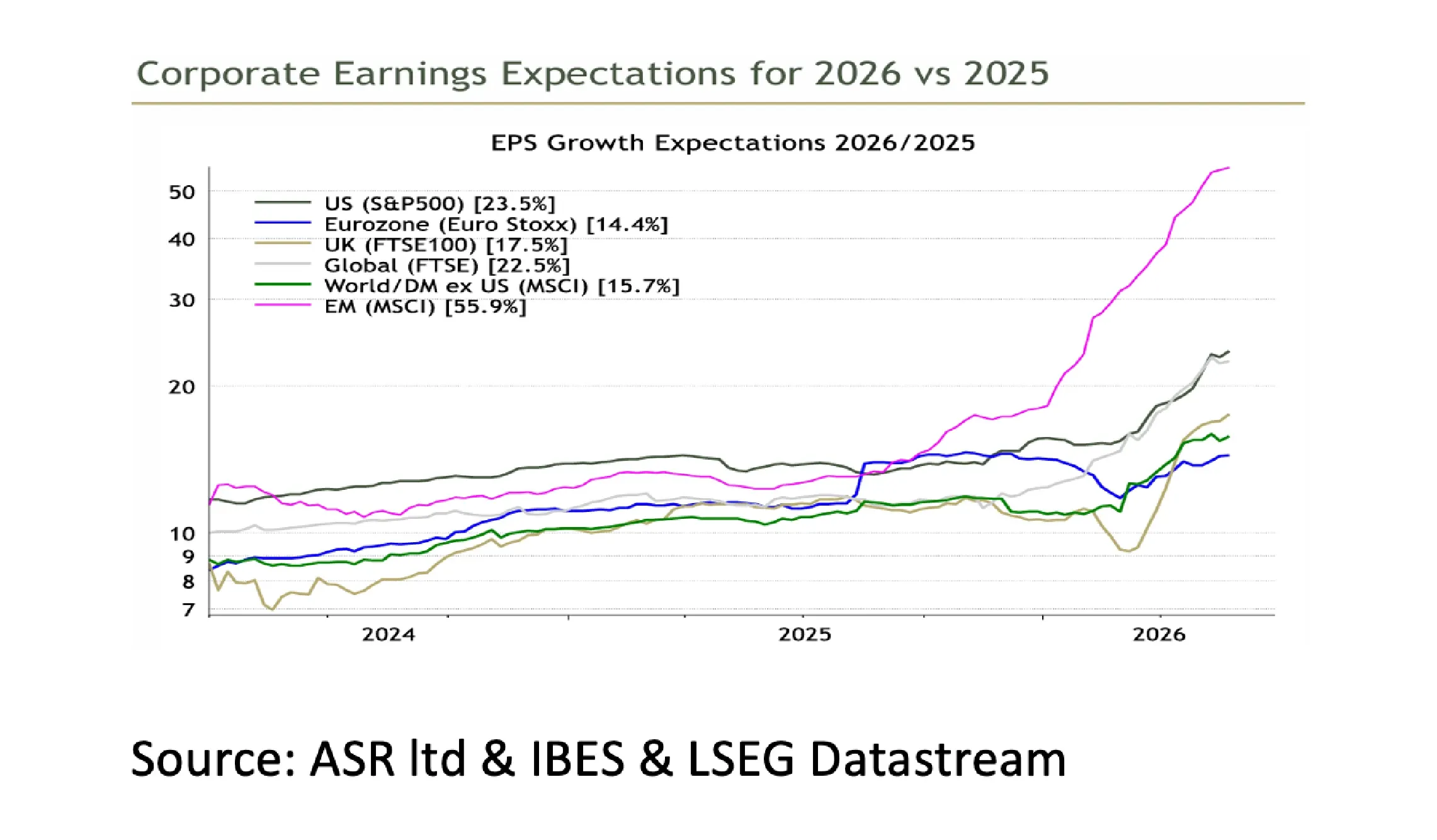
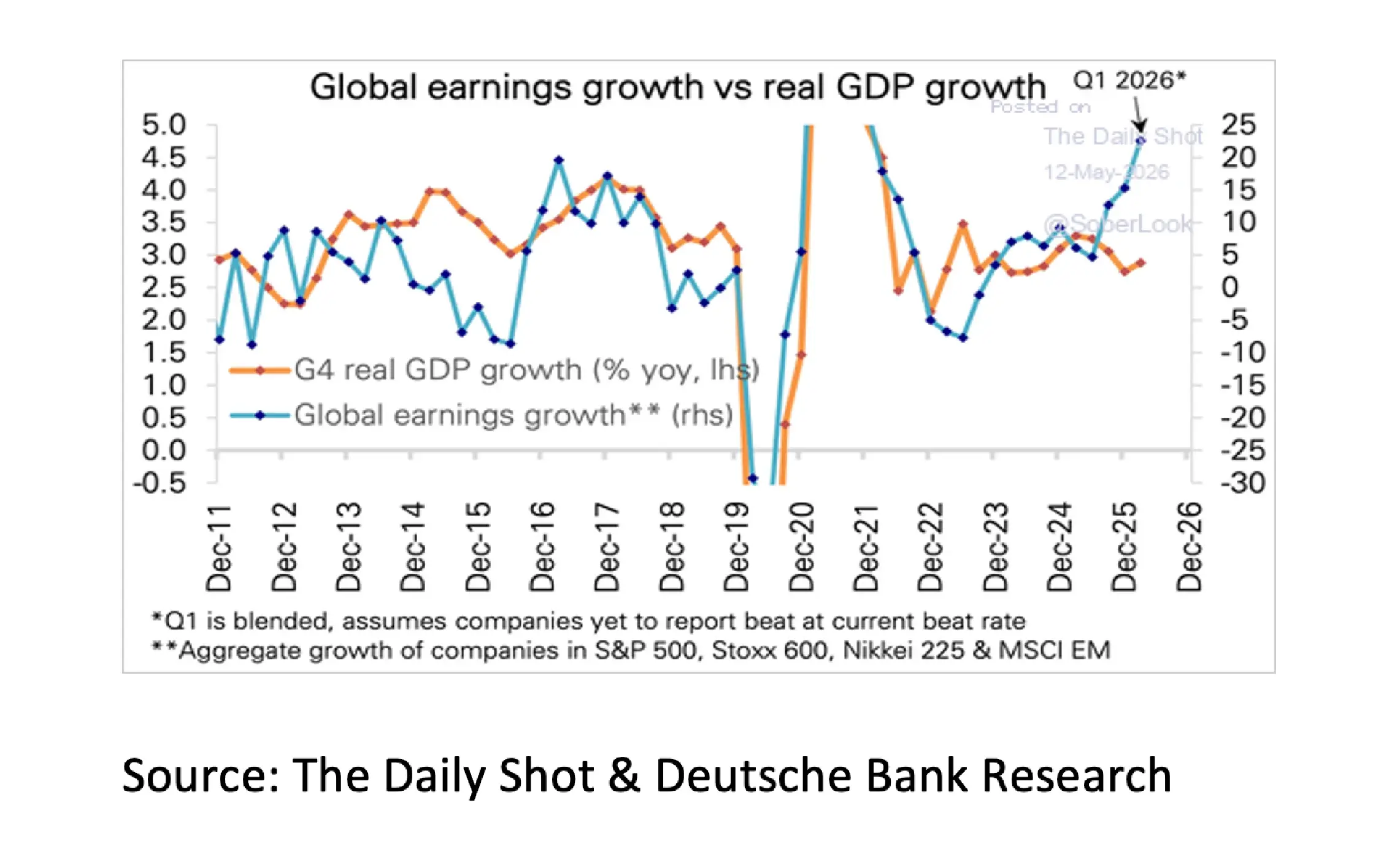
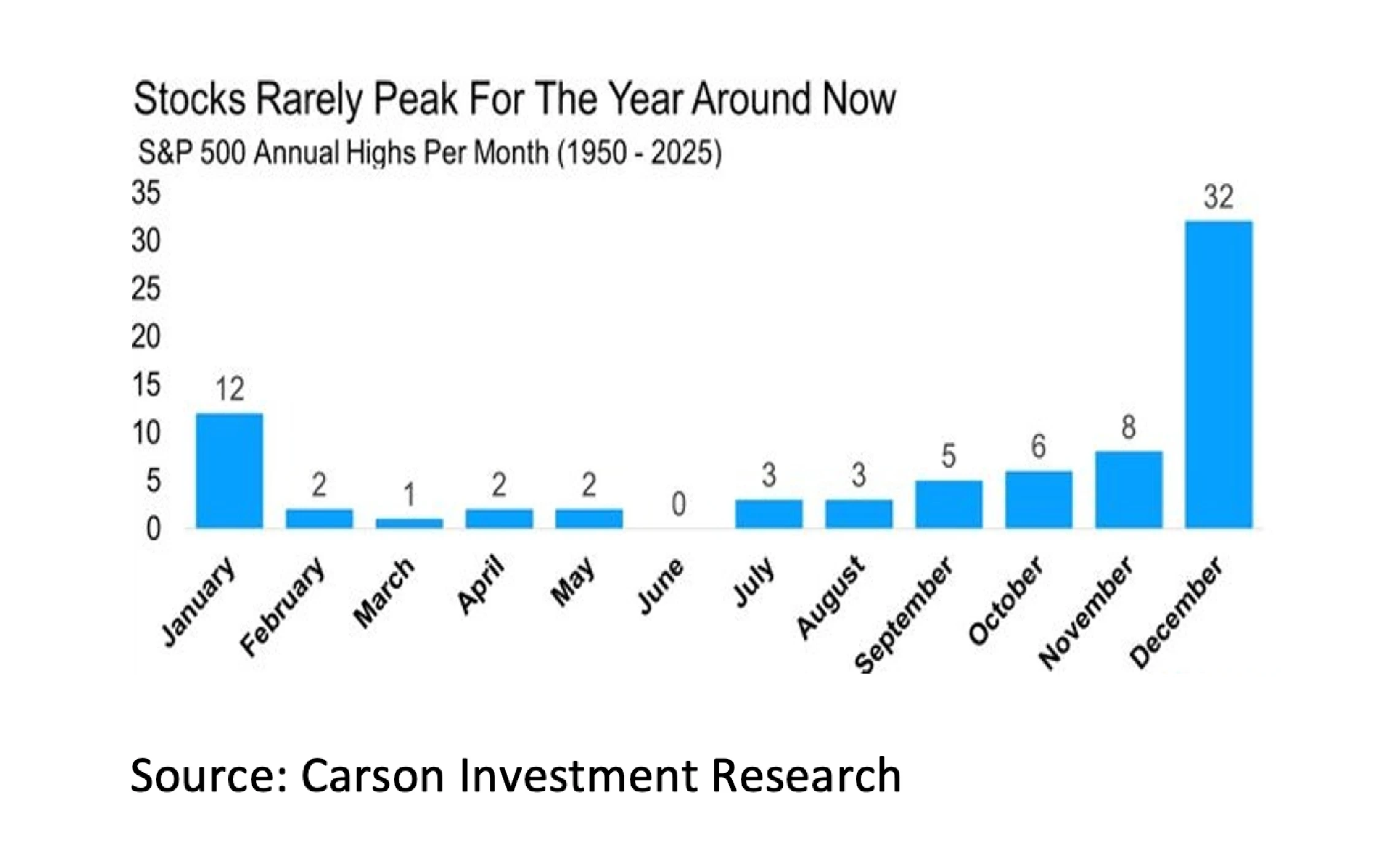
In all regions, there appears to be a surprisingly large increase in profit expectations for 2026. While the rise in corporate profits kept reasonably pace with global economic growth until 2024, this link seems to have ceased to exist since 2025. Much of the profit increase is due to companies benefiting from massive capital investments in Artificial Intelligence and to energy companies profiting from higher oil and gas prices. However, it is also striking that mid- and small-cap companies are showing increasingly better net profit figures as well. The surprisingly strong rise in corporate profits is therefore broadly based. As long as quarterly corporate profits continue to exceed expectations, it seems too early for a new bearmarket. Furthermore, it is worth noting that in the past 76 years, the peak in the S&P 500 occurred in December (12x) and January (32x) in 58% of cases, and never in the current month of June.
Disclaimer:
While the information contained in the document has been formulated with all due care, it is provided by for information purposes only and does not constitute a professional advice. We would encourage you to seek appropriate professional advice before considering a transaction as described in this document. No liability is accepted whatsoever for any direct or consequential loss arising from the use of this document.
RECEIVE OUR INVESTMENT NEWSLETTER IN YOUR INBOX




© 2025 TRUSTMOORE.